About & Origin
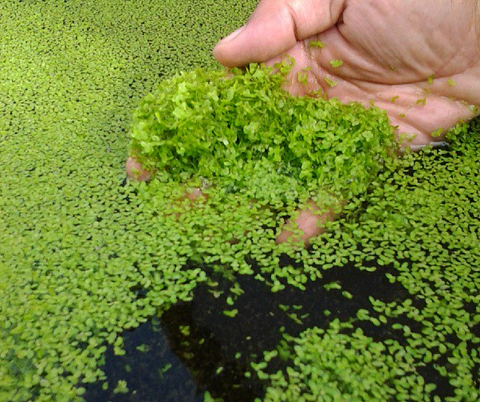
Duckweed (genus Lemna) is one of the smallest and fastest-growing flowering plants on Earth. In the wild it forms dense floating mats across still or slow-moving fresh water — ponds, ditches, marshes, and the quiet backwaters of lakes and rivers — across nearly every continent except Antarctica. Each plant is just a single tiny oval leaf-like frond, often no bigger than a pinhead, trailing one fine root beneath the surface.
It has a long history well beyond the aquarium hobby. Because it grows so quickly and is unusually rich in protein, duckweed has been studied and farmed as a low-cost feed for poultry and fish, and even explored as a biofuel and wastewater-treatment crop, since a floating mat can strip excess nutrients out of polluted water in a matter of days.
In the home aquarium it plays a similar role in miniature: a fast-growing floating plant that shades the water below, offers fry and shrimp somewhere to hide, and pulls nitrates out of the water column between water changes.
fishykart.com sources live duckweed cultures directly, not preserved or dried material, so what arrives is actively growing and ready to spread across your tank's surface within days.
Reproduction is almost entirely asexual: new fronds bud directly off the edge of existing ones and simply pinch away once mature, which is why a population can double in as little as one to four days under good conditions — one of the fastest reproduction rates of any flowering plant known. Flowering does happen but is rare and easy to miss, since the flowers are microscopic and mostly relevant to botanists rather than aquarists. In cooler outdoor ponds, duckweed can also form small starch-rich survival buds called turions that sink and overwinter on the bottom, re-sprouting to the surface once the water warms again — a trick it rarely needs indoors in a heated tank.
Several genera get sold under the "duckweed" name — Lemna, Spirodela, and Wolffia (the latter holding the record for the world's smallest flowering plant) — and they're similar enough in care that most of what applies to one applies to the others.
Requirements
Duckweed asks for very little, but a handful of conditions make the difference between a thin scattering of fronds and a thick, healthy mat.
Surface space: because it floats, duckweed needs open, calm water surface to spread across. Strong filter outflow, powerheads, or heavy surface agitation will constantly push it into corners and break up the mat.
Nutrients: duckweed feeds directly from the water column, so it thrives in tanks with some nutrient load (fish waste, leftover food) — it's an excellent natural nutrient export tool for lightly to moderately stocked tanks. In a bare, nutrient-starved tank it will grow much more slowly.
Light: it needs light falling directly on the surface to grow well; a floating mat that's too thick will actually shade itself out from below, so thinning is part of normal maintenance, not a sign anything is wrong.
Containment: duckweed spreads fast and is very difficult to fully remove once established — if you keep it in a shared sump, pond, or plan to move plants between tanks, expect it to hitchhike along. Many keepers deliberately grow it in a floating ring or a separate container for this reason.
Given the right conditions, a small starter portion can cover the entire surface of a standard tank within one to two weeks.
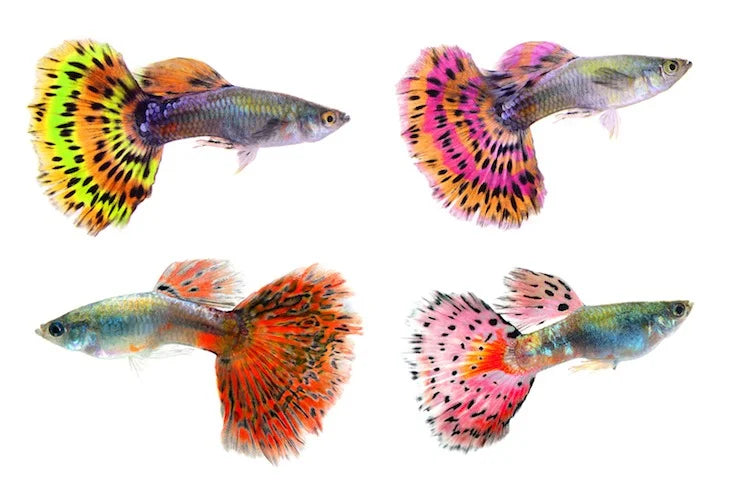
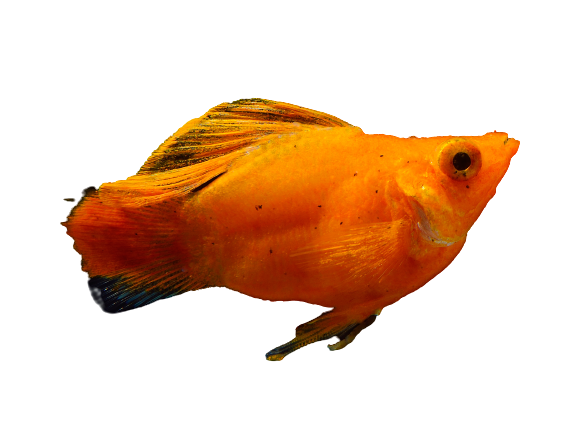
Tankmates that eat it: goldfish, larger livebearers, and several cichlid species will happily graze duckweed, which can be useful (a self-renewing snack that also cleans water) or frustrating (if you actually wanted a permanent floating cover and it keeps vanishing) depending on your goal — worth knowing before stocking either around it.
Thinning and harvesting: because it grows so quickly, most keepers net off the excess every week or two rather than trying to stop it growing. A kitchen sieve or fine net skimmed across the surface is usually enough; removed duckweed composts well or can be fed fresh to livestock that eat greens.
It's a genuinely low-effort plant to introduce — most of the "requirements" above are really about managing its enthusiasm rather than coaxing it to grow at all.
Compatibility

Water & Care Conditions
Duckweed is tolerant of a wide range of conditions, which is exactly why it spreads so readily in the wild — but it does best, and looks its healthiest, within these ranges:
- pH: 6.5–7.5 (tolerates a broader 5.0–9.0 range, but growth slows at the extremes)
- Salinity / hardness: freshwater only, soft to moderately hard water (roughly 3–20 dGH); it will not tolerate brackish or marine conditions
- Light: low to moderate direct light on the water surface; very low light will thin the mat out, very intense light can bleach fronds pale yellow
- Temperature: 20–30°C (68–86°F) — comfortably spans both unheated and tropical community tanks
- Oxygenation: not demanding on its own, but a thick, unmanaged mat can reduce oxygen exchange and gas diffusion at the water's surface, so keep some open water free and thin the mat back regularly rather than letting it fully close over
Outside of these ranges duckweed won't necessarily die off completely, but growth will slow noticeably and fronds tend to yellow and shrink.
It's also a handy bioindicator: because it takes up nutrients directly through its underside, a duckweed mat that suddenly yellows, shrinks, or stops multiplying is often one of the earliest visible signs of a water-quality problem — a nutrient deficiency, a medication dose, or a chemical contaminant — well before fish show obvious symptoms. Healthy duckweed should stay a bright, even green and keep expanding steadily; a stalled or pale mat is worth investigating rather than ignoring.
CO2 and fertilization: duckweed pulls carbon from the air at the water's surface rather than relying on dissolved CO2 like fully submerged plants, so it doesn't compete for or benefit much from a pressurized CO2 system, and rarely needs dosed fertilizer in a normally stocked tank — the fish waste it filters out is usually plenty. In a heavily planted, low-nutrient tank running CO2 for other species, duckweed can occasionally show mild yellowing simply from being outcompeted for surface nutrients by faster-growing submerged plants nearby.