Apple Snail Care: Species, Size, Eggs and Water
Published: 2026-10-27 · FishyKart Blog
Apple snail is the common name for snails of the genus Pomacea, the largest freshwater snails in the aquarium trade, and the one most people keep is the spike-topped apple snail, Pomacea diffusa, often sold as the mystery snail. It grows to about 2 inches (5 cm), breathes air through a siphon, and lays its eggs above the waterline, which makes breeding easy to control.
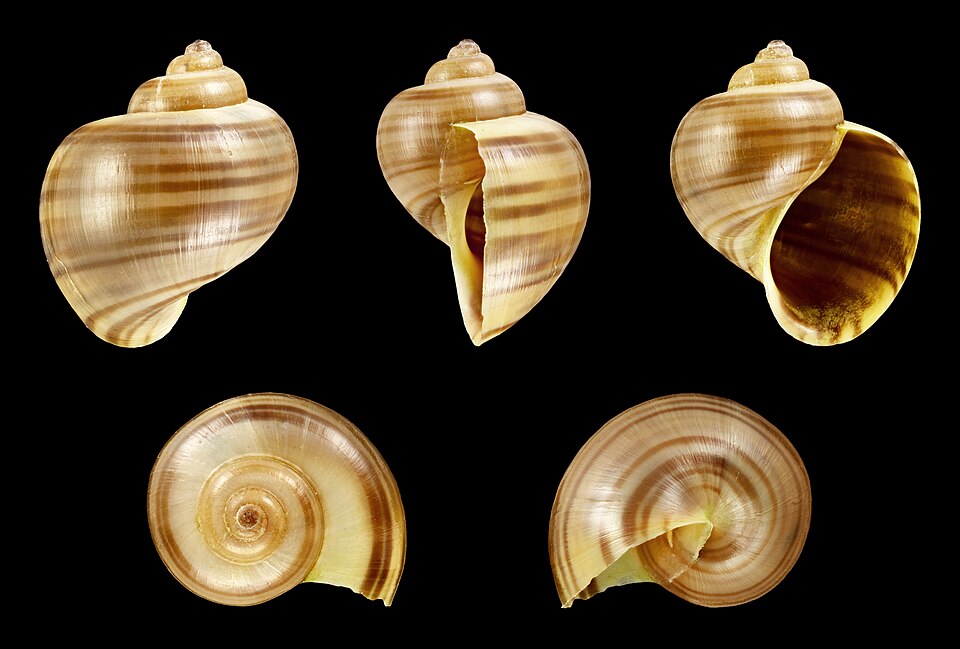
Photo: H. Zell - Wikimedia Commons, CC BY-SA 3.0
| Parameter | Value |
| Common species in tanks | Pomacea diffusa (spike-topped / mystery snail) |
| Adult size | About 2 in (5 cm) shell |
| Lifespan | 1-2 years, sometimes 3 |
| Temperature | 68-82°F (20-28°C) |
| pH | 7.0-8.0, hard water for shell growth |
| Minimum tank | 5-10 gallons for one snail |
| Sexes | Separate males and females |
| Eggs | Clutches laid above water |
Pomacea diffusa vs Pomacea canaliculata
The two species look alike but behave very differently. Pomacea diffusa mostly eats algae, biofilm and leftovers and leaves healthy plants alone. The channeled apple snail, Pomacea canaliculata, grows larger, eats live plants aggressively and is one of the world's worst invasive species. In the United States, federal rules (USDA APHIS) restrict moving apple snails (family Ampullariidae) between states; Pomacea diffusa is exempt from the federal permit, but state laws may still differ, so check them before buying.
Shell Health Depends on Your Water
- Keep pH at 7.0 or higher: acidic water dissolves shell
- Provide calcium: crushed coral, a cuttlebone or calcium-rich foods
- White pitting or cracks at the shell tip usually mean soft, acidic water
- Small chips heal if water hardness is corrected
Feeding Apple Snails
Apple snails are big eaters. Algae and leftovers alone rarely cover their needs, so add blanched vegetables (zucchini, spinach, cucumber), sinking pellets or algae wafers. Remove uneaten vegetables after a day, because a large snail produces a lot of waste and can foul a small tank.
Eggs and Breeding
Females climb out of the water at night to lay a clutch of a few hundred eggs on the glass or lid. P. diffusa clutches are usually pale pink, cream or salmon; bright pink or red clutches are a warning sign for P. canaliculata, though colour alone is not a reliable ID. If you do not want babies, scrape the clutch off before it hatches in 2-4 weeks. Identification of other species' eggs: aquarium snail eggs; hatching mystery snail clutches: mystery snail eggs.
See our listed apple snails