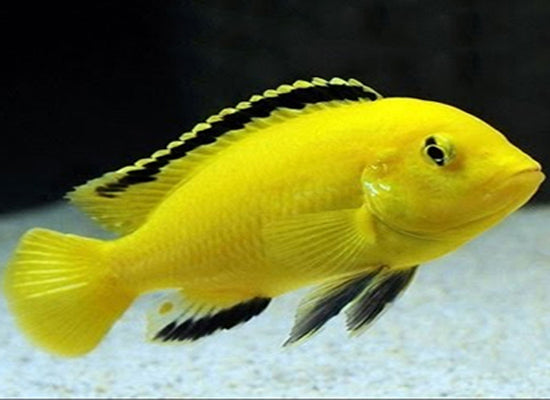
About & Origin
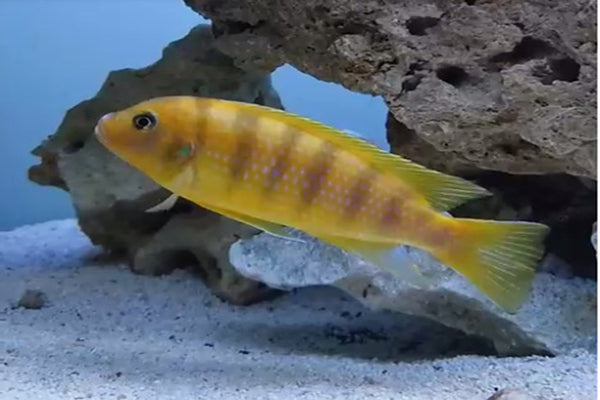
The Banana Cichlid is a Malawi peacock cichlid — "Banana cichlid" is the hobby trade name for a bright, all-yellow colour strain of this species (Aulonocara sp.) — the name describes the solid banana-yellow body colour males display at maturity rather than a distinct species. Like other peacocks, it comes from the sandy and intermediate rock/sand habitats along Lake Malawi's shoreline in East Africa, where it forages for small invertebrates in the sand using a sensitive, pore-covered snout.
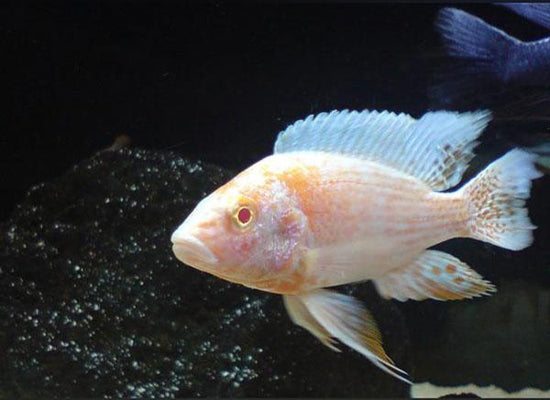
Females and juveniles are considerably plainer — silvery-grey — with the vivid yellow developing gradually in males as they mature and establish territory, so a young "banana cichlid" often looks unremarkable until it colours up over several months.
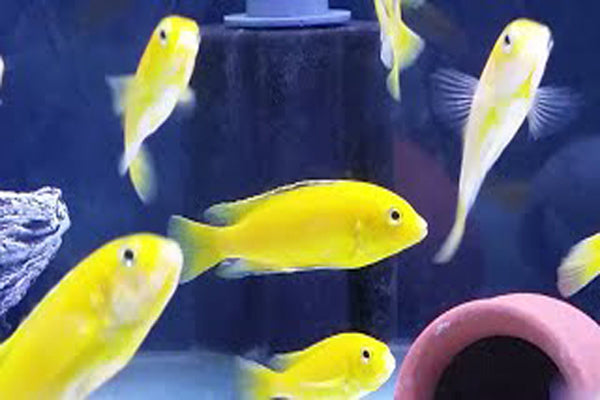
Like other peacocks, it's a calmer, more manageable rift lake cichlid than the aggressive mbuna group, and a popular choice for stocking colour into a mixed Malawi peacock/hap community tank.
As a maternal mouthbrooder, a mature female will collect fertilized eggs into her mouth after spawning and carry them for roughly three weeks before releasing free-swimming fry, eating little herself during that period — it's a common, often accidental occurrence in a mixed Malawi tank once fish reach breeding size and condition. Because the vivid yellow is a hobby-bred colour trait rather than a distinct species, "banana cichlid" specimens can vary somewhat in exact shade and how quickly males colour up, and buying a young, still-silvery juvenile is normal rather than a sign of a mislabeled fish.
Adults typically reach 12–15 cm (5–6 inches), smaller than the large predatory Malawi haps but still a substantial, long-lived cichlid — a well-kept individual can live eight to ten years or more, so it's worth planning tank size and stocking around that lifespan rather than treating it as a short-term purchase.
Colour intensity depends noticeably on diet, water quality, and how settled the fish feels in its environment — a stressed or newly-introduced individual often looks pale for the first weeks before settling into its full banana-yellow.
Requirements
200+ litres (55+ US gallons) for a small group with one male to avoid territorial fighting between rival males in a smaller space.
Temperament: semi-aggressive, calmer than mbuna, generally safe in a mixed peacock/hap Malawi community.
Diet: cichlid pellets formulated for carnivorous/omnivorous African species, supplemented with frozen brine shrimp or mysis shrimp; avoid the vegetable-heavy flakes made for herbivorous mbuna, and don't overfeed rich, high-protein foods, since digestive trouble from overfeeding is one of the more common health issues in Malawi cichlids.
Décor: rockwork for territory plus open sand for natural foraging behaviour. Splitting the rockwork into several separate piles rather than one long ridge gives subordinate fish somewhere to retreat and reduces how much chasing happens between rival males.
Group composition: two to three females for every male keeps a single female from being singled out and constantly harassed, which is a common problem in an unbalanced male-heavy or single-pair setup.
Filtration: Malawi cichlids are messier than their size suggests, so filtration rated above the tank's stated volume avoids the cloudy water and rising nitrates a marginal filter tends to produce in this kind of setup.
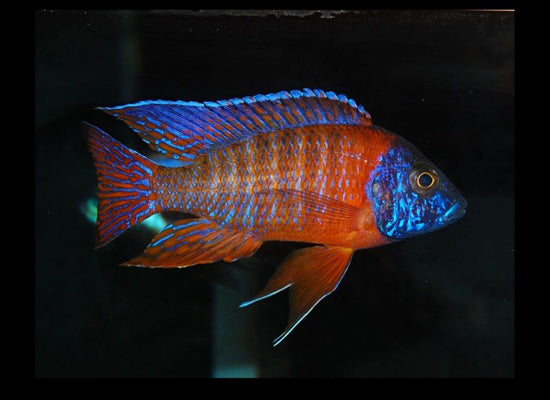
Colour-strain mixing: because several Aulonocara colour morphs (banana, yellow, orange, red peacock and similar) are the same underlying species selectively bred for different colours, mixing multiple morphs together can occasionally lead to cross-breeding between them — worth knowing for a buyer who wants to keep a colour line visually distinct.
Tankmates: best paired with other peaceful-to-semi-aggressive Malawi haps and peacocks of a similar size, rather than the more combative mbuna, which will often bully a calmer peacock for food and territory.
Water changes: weekly 25-30% changes with temperature- and hardness-matched water keep Rift Lake chemistry consistent, which matters more to these fish than to most community species.
Compatibility
Water & Care Conditions
These parameters follow the natural chemistry of Lake Malawi's Rift Valley water — they aren't flexible in the way softer-water community fish can be:
- pH: 7.8–8.6 (Lake Malawi is naturally hard and alkaline — this is not optional, low-pH water stresses these fish over time)
- Water hardness: 10–20 dGH (200–350 ppm); many keepers add crushed coral or aragonite sand to the substrate/filter to hold pH and hardness up long-term
- Temperature: 24–28°C (75–82°F)
- Oxygenation: strong surface agitation and filtration — Malawi cichlids are messy, heavily-stocked-tank fish that need robust biological filtration and large, regular water changes
- Ammonia/nitrite: zero at all times in a mature tank — stress from poor water quality is a common trigger for Malawi bloat, which progresses quickly and is far easier to prevent than treat
- Water changes: weekly changes of 25-30% with hardness/temperature-matched water hold parameters steady, which matters more for rift lake cichlids than for most community fish since they evolved in a remarkably stable natural environment
Test kits for pH, ammonia, nitrite, and nitrate are worth running weekly while a tank is still cycling and maturing, then monthly once stable, since buffering material like crushed coral gradually loses effectiveness and can let pH drift down without any obvious visual warning sign until fish begin to show stress. Watch for the early signs of Malawi bloat -- appetite loss, laboured breathing, pale stringy faeces, and abdominal swelling -- since it is much easier to head off early with a water change and a short fast than to treat once advanced. New water used for changes should be matched to tank temperature and, ideally, hardness before it goes in, rather than added straight from a typically softer tap supply, to avoid repeated swings in chemistry.