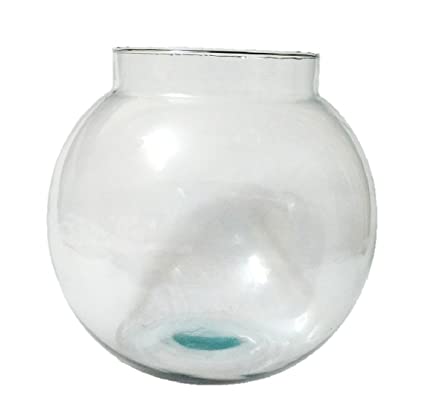
1O INCH GLASS BOWL
About & Origin
This is a classic round glass fish bowl, roughly 10 inches across the widest point. It's the traditional, unfiltered "goldfish bowl" shape that's been sold for decorative fishkeeping for generations — a clear glass vessel with a narrower neck, designed to sit on a table, desk, or shelf as much as to house fish.
At roughly 8–10 litres of actual water volume once you account for the curved glass and typical fill level, a 10 inch bowl is one of the larger bowls in this style — noticeably more forgiving than the smaller 4–8 inch sizes, though it is still a bowl, not a filtered aquarium.
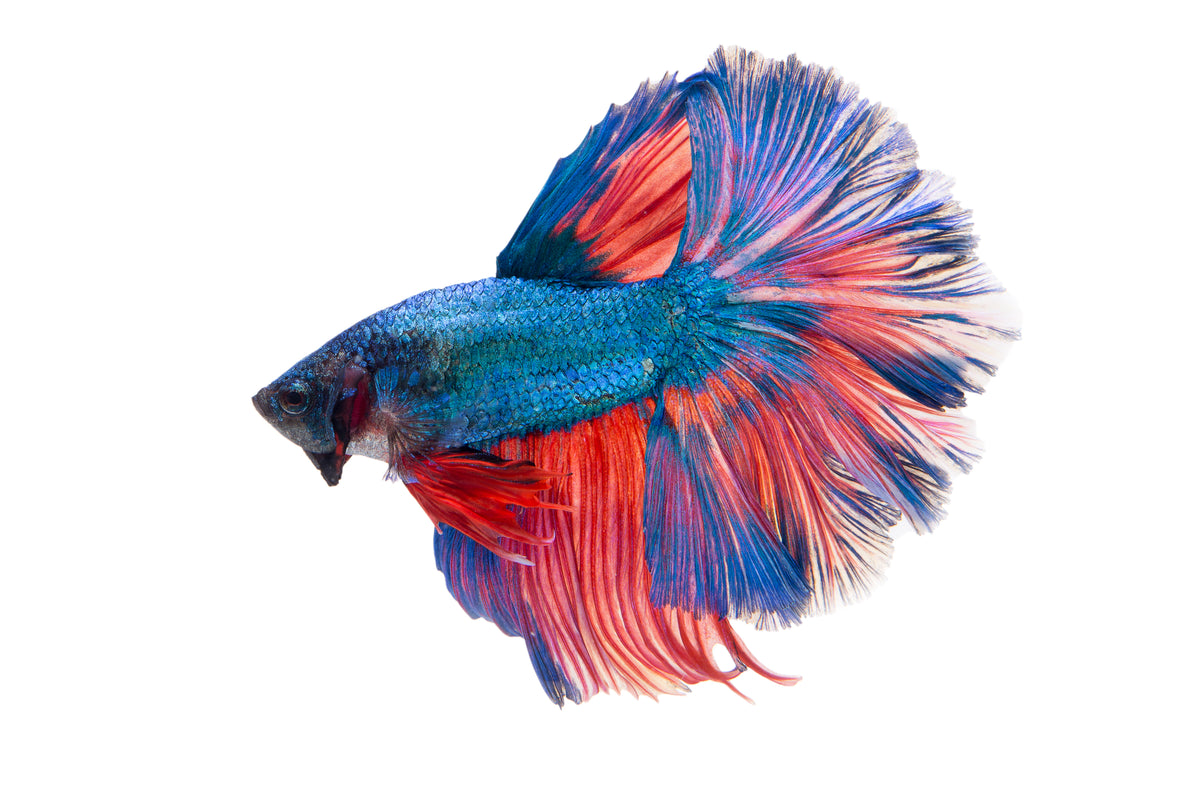
It's most commonly bought as a low-cost, low-maintenance starter option for a single small fish — most often a betta, which can tolerate still water better than most species — or as a temporary/quarantine container.
Construction is moulded glass, thinner than the cut and glued panel glass used in a rectangular aquarium, and formed as one continuous piece rather than assembled from separate sides — so there's no seam to fail, but the rim and widest point of the curve are the areas most at risk of chipping if the bowl is knocked against something hard.
Empty, a bowl this size is still light enough to carry in one hand, but filled it's a different story: 8–10 litres of water alone weighs roughly 8–10kg (water is close to 1kg per litre), so a full 10-inch bowl comes in somewhere around 9–12kg total once you add the glass — worth knowing before deciding where to keep it permanently.
The round bowl format itself predates the modern rectangular filtered aquarium by a long way — it's one of the oldest recognisable pieces of fishkeeping-adjacent decor, popular well over a century before heaters, air pumps, and biological filter media became standard hobby equipment. That long history is part of why the shape still sells today even though it isn't the setup most experienced keepers would actually recommend for a fish's long-term welfare.
Requirements
A round bowl like this has no built-in filter, heater, or air pump, and none of those fit it easily by design — so what you're buying is the housing only.
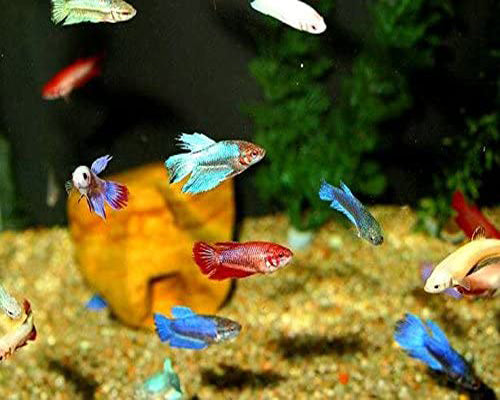
Be realistic about stocking: even at 8–10 litres, this size is only suitable for a single small, hardy fish (a betta is the standard choice) or a very small shrimp/snail cleanup crew — not a community of fish, and not anything that needs to shoal in groups.
No filtration means more work, not less: without a filter cycling the water, ammonia and nitrite from waste build up faster in a bowl than in an equivalent filtered tank, since there's no colony of beneficial bacteria continuously processing it. That has to be offset with more frequent partial water changes, not left unmanaged. Feeding discipline matters too — uneaten food breaks down and fouls the water fast in a bowl with no mechanical filtration to catch debris, so feed small amounts and remove anything left after a couple of minutes.
Place it away from direct sunlight (algae blooms fast in an open, unfiltered bowl) and on a stable, level surface — a full 10-inch bowl weighs close to 10kg once filled, so make sure whatever it's sitting on can actually take that weight without flexing or wobbling.
Surface-area-to-volume matters here too: gas exchange (oxygen in, CO2 and off-gassing ammonia out) happens at the water's surface, and the narrow neck on a classic bowl shape limits that relative to the volume of water and waste beneath it, compared to an open-topped tank of the same size. That's a real, if often overlooked, part of why bowls are considered lower-welfare housing even at a size that sounds reasonably generous on paper.
Compatibility

Setup & Maintenance
Because there's no filter doing the biological work for you, a bowl like this needs a more hands-on maintenance routine than a filtered tank of similar size.
- Water changes: partial water changes roughly 2–3 times a week (around 25–30% each time) are typical for an unfiltered bowl this size, more often if it looks cloudy or smells
- Dechlorination: always treat tap water with a dechlorinator before adding it, since there's no filter media to help buffer sudden chemistry changes
- Cleaning: wipe down algae on the glass regularly; the wide opening on this shape makes it easy to reach in and clean by hand
- Temperature: without a heater, a bowl will simply track room temperature — fine for a hardy species in a warm room, riskier if the room gets cold at night
- Evaporation top-ups: check the water level every few days and top up with dechlorinated water between full changes, since evaporation concentrates dissolved waste in what's left
- Watch the fish: gasping at the surface, clamped fins, or unusual lethargy are often the earliest sign water quality has slipped, sometimes before the water itself looks visibly dirty
If you outgrow the maintenance routine of a bare bowl, moving up to a small filtered tank (even a betta cube tank with an air-driven sponge filter) is a common and worthwhile upgrade — it takes real, ongoing pressure off the water-quality side of things since beneficial bacteria in the filter media do continuous work between changes instead of the water quality resetting to zero after each manual change and then degrading again.
A cheap liquid or strip water-test kit is genuinely useful at this size, since it replaces guesswork with an actual reading of ammonia, nitrite, and pH rather than relying on smell or cloudiness alone, both of which tend to lag behind the actual chemistry.