About & Origin
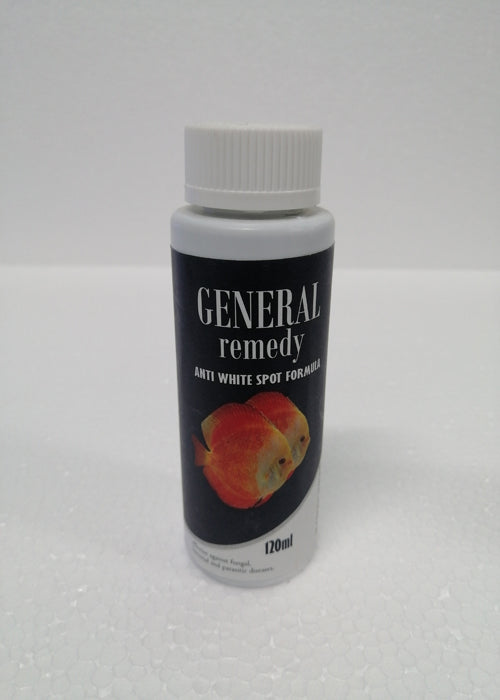
General Remedy is a broad-purpose tonic for freshwater aquarium fish, used both as a general preventive treatment and as first-response support when a fish is showing early, non-specific signs of stress or illness — clamped fins, loss of appetite, listlessness, or slight discolouration.
Rather than targeting one specific parasite or pathogen the way a dedicated anti-parasitic or antibacterial does, a general remedy like this is meant to support the fish's overall condition and water quality during a rough patch, which is often enough to tip things back in the fish's favour before a specific illness has a chance to take hold.
This 120ml bottle is sized for regular use in a moderately stocked freshwater setup, whether that's routine maintenance dosing or a short course after a stressful event like introducing new fish or a large water change.
The line between "preventive tonic" and "active treatment" for a general remedy is mostly about dose and frequency rather than a different product -- which is part of why it's such a flexible staple to keep on hand: the same bottle covers routine maintenance dosing and a more focused response if a fish starts looking off.
The vague, non-specific symptoms this product targets — clamped fins, a fish hanging near the surface or hiding more than usual, a dull rather than vivid colour — are often the earliest visible sign that something is wrong, appearing well before a fish develops the more obvious markers of a specific disease like white spots or visible fungus. Reaching for a general support product at this early stage, alongside checking water parameters, gives a fish the best chance of recovering on its own before a specific illness has a chance to properly establish itself.
Requirements
Routine use: many keepers dose a general remedy on a regular light schedule (for example, weekly) as preventive maintenance, alongside normal water changes, rather than waiting for visible symptoms.
Active use: when a fish is showing early stress signs, a short course at treatment-strength dosing (check the bottle for the specific ratio) can help support recovery alongside good water quality and, where appropriate, a slightly raised temperature.
Filtration: as with most liquid treatments, activated carbon in your filter will absorb some of the product — remove it during an active treatment course, and it's fine to leave in place during light preventive dosing.
General remedies are a support product, not a substitute for good water quality — regular water changes and correct stocking levels do more for fish health day-to-day than any bottled treatment.
New fish and new plants: a short course after introducing anything new to the tank -- fish, plants, or decor from another tank -- is a common, low-effort precaution, since these are the most likely routes for a new pathogen to enter an otherwise stable tank.
Check water parameters alongside dosing: a general remedy supports a stressed fish, but it doesn't fix the underlying cause if that cause is poor water quality — test ammonia, nitrite, and nitrate whenever a fish is showing stress signs, since a course of tonic on top of bad water conditions will only provide short-term relief.
Not a substitute for diagnosis: if a fish develops clearer, more specific symptoms during a course of general remedy — visible white spots, fuzzy fungal growth, open sores, or rapid deterioration — switch to a targeted treatment for that specific problem rather than continuing to rely on a general support product alone.
Compatibility

Dosage & Usage Guidelines
Dosing differs between light preventive use and an active treatment course — check the ratio printed on your specific bottle rather than guessing.
- Preventive dosing: light, regular use alongside routine water changes
- Active treatment: a short course at a higher, treatment-strength dose when a fish shows early stress/illness signs
- Filtration: remove carbon media during an active treatment course
- Storage: cool, dark place, tightly sealed between uses
- Flexible use: the same bottle serves both routine maintenance and active short-course treatment, at different doses
- Good precaution after introducing new fish, plants, or decor
- Pair with testing: check ammonia/nitrite/nitrate whenever dosing for active stress signs, since poor water quality is a common underlying cause
- Early signs to watch for: clamped fins, hiding more than usual, dull colour, reduced appetite
- Switch products if symptoms sharpen: visible spots, fungus, or sores call for a targeted treatment instead, rather than continuing general support alone
- Keep away from children and pets, and out of direct sunlight or heat
Keep a bottle on hand as a standing precaution rather than only buying one once a problem has already appeared -- its main value is in routine, low-effort prevention. Because it's a general support product rather than a targeted medication, it's gentle enough for routine use across most freshwater community setups, but that also means it isn't a substitute for a specific treatment once a clear diagnosis is possible — if a fish develops obvious symptoms like visible spots, fungus, or open sores, switch to a targeted product rather than relying on the general remedy alone. Shake the bottle before each use, since the active ingredients can settle between doses, and always measure with the cap or dropper provided rather than estimating by eye.