Blue Dolphin Cichlid - Complete Care Guide
Published: 2026-10-24 · FishyKart Blog
The Blue Dolphin Cichlid (Cyrtocara moorii) gets its name from an unmistakable profile: a bill-like mouth paired with a pronounced forehead bump, the nuchal hump, that gives it a genuinely dolphin-like silhouette. What sets it apart from most humped cichlids is that both sexes develop the hump - males more prominently, but females too - so hump size alone won't reliably sex a pair. Adults reach 8-10 inches, and the hump itself takes up to 3 years to reach full size.
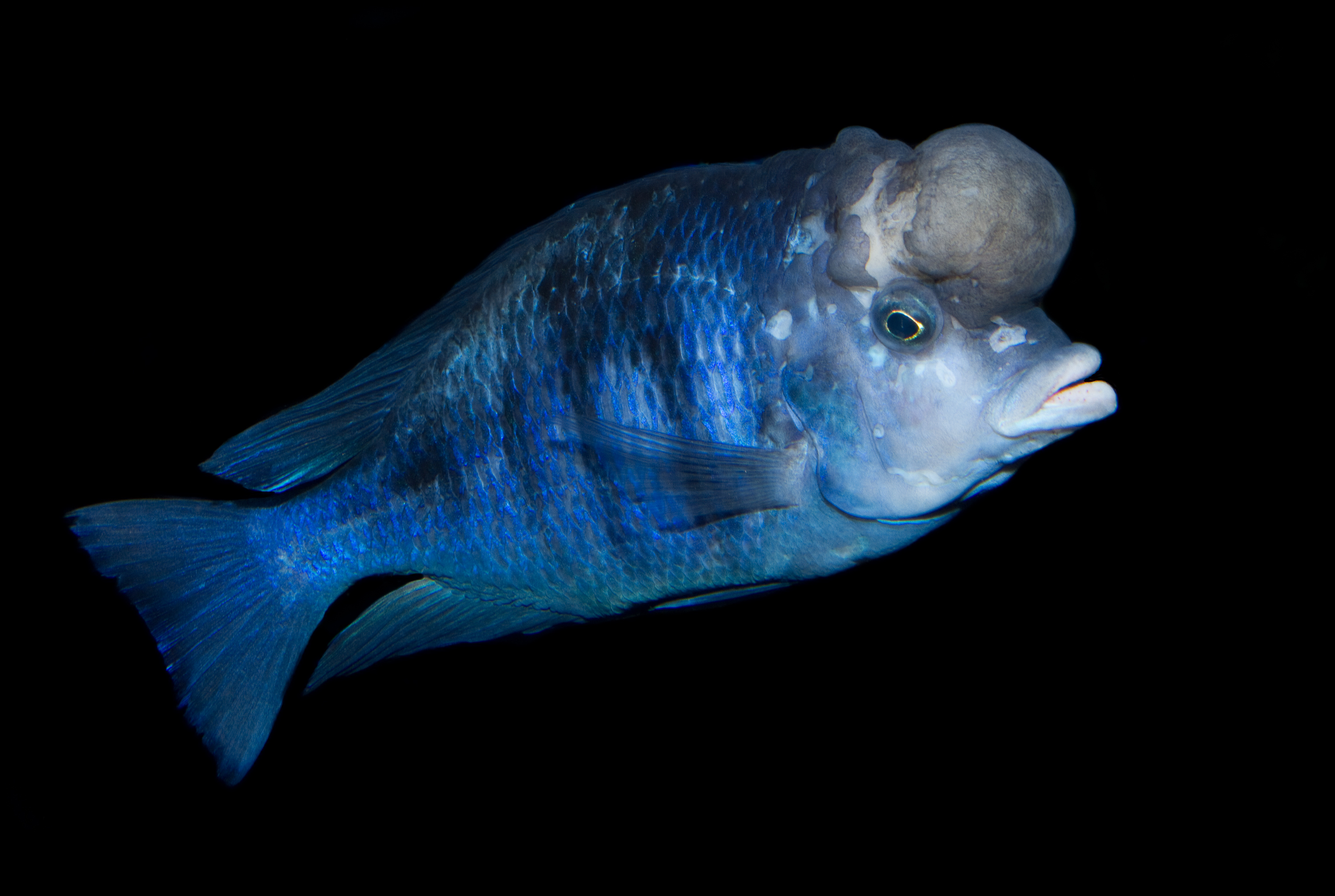
Photo: Brian Gratwicke - Wikimedia Commons, CC BY 2.0
| Parameter | Value |
| Adult size | 8-10 inches |
| Minimum tank size | 90 gallons (6ft x 2ft x 2ft) |
| Substrate | Fine sand (Lake Malawi native habitat) |
| Time to full hump | Up to 3 years |
| Temperament | Peaceful for a Malawi cichlid |
A Hump Both Sexes Share
Most humped cichlids reserve the feature for males, but Blue Dolphin Cichlid breaks that pattern - females develop a nuchal hump too, just less pronounced on average. Sexing a pair by hump alone is unreliable as a result; keepers typically fall back on other cues like overall body size and behavior during breeding rather than the forehead shape.
Slow to Reach Full Size and Color
The dolphin-like profile isn't immediate - juveniles show little to none of the adult hump, full coloration takes 18-24 months to settle in, and the hump itself can take up to 3 years to reach its final, most dramatic size. A young Blue Dolphin Cichlid at point of sale looks like a different, far plainer fish than the adult it will eventually become.
One of the Calmer Malawi Cichlids
Unlike Mbuna, the rock-dwelling Lake Malawi cichlids famous for constant territorial aggression, Cyrtocara moorii is largely non-territorial and comparatively peaceful. This temperament makes it a common choice to mix into a Malawi tank as a buffer presence, though "peaceful for a cichlid" still means it needs suitably large, similarly-sized tank mates rather than small community fish.
Sand Substrate Matches Natural Feeding Behavior
In Lake Malawi, Blue Dolphin Cichlid follows sand-sifting fish to feed on invertebrates stirred up from the lakebed - a foraging style that only works over fine sand, not gravel. Replicating that substrate in the home aquarium isn't just cosmetic; it supports the natural feeding behavior the species evolved around.
Buy Blue Dolphin Cichlid Online
FishyKart stocks Blue Dolphin Cichlid for large Lake Malawi setups.
Shop Blue Dolphin Cichlid