African Cichlids: Mbuna vs Peacock, Tank Setup and Stocking
Published: 2026-10-29 · FishyKart Blog
African cichlids in the hobby are mostly fish from Lakes Malawi and Tanganyika in East Africa. They are among the most colorful freshwater fish, but they need hard, alkaline water (pH around 7.8-8.6), tanks of 55-75 gallons or more, lots of rockwork and careful stocking to keep aggression under control. The three Malawi groups you will meet most are mbuna, peacocks and haps.
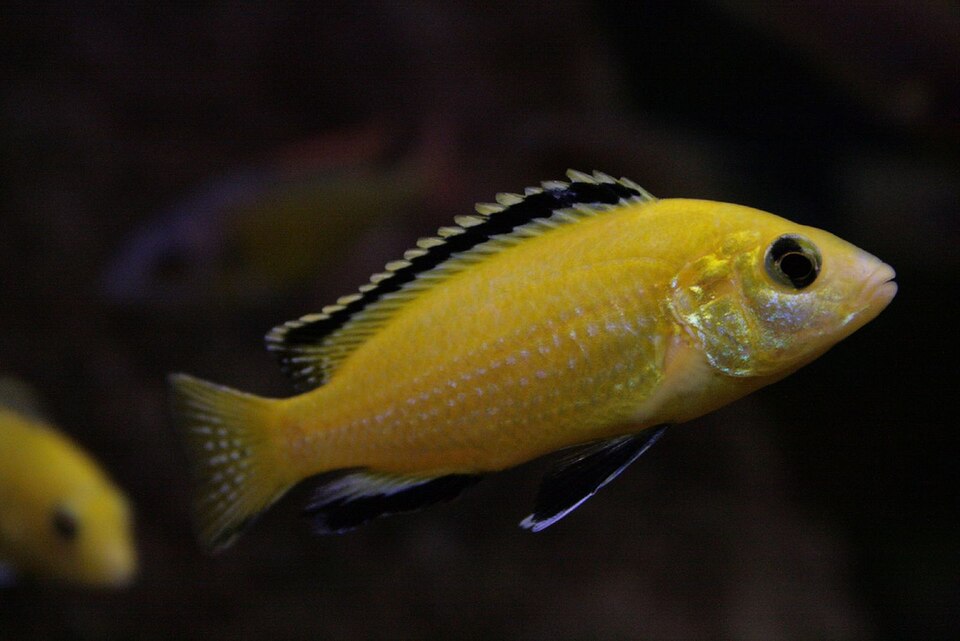
Photo: Jmatz at English Wikipedia - Wikimedia Commons, CC BY-SA 3.0
Mbuna vs Peacock vs Hap
| Group | Habitat / Diet / Temperament |
| Mbuna (yellow lab, Pseudotropheus, demasoni) | Rocks / Algae grazers, plant-based / Very territorial |
| Peacocks (Aulonocara) | Sand near rocks / Small invertebrates, protein / Calmer |
| Haps (Haplochromines) | Open water / Fish and invertebrates / Large, predatory species exist |
| Tanganyika (frontosa, shell dwellers, Tropheus) | Varied / Varies by species / Varies |
Popular African Cichlids
- Yellow lab (Labidochromis caeruleus): bright yellow, one of the gentlest mbuna, about 4 inches.
- Demasoni (Chindongo demasoni): small blue-striped mbuna, very aggressive; keep only in large groups.
- Electric blue johanni and Pseudotropheus species: colorful, active and territorial.
- Peacocks such as OB peacock and sunshine peacock: males show bright colors, 5-6 inches.
- Frontosa (Cyphotilapia frontosa): a large, slow Tanganyika cichlid that needs a very big tank; see our frontosa guide.
Tank Setup
- Size: 55 gallons and 4 feet long minimum for mbuna; 75+ gallons for peacocks and haps; frontosa need far more, around 200+ gallons (8 x 2 feet) for a group.
- Rockwork: stacked rocks with caves break lines of sight and give each fish a territory.
- Substrate: sand or crushed coral, which also helps keep pH high.
- Water: 76-82 F, pH 7.8-8.6, hard water. Avoid soft, acidic water.
- Filtration: strong; aim to turn over the tank volume several times an hour and change 30% weekly.
- Plants: most are dug up or eaten; tough anubias and java fern on rocks have the best chance.
Stocking to Control Aggression
- Male-to-female ratio: 1 male to 3-4 females of the same species spreads aggression.
- Avoid look-alikes: two species with the same color pattern fight more and may hybridize.
- Slight overstocking with strong filtration is a common mbuna method to spread aggression; it only works with frequent water changes.
- Add fish together or rearrange rocks when adding new fish to reset territories.
Feeding
Mbuna need a mostly plant-based diet such as spirulina flakes and pellets; rich protein foods can cause "Malawi bloat". Peacocks and haps take more protein, such as quality pellets and frozen brine shrimp.
Do Not Mix With
Keep African rift lake cichlids away from South American cichlids like angelfish, discus and oscars, and from small community fish. For all cichlid groups see types of cichlids.
See cichlids available now in our cichlids collection.