Cherry Barb - Complete Care Guide
Published: 2026-10-24 · FishyKart Blog
Cherry Barb (Puntius titteya) breaks the stereotype most keepers associate with barbs: where species like Tiger Barb built the family's reputation for boisterous fin-nipping, Cherry Barb doesn't nip fins, doesn't chase tank mates, and doesn't retaliate when pushed around by larger fish - closer in temperament to a mild-mannered tetra than to its own relatives. At 1.5-2 inches, it's also small enough to fit comfortably in a modest community tank.
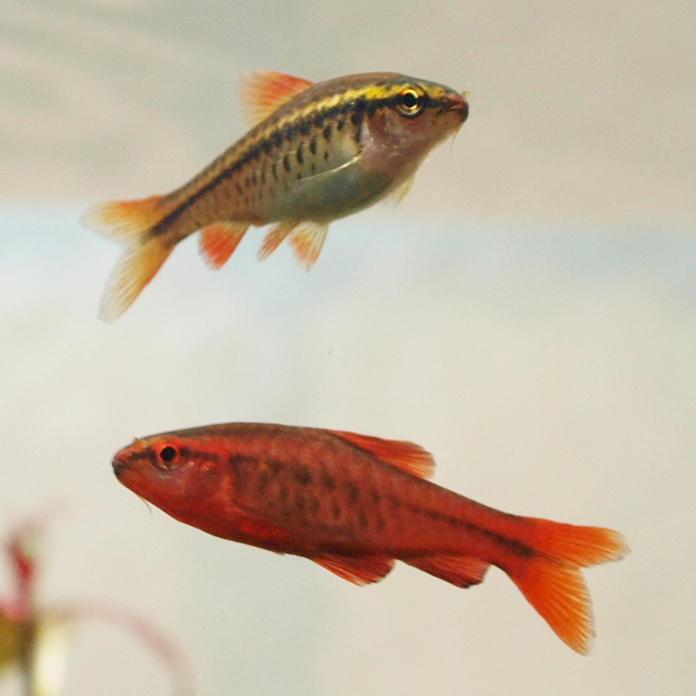
Photo: Akino yuugure - Wikimedia Commons, CC BY-SA 3.0
| Parameter | Value |
| Adult size | 1.5-2 in |
| Minimum tank | 20-30 gallons |
| School size | 6+ |
| Breeding temp | 75-79°F |
| Temperament | Peaceful - non-fin-nipping |
The Peaceful Exception in a Nippy Family
Most barbs earn a cautionary note in community tank guides for fin-nipping and general boisterousness. Cherry Barb is the exception most experienced keepers point to first: it won't nip fins, won't chase slower tank mates, and won't defend itself when bumped by a larger fish - a genuinely different temperament from its own genus, not just a milder version of it.
Telling Males From Females
Cherry Barb sexes are close in size, but color and build differ clearly: males run slim and bright cherry-red, while females are chunkier and a more muted tannish-red. Both carry a black horizontal stripe down the flank, sometimes with individual scales rimmed in black, but the male's saturated red is the fastest way to sex a group at a glance.
Schooling Numbers Shape Behavior and Color
A group of 6 or more Cherry Barbs shows calmer, more natural behavior and better color than a small handful - schooling fish generally settle in and display more confidently once the group size feels secure. 20-30 gallons comfortably houses that school size without crowding.
Breeds Readily With Good Feeding
A well-fed Cherry Barb group will often breed without deliberate intervention - no special triggering needed beyond stable water and consistent food. Keepers aiming to breed on purpose typically move a pair or small group to a dedicated 15-gallon tank at 75-79°F to control the process and protect eggs.