Dwarf Gourami - Complete Care Guide
Published: 2026-10-23 · FishyKart Blog
The Dwarf Gourami (Trichogaster lalius, formerly classified as Colisa lalia) is a small labyrinth fish best known for two contradictory traits: some of the most vivid finnage sold for community tanks, and a mass-bred disease problem - Dwarf Gourami Iridovirus - serious enough that sourcing matters more for this species than almost any other tropical fish. Males top out around 3.5 inches, females closer to 2.4 inches, with a natural lifespan of 4-7 years in disease-free stock.
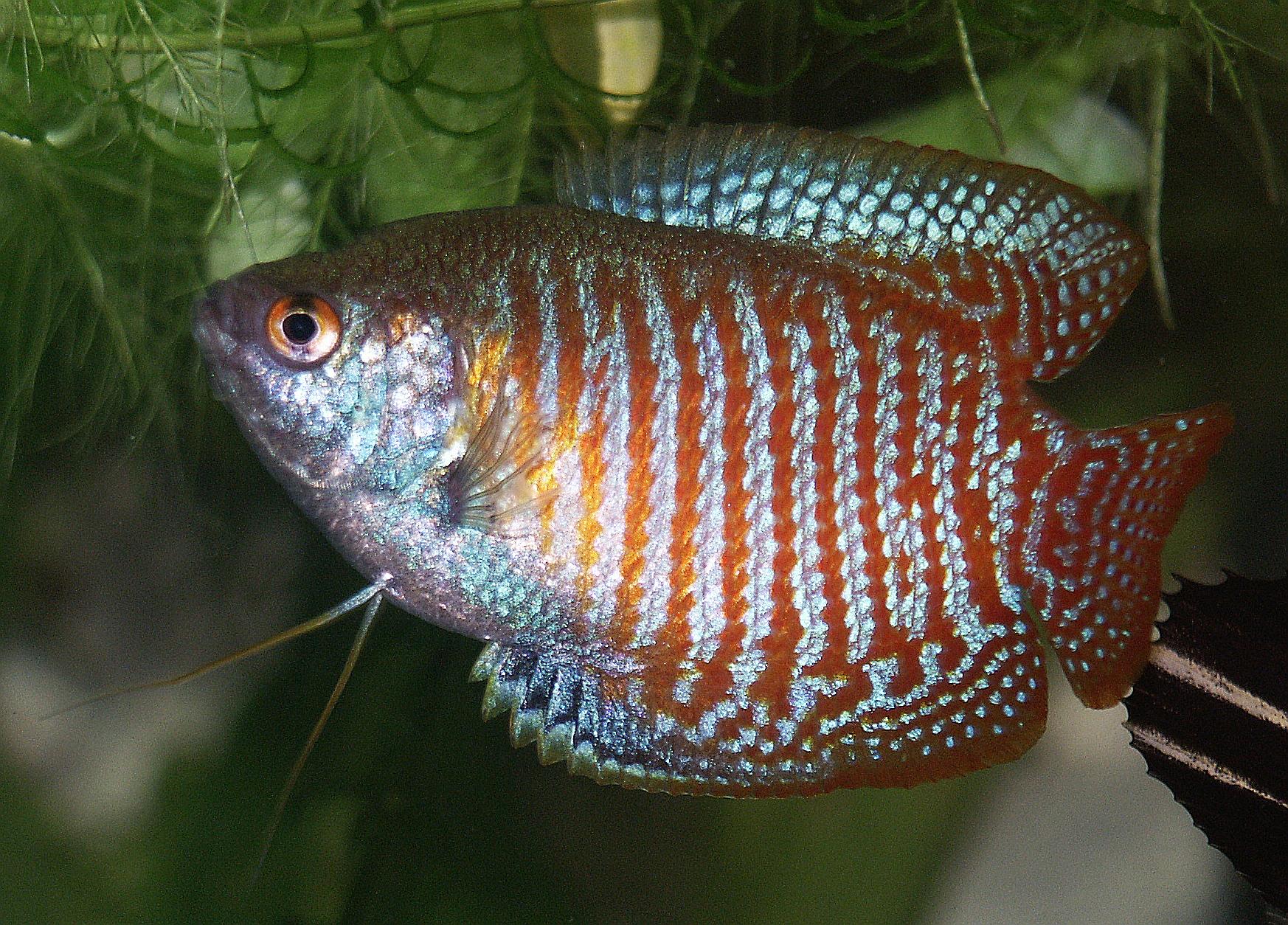
Photo: Quatermass - Wikimedia Commons, Public Domain
| Parameter | Value |
| Adult size | 3.5 in (male), 2.4 in (female) |
| Lifespan | 4-7 years (disease-free) |
| Minimum tank | 20 gallons |
| Water flow | Slow / gentle only |
| Breathing | Labyrinth organ - surface air |
Dwarf Gourami Iridovirus - The Buying Decision That Matters Most
Dwarf Gourami Iridovirus (DGIV) infects an estimated 20-40% of mass-bred Dwarf Gourami stock worldwide, attacking the kidney and spleen with no available cure and a mortality rate that can reach 50% once symptoms appear. Carrier fish frequently look healthy for weeks before a sudden decline, which is why buying from a quarantined, reputable source outweighs almost every other care decision for this species - a perfect tank setup can't rescue a fish that arrived already infected.
Labyrinth Breathing and Surface Access
Trichogaster lalius belongs to the labyrinth fish family, using a specialized organ above the gills to gulp atmospheric air at the water's surface. This lets Dwarf Gourami tolerate lower-oxygen water better than most tropical community fish, but it also means the tank needs open, unobstructed surface access - floating plants are fine in patches, but a surface completely sealed by cover or heavy filter turbulence interferes with the behavior the species depends on.
Color Varieties
Wild-type Trichogaster lalius carries blue-and-red vertical striping, but decades of selective breeding produced solid-color lines sold under separate names: Powder Blue, Neon Blue, Flame Red, and Rainbow. These are breeding varieties of one species, not separate types - the Iridovirus risk applies equally across all of them since it travels with mass-breeding practices, not color genetics.
Tank Setup: Slow Flow and Dense Planting
Dwarf Gourami's long, trailing pelvic fins and deliberate swimming style make it a poor match for strong filter current - fight against flow constantly and the fish stresses, hides, and stops feeding normally. Dense planting along the sides and back of a 20-gallon-plus tank gives it the slow-water pockets it prefers while leaving center swimming space open.
Buy Dwarf Gourami Online
FishyKart sources Dwarf Gourami from screened breeders to keep iridovirus risk low.
Shop Dwarf Gourami