Kissing Gourami - Size, Care, Tank Mates & Price
Published: 2026-04-11 · FishyKart Blog
The Kissing Gourami (Helostoma temminckii), also known as the kissing fish or kisser fish, is a fascinating freshwater species native to Thailand, Malaysia, and Indonesia. Famous for its thick, fleshy lips and the distinctive lip-locking behaviour between individuals, the Kissing Gourami is a labyrinth fish - it breathes atmospheric air using a specialised labyrinth organ in addition to its gills. In the wild it grows up to 30 cm; in aquariums it typically reaches 15-20 cm. It requires a 50-gallon (190-litre) minimum tank, temperature of 22-28°C, and pH 6.0-8.0. Kissing Gourami live 5-7 years in captivity. On FishyKart a Kissing Gourami costs ₹50.
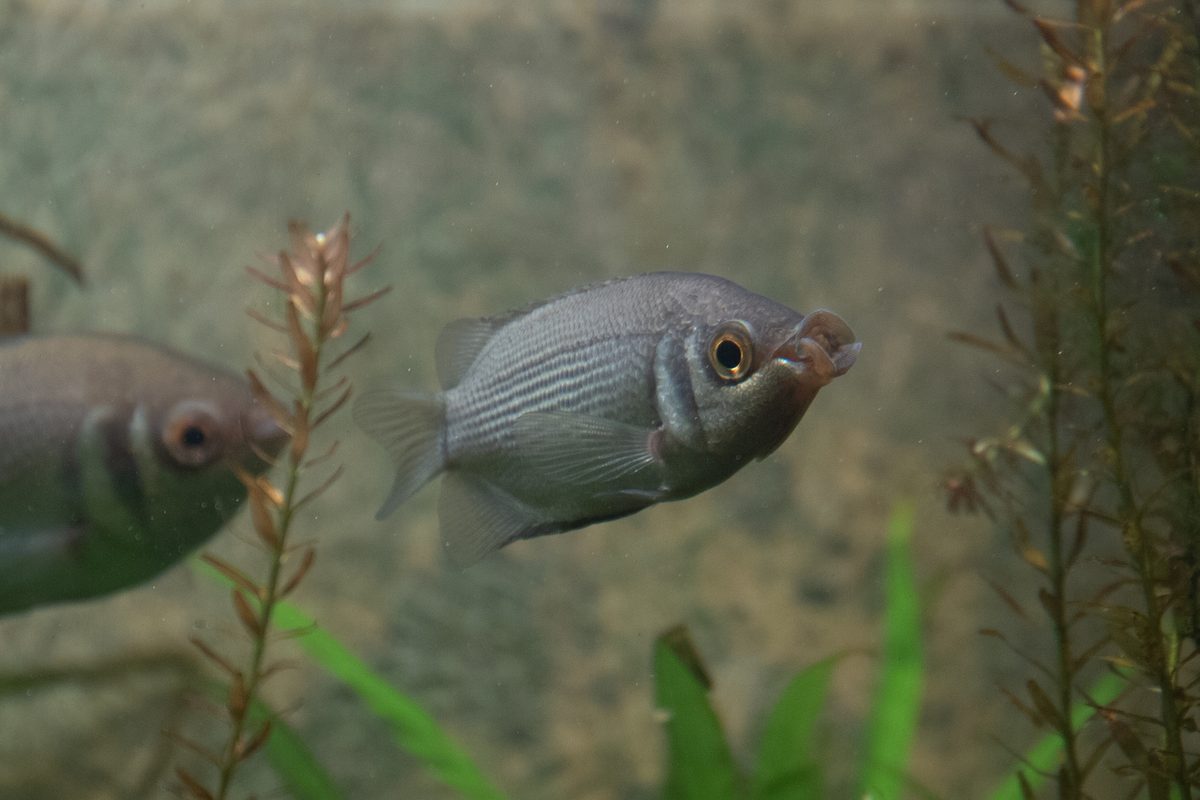
Photo: Lilbitmessy - Wikimedia Commons, CC BY-SA 4.0
Kissing Gourami Price in India
FishyKart lists the Kissing Gourami at ₹50 per fish (juvenile). It is one of the cheapest large-growing fish on the site, and that is exactly the trap: a 5 cm kissing fish grows into a 15-20 cm adult that needs a 190-litre (50-gallon) tank, a lid (it gulps air at the surface) and a strong filter.
| Budget item | What to plan for |
|---|---|
| Kissing Gourami (juvenile) | ₹50 on FishyKart |
| Tank | 190 litres (50 gallons) minimum for one adult; 280+ litres (75 gallons) for two |
| Temperature | 22-28°C (72-82°F); a heater in north Indian winters |
| Food | Spirulina or algae flakes, sinking pellets, blanched vegetables |
For orders see Contact us. Other gouramis and their sizes: types of gourami.
Why Do Kissing Gouramis Kiss?
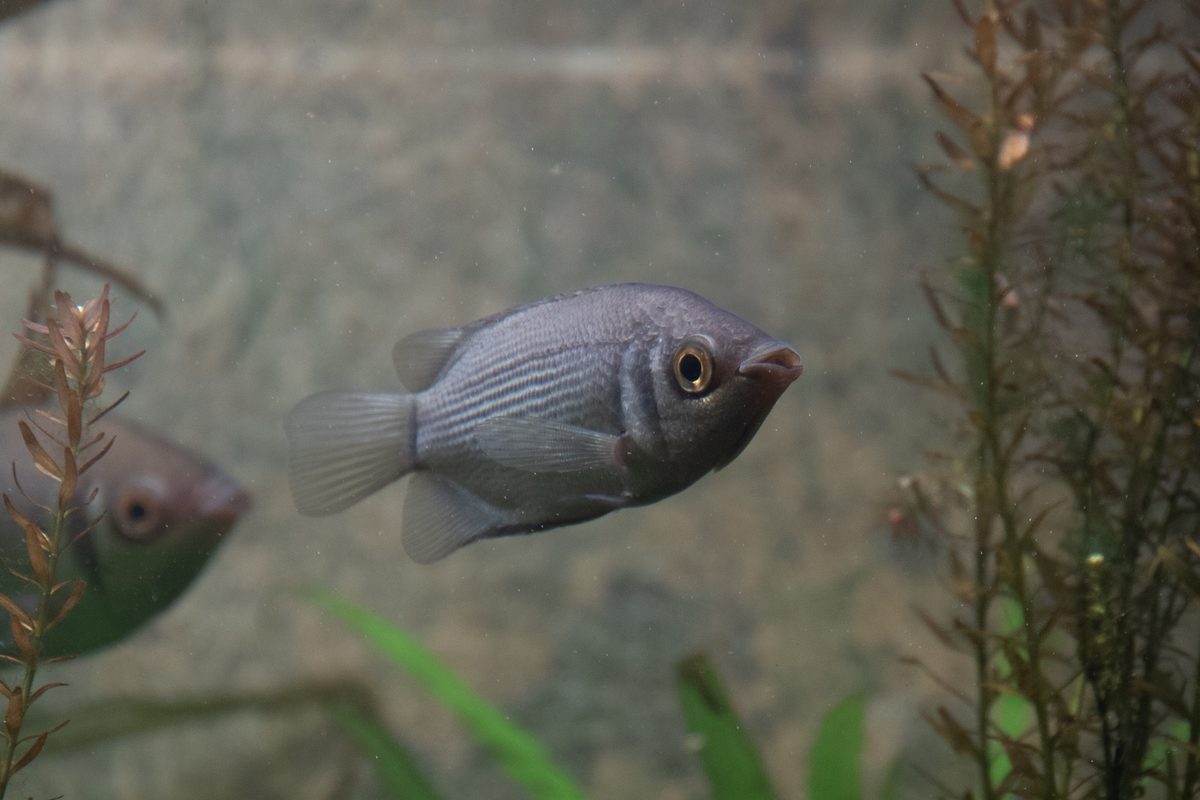
Photo: Lilbitmessy - Wikimedia Commons, CC BY-SA 4.0
Despite its romantic appearance, the famous "kissing" behaviour is not affection - it is a territorial display. When two Kissing Gouramis lock lips, they are engaged in a strength contest, each trying to push the other away to establish dominance over a feeding territory or mating site.
- Who does it? Both males and females perform lip-locking. It is most common between two males competing for territory.
- Is it harmful? Rarely. The thick lips act as a cushion. Most bouts end quickly without injury. In small tanks, however, prolonged sparring can stress subordinate fish.
- When does it happen? Most frequently when two fish are introduced simultaneously into a new tank, or when resources (food, space) are limited.
- Other mouth uses: The specialised lips and fine gill rakers also serve a feeding function - Kissing Gouramis use their mouths to rasp algae from surfaces, filter plankton from the water column, and sift detritus from substrate.
Tank Requirements
- Tank size: Minimum 50 gallons (190 litres) for one adult; 75+ gallons for a pair. These fish grow large and are active swimmers.
- Temperature: 22-28°C (72-82°F) - stable temperature is important; avoid drops below 20°C.
- pH: 6.0-8.0; hardness 5-20 dGH. Tolerant of a wide range - one of the hardier gouramis.
- Filtration: Canister or HOB filter rated for 3-4× tank volume. Kissing Gouramis produce moderate bioload.
- Surface access: As labyrinth fish they must breathe atmospheric air - keep a gap between water surface and tank lid.
- Plants: Robust plants only (Anubias, Java Fern, Vallisneria) - Kissing Gouramis graze on soft plants and will destroy delicate species.
- Water changes: 25-30% weekly. Maintain ammonia at 0 ppm and nitrate below 20 ppm.
Feeding Kissing Gourami
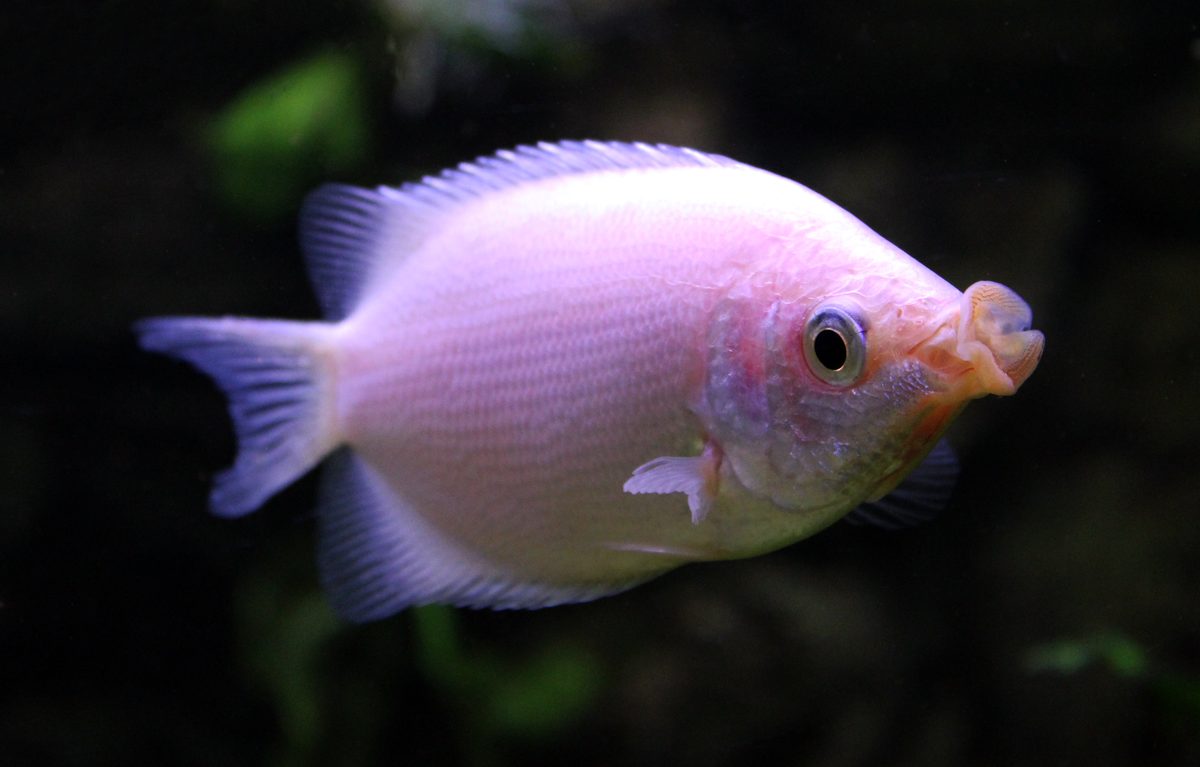
Photo: Green Yoshi - Wikimedia Commons, CC BY-SA 3.0
Kissing Gouramis are omnivores with a strong algae-grazing tendency:
- Pellets / flakes: Tetra Cichlid Sticks, Hikari Cichlid Gold (Medium) - staple diet, feed twice daily
- Algae wafers: Essential - Kissing Gouramis naturally rasp algae and need plant-based food daily
- Blanched vegetables: Zucchini, cucumber, spinach, peas - supplement 3-4× weekly; encourages natural grazing behaviour
- Frozen foods: Bloodworms, brine shrimp, daphnia - 2-3× weekly for protein
- Spirulina flakes: Excellent supplement; enhances colour and provides plant nutrition
Feed twice daily. Allow natural algae to grow on tank back glass and décor - it provides continuous free grazing and mimics their wild diet.
Tank Mates
- Good tank mates: Medium to large peaceful fish - Silver Dollars, larger Barbs (Tinfoil, Spanner), Rainbowfish, large Corydoras, Plecos, peaceful cichlids
- Acceptable with monitoring: Other Gouramis (Pearl, Gold, Blue) of similar or larger size; robust Tetras
- Avoid: Small fish like Neon Tetras or Guppies (may be harassed or eaten), aggressive cichlids like Oscars or Flowerhorns, fin-nippers like Tiger Barbs
- Two Kissing Gouramis together: Generally fine - lip-locking is typically brief and harmless. Provide enough space (75+ gallons) to reduce territorial pressure.
Pink vs Green Kissing Gourami
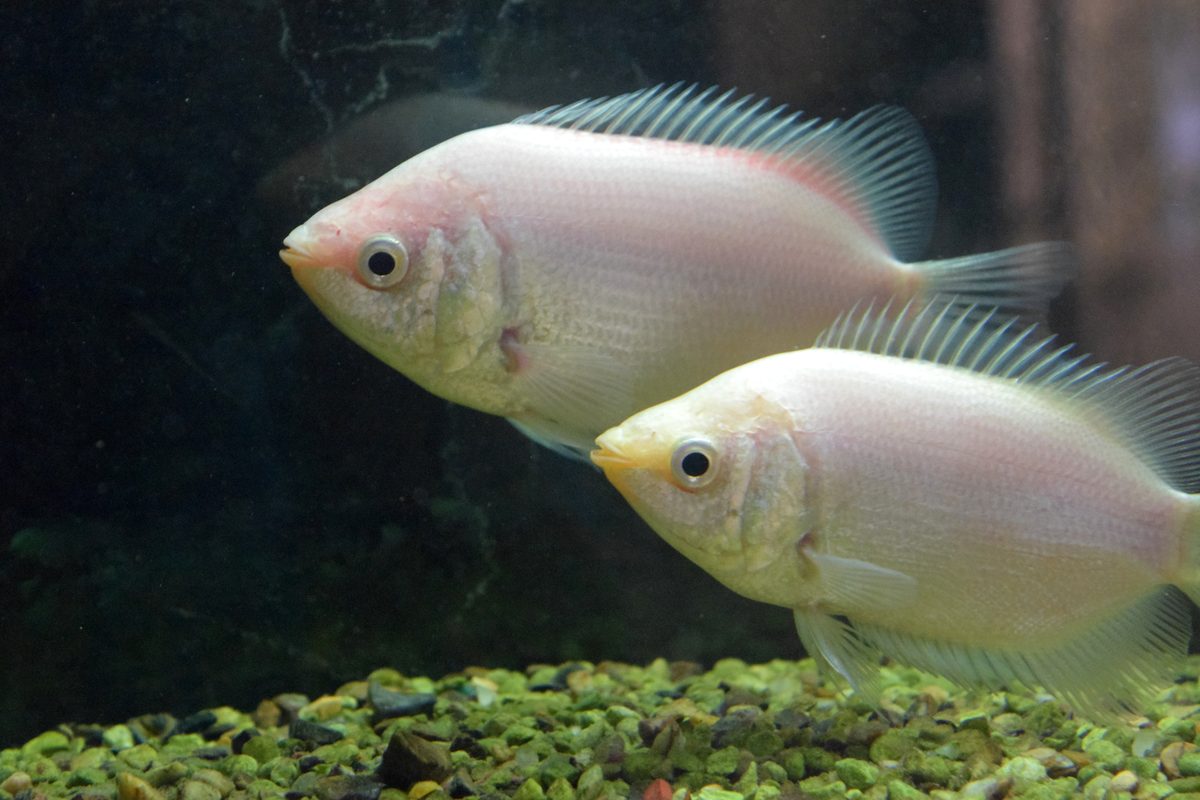
Photo: Aditi Jivani - Wikimedia Commons, CC BY-SA 4.0
There are two colour forms of Helostoma temminckii - both the same species, different appearance:
- Pink Kissing Gourami: Pale pinkish-white body, the most common aquarium form. This is a selectively bred colour variant - the pink colour is due to reduced melanin pigmentation (a form of leucism). Pink fish are slightly less robust than the wild form.
- Green Kissing Gourami: Wild-type colouration - olive-green to grey body with faint horizontal stripes. Less commonly available in India but hardier and larger-growing. The natural form found in Southeast Asian rivers and rice paddies.
- Care difference: Identical care requirements. Green form slightly more disease-resistant; pink form more widely available and visually striking in aquariums.
Why Buy from FishyKart
FishyKart lists the Kissing Gourami at ₹50 per fish. Order and delivery conditions are on the Contact us page.
Buy Kissing Gourami → Browse All Live Fish →