Green Terror and Bichir Compatibility
Published: 2026-11-02 · FishyKart Blog
Can a Green Terror cichlid (Andinoacara rivulatus) share a tank with a bichir (Polypterus)? Usually yes, with conditions. The Green Terror is a territorial South American cichlid whose males reach 10-12 inches (25-30 cm); the Senegal bichir (Polypterus senegalus), the species most often sold in US stores, grows to about 12-14 inches (30-35 cm) in aquariums. Their water needs overlap at 75-81°F (24-27°C) and pH 6.5-7.5. The pairing works in a tank of 125 gallons (470 litres) or more, with both fish of similar size and the bichir fed separately at night. It fails in small tanks, during Green Terror breeding, and when one fish is small enough to fit in the other's mouth.
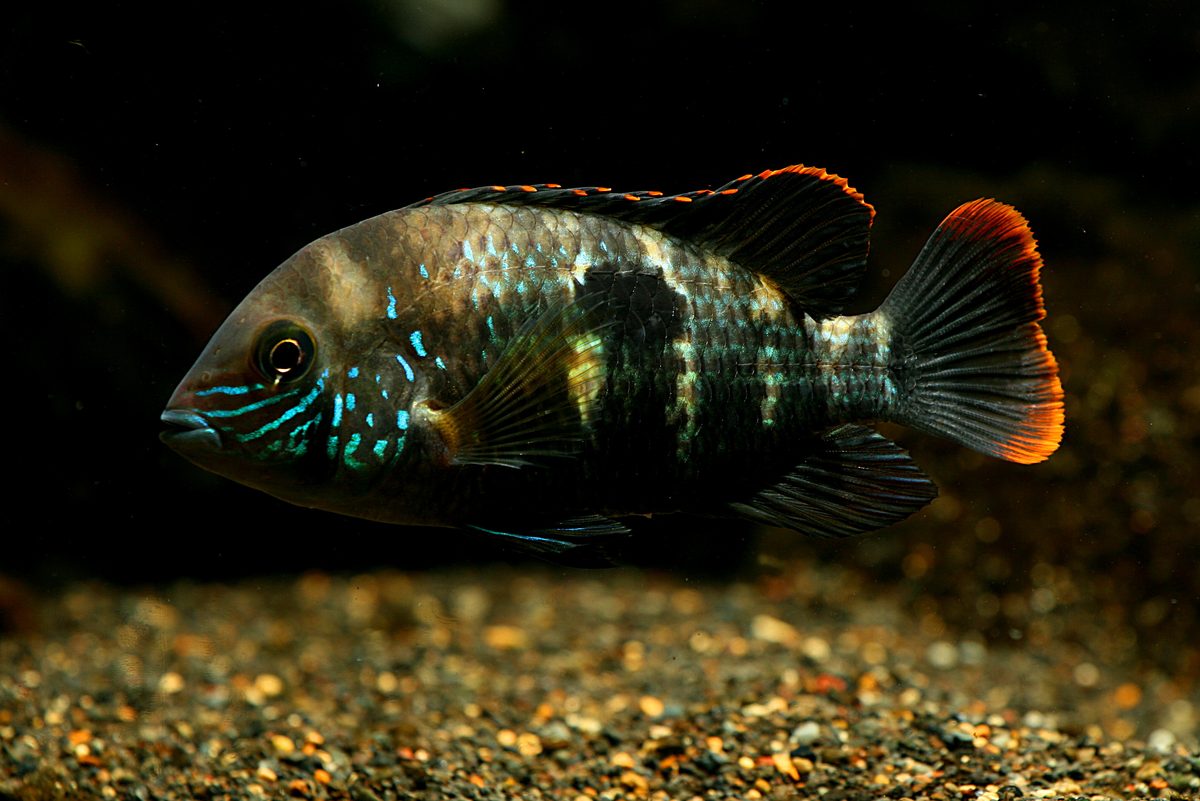
Photo: úlfhams víkingur (Elma). - Wikimedia Commons, CC BY 2.0
Quick Verdict
| Question | Answer |
|---|---|
| Compatible? | Yes, conditionally - a common pairing in large South American cichlid tanks |
| Minimum tank | 125 gallons (470 litres), at least 5 feet (150 cm) long |
| Shared temperature | 75-81°F (24-27°C) |
| Shared pH | 6.5-7.5 |
| Main risk to the bichir | Fin nipping and chasing from a breeding Green Terror; losing food to the faster cichlid |
| Main risk to the Green Terror | A juvenile Green Terror can be swallowed by a large adult bichir |
| Safest bichir choice | Senegal bichir of similar length to the Green Terror |
Why the Pairing Usually Works
The two fish use different parts of the tank. A Green Terror patrols the middle water and claims a territory around rocks or a cave it likes. A bichir is a bottom dweller that rests on the substrate for long periods, moves at dusk and at night, and hunts mostly by smell rather than sight. Because the bichir spends its time low and still, a settled Green Terror often treats it as part of the scenery rather than a rival cichlid.
Both fish are also tough. The bichir is covered in thick, interlocking ganoid scales, and an adult Green Terror is too large and too deep-bodied for a Senegal bichir to swallow. That combination - different zones, armour on one side, size on both - is why Green Terror tank mate lists often include bichirs.
Water Parameters: Where They Overlap
| Parameter | Green Terror | Senegal Bichir | Shared target |
|---|---|---|---|
| Temperature | 75-81°F (24-27°C) | 75-82°F (24-28°C) | 77-79°F (25-26°C) |
| pH | 6.5-7.5 | 6.5-7.5 | 6.8-7.2 |
| Adult length | 8-12 in (20-30 cm) | 12-14 in (30-35 cm) | Introduce at similar size |
| Lifespan | 7-10 years | 15+ years | Plan for the bichir to outlive the cichlid |
Water chemistry is not the problem with this pair. Keep the temperature steady with a heater sized for the tank, keep nitrate below about 20 ppm with weekly 25-30% water changes, and run filtration strong enough for two large, messy carnivores.
Where Conflicts Happen
1. Breeding season
Green Terrors are substrate spawners. A pair digs pits and clears a flat stone on the bottom - exactly where a bichir lives. A guarding Green Terror will bite at anything that drifts near the eggs, and a bichir that wanders over the spawning site at night can lose fin tips or the small dorsal finlets. If your Green Terrors pair off, either move the bichir or give the pair a separate tank until the fry are raised.
2. Feeding
A Green Terror sees food first and eats fast. A bichir finds food by smell, slowly. In a shared tank the cichlid often eats the bichir's share, and the bichir slowly loses condition while looking fine for weeks. Feed sinking carnivore pellets, frozen bloodworms or chopped shrimp after lights out, when the Green Terror is resting, or use a feeding tube to place food near the bichir's cave.
3. Size mismatch
Bichirs eat any fish that fits in their mouth. A 2-inch juvenile Green Terror added to a tank with a 12-inch bichir can disappear overnight. The opposite also happens: a full-grown male Green Terror may bully a small bichir until it stops coming out to feed. Add both at roughly the same length, ideally 4 inches (10 cm) or more.
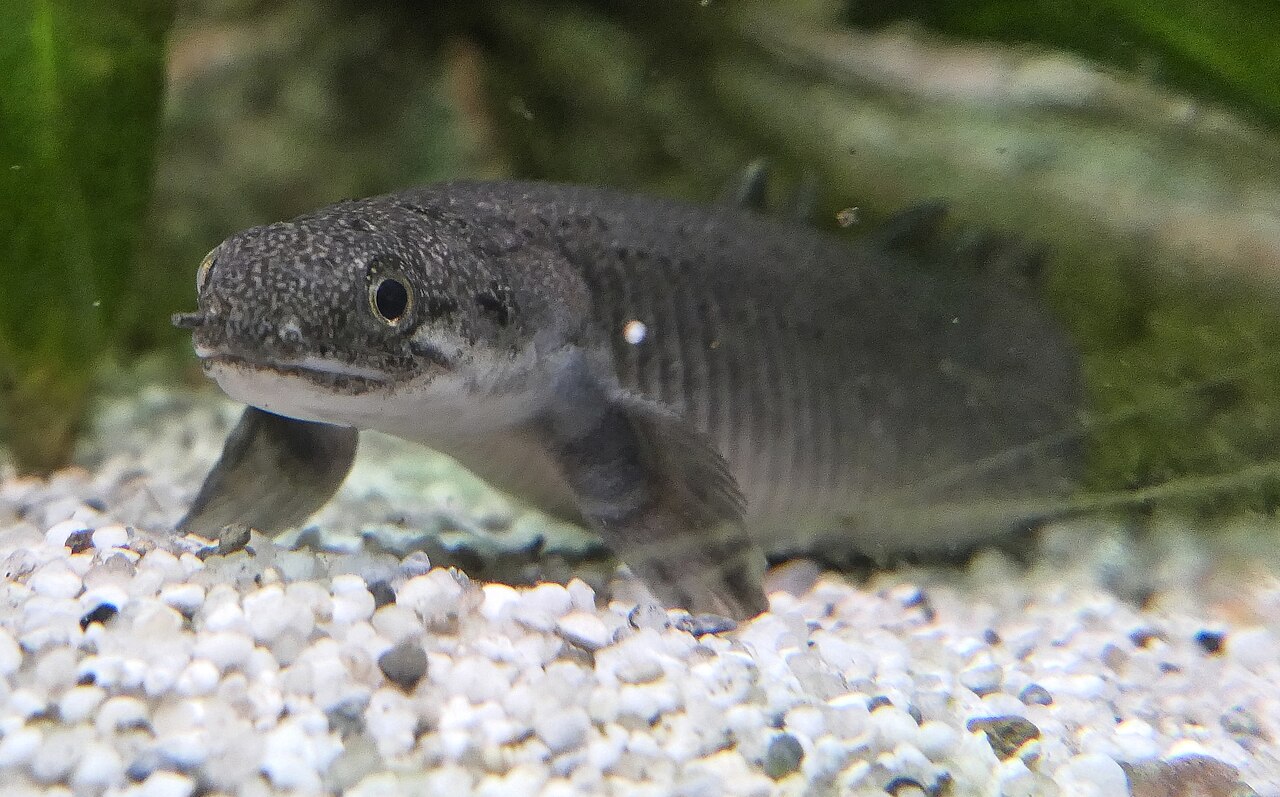
Photo: 5snake5 - Wikimedia Commons, CC0
Setting Up a Tank for Both
- Size: 125 gallons (470 litres) or more. Floor space matters more than height for a bottom-dwelling bichir.
- Lid: tight-fitting, with every gap around cables and filter pipes covered. Bichirs are escape artists, and they still need a small air gap under the lid because they breathe air at the surface.
- Two kinds of cover: rockwork and driftwood that break up the Green Terror's line of sight in the middle of the tank, plus at least one wide cave or PVC pipe at the bottom for the bichir.
- Substrate: smooth sand or fine rounded gravel. Green Terrors dig, and bichirs rest on the bottom, so avoid sharp gravel.
- Lighting: moderate. Dim areas help the bichir come out during the day.
- Filtration: a canister or sump rated for 4-5 times the tank volume per hour.
Which Bichir to Choose
The Senegal bichir is the easiest match: hardy, widely available and close in adult size to a Green Terror. Larger species such as the ornate bichir (Polypterus ornatipinnis) and saddled bichir (Polypterus endlicheri) grow to about 2 feet, which makes them able to eat a Green Terror later on and too big for most home tanks. Small, slim species can be bullied. Match the bichir to the cichlid's adult size, not to its size on the day you buy it.
Signs It Is Not Working
- The bichir stays in its cave and stops taking food for more than a few days.
- Torn fins, missing dorsal finlets or scrapes on the bichir.
- The Green Terror patrols the bottom constantly and chases the bichir out of every hiding place.
- One fish loses weight while the other grows fast.
Any of these means it is time to separate them. A tank divider is a short-term fix; a second tank is the long-term one. Other bottom-dwelling partners that suit a Green Terror include large armoured plecos and, in very big tanks, a ropefish, which needs the same tight lid as a bichir.
Green Terror Cichlid at FishyKart
FishyKart lists young Green Terror cichlids. For the full species profile - size, diet, breeding and male vs female - see the Green Terror care guide.
View Green Terror Cichlid → Browse Cichlids →