Bichir Fish Care: Senegal Bichir and Tank Mates
Published: 2026-10-28 · FishyKart Blog
Bichirs (genus Polypterus) are some of the oldest-looking fish in the hobby: long, armoured, with a row of small dorsal finlets and a pair of primitive lungs that let them gulp air at the surface. The species seen most often in US stores, the Senegal bichir (Polypterus senegalus), usually grows to about 10-12 inches in aquariums (the recorded maximum is near 20 inches), can live well over 15 years, and needs a large tank, ideally around 5 x 2 feet of floor space, with a tight lid, because bichirs are notorious escape artists.
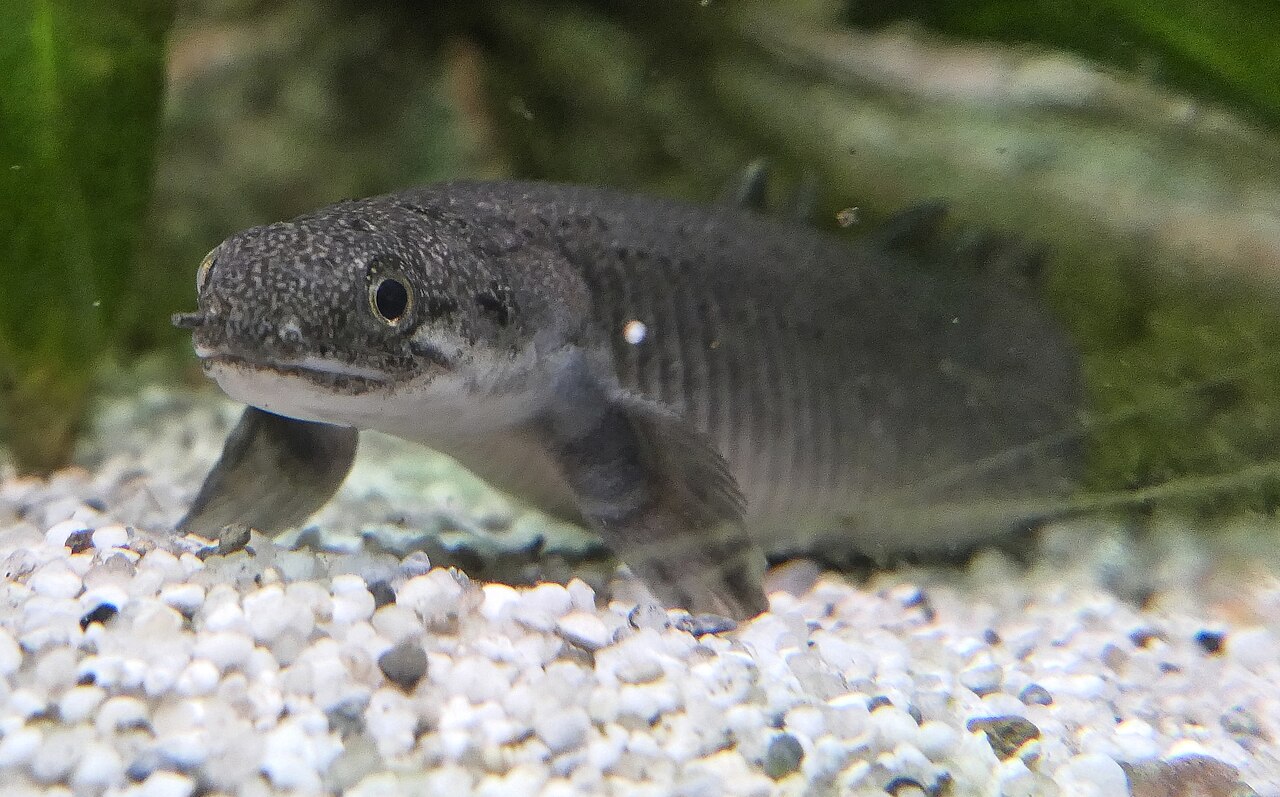
Photo: 5snake5 - Wikimedia Commons, CC0
| Parameter | Value |
| Genus | Polypterus (family Polypteridae) |
| Common species | Senegal bichir, P. senegalus |
| Origin | Rivers and swamps of Africa |
| Adult size | Senegal: usually 10-12 in, max about 20 in; large species 24 in or more |
| Lifespan | 15+ years; over 30 years recorded |
| Temperature | 75-82°F (24-28°C) |
| pH | 6.5-7.8 |
| Minimum tank | About 5 x 2 ft footprint (roughly 140 gallons) for an adult Senegal; larger for big species |
| Diet | Carnivore: pellets, frozen and meaty foods |
Types of Bichir
- Senegal bichir (P. senegalus): the smallest common species, grey or albino, the usual beginner bichir
- Ornate bichir (P. ornatipinnis): striking black-and-white pattern, grows much larger
- Delhezi bichir (P. delhezi): banded, mid-sized
- Saddled bichir (P. endlicheri): heavy-bodied, can exceed 2 feet
Larger species need much bigger tanks, so confirm which species you are buying before taking one home.
Air Breathing and the Lid
Bichirs breathe air through paired lungs as well as gills, and they swim to the surface for a gulp regularly. Leave a small air gap between water and lid, but seal every opening around filters and heaters: bichirs push through surprisingly small gaps, and a fish found on the floor is the most common way bichirs die.
Feeding a Nocturnal Hunter
Bichirs have poor eyesight and hunt by smell, mostly at night. Feed sinking carnivore pellets, frozen bloodworms, shrimp and pieces of fish, ideally after the lights go off so faster tank mates do not steal it. They will eat any fish that fits in their mouth, which in practice is more than you would expect.
Bichirs and Green Terror Cichlids
Many keepers ask whether a bichir can live with a green terror cichlid. It can work in a large tank, because both are tough fish of similar size. The risks: the cichlid may harass the slow, bottom-dwelling bichir, especially when breeding, and a small cichlid could be eaten. Provide caves and plenty of floor space, and watch closely. Our green terror tank mates guide covers the cichlid side.
Other Tank Mates
Good choices are robust fish too large to eat: larger cichlids, clown loaches, large gouramis and catfish. Avoid small fish, shrimp and fin-nippers that pick at the bichir's fins.
Large cichlids and predators are listed in our cichlids collection.