About & Origin
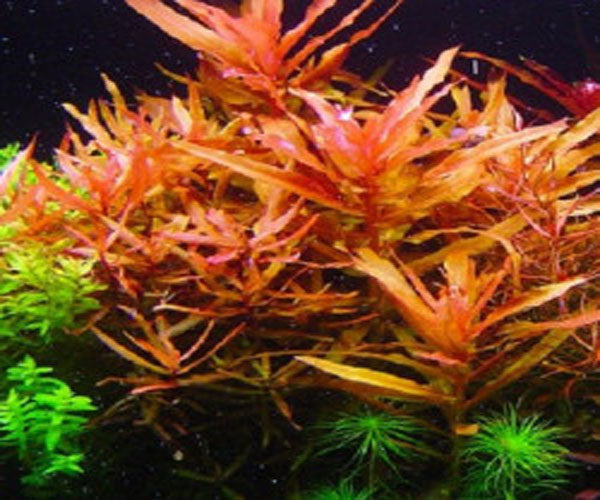
Ammannia senegalensis, sometimes sold as "Copper Leaf," is a stem plant native to West Africa, where it grows emersed and submersed along the muddy margins of slow rivers and seasonal wetlands. It belongs to the loosestrife family (Lythraceae), the same family as several other popular red aquascaping stems.
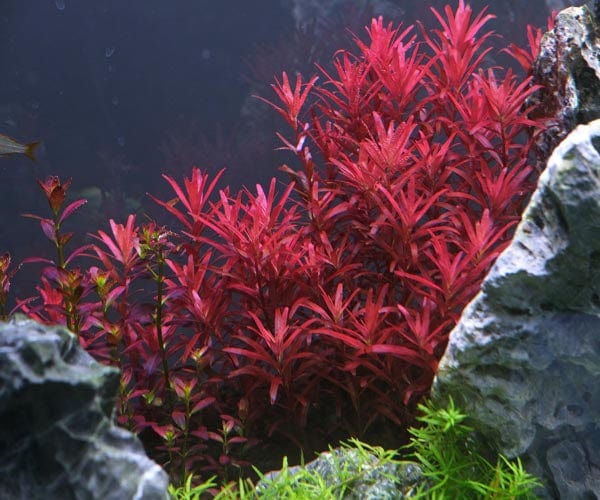
Its leaves are narrow and lance-shaped, arranged in whorls up a slender stem. Under good light the foliage develops the copper-to-deep-red colouring the plant is known for; in lower light or nutrient-poor water it tends to stay a duller green-bronze instead.
It's a moderately fast grower and, like most colour stems, is really grown for the contrast it adds against green foreground and midground plants rather than for size or structure on its own. Grouped in dense stands, its narrow whorled leaves create a fine, almost feathery texture that reads very differently from broader-leaved reds like Alternanthera, giving aquascapers another distinct shape to work with when building depth and contrast into a layout.
The species name honours Senegal, near the western edge of its African range, though related Ammannia species turn up across tropical wetlands more broadly. In the wild these plants are opportunistic colonisers of disturbed, seasonally flooded ground — the kind of muddy, nutrient-rich, sun-exposed margin that regularly dries out and refloods — which likely explains why they're so quick to root from a cutting and so responsive to strong light and rich feeding in an aquarium setting.
The "Hi Red" tag in the trade name isn't a separate botanical variety so much as a grower's promise: it signals a strain that's been selected and raised specifically to colour up intensely under aquarium lighting, as opposed to wild-collected stock that can be more variable in how deeply it reddens. This is a common practice across the red-stem-plant trade, and it's worth keeping in mind that even a "hi red" strain still needs the light and nutrient conditions described below to actually deliver on that promise.
Requirements
Ammannia senegalensis is achievable in a general planted tank, but reaching its full copper-red colour takes a bit more effort than a purely green stem plant.
Light: moderate to high — this is the single biggest factor in colour development. Under weak light it will survive but stay mostly green, with pale or browning leaf tips rather than red.
CO2 and iron: CO2 injection isn't mandatory but noticeably improves stem strength and speeds growth; consistent iron and micronutrient dosing is what really drives the red pigmentation, so a liquid fertiliser routine matters more here than for an undemanding green stem.
Nutrients: benefits from steady dosing and regular water changes rather than letting nutrients swing between feast and famine.
Planting and trimming: plant in the midground to background in small groups; top and replant cuttings regularly to keep the colour concentrated in fresh new growth rather than older, fading stems. As with most stem plants, cut just above a node and the parent stem will branch and bush out from that point, so regular trimming actually thickens the stand over time rather than just controlling height.
Substrate: a nutrient-rich aqua-soil gives noticeably better results than plain gravel or sand, since Ammannia draws a meaningful share of its nutrition through the root system in addition to the water column — root tabs are a reasonable substitute if the whole tank isn't running an active substrate.
Algae risk: because strong light is needed for the red colouring but the plant is only a moderate grower, tanks pushing high light specifically for Ammannia's colour need to stay on top of CO2 and nutrient dosing, or the light/nutrient imbalance can invite algae on slower-growing neighbours.
Compatibility
Water & Care Conditions
Ammannia senegalensis is fairly adaptable, but colours up best and grows most reliably within these ranges:
- pH: 6.5–7.0
- Hardness: moderate, roughly 4–12 dGH
- Light: moderate to high (around 0.5–1 watt/litre equivalent) for good colour; lower light gives green rather than copper-red foliage
- Temperature: 22–28°C (72–82°F)
- Nutrients: regular iron and micronutrient dosing, with weekly water changes to keep nutrient levels stable
Outside these ranges the plant typically doesn't die so much as lose its colour — leaves stay green, growth slows, and older leaves may brown at the edges. A sudden drop in light intensity or nutrient dosing (for example after a big water change without re-dosing fertiliser) can also cause a temporary colour fade even within otherwise acceptable parameters, so consistency matters as much as hitting any single number.
Potassium and phosphate levels are worth watching alongside iron: a shortage of either can leave the plant looking stunted or blotchy even when nitrogen and iron dosing are otherwise generous, since red-leaved stems in general tend to be a bit more nutrient-sensitive than their green counterparts.
Weekly partial water changes (roughly 20-30%) paired with a consistent fertiliser schedule keep the swings in nutrient availability small, which matters more for colour stability here than for a plain green plant that doesn't depend on nutrient levels for its appearance. A drop checker or regular CO2 monitoring is a worthwhile add-on in tanks running injected CO2 for this plant, since inconsistent CO2 is one of the more common hidden causes of a red stem plant plateauing at a dull bronze instead of reaching a true copper-red.
It's not a fussy plant about temperature swings within the range above, but avoid pairing it with fish or invertebrates that need noticeably cooler water, since the light and warmth that bring out its best colour are also on the warmer, brighter end of what a general community tank runs.