About & Origin
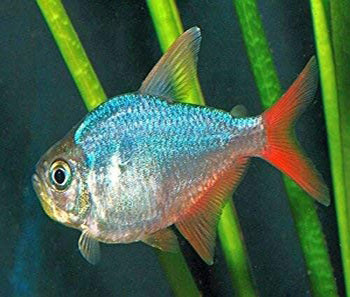
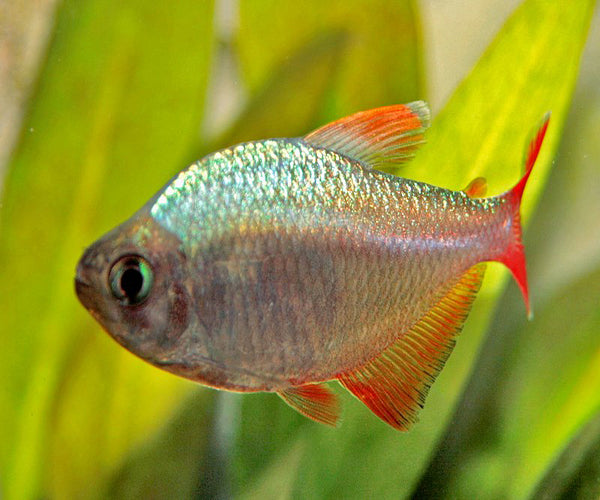
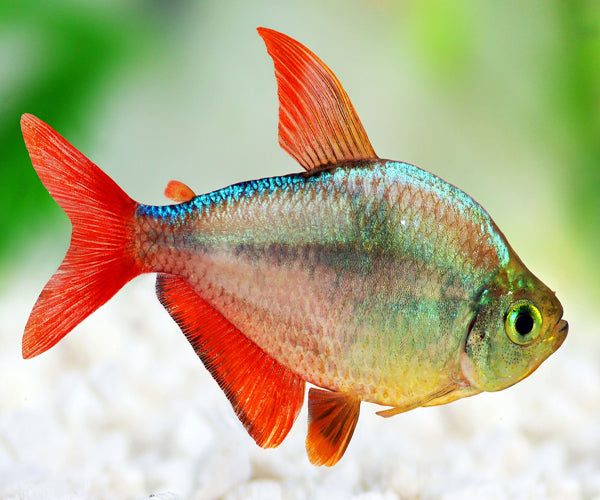
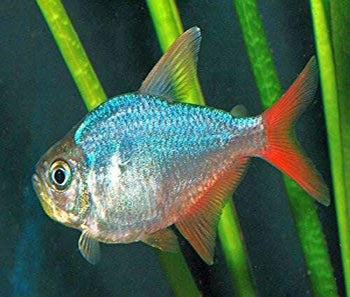
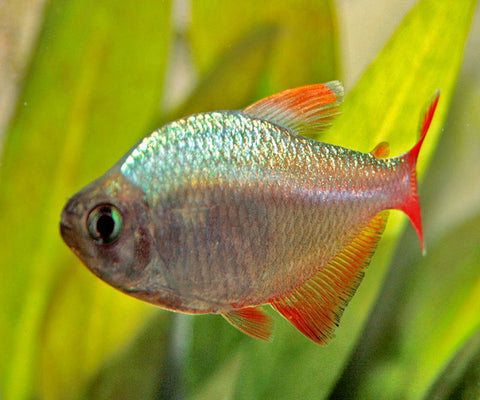
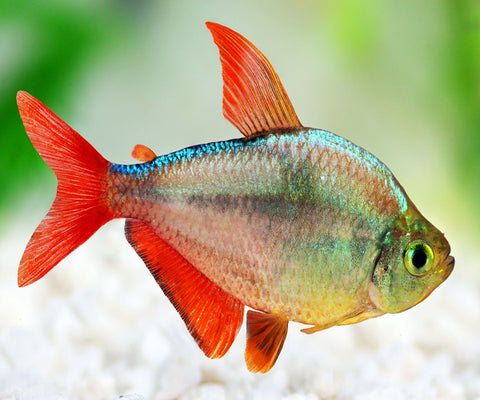
The Colombian Tetra (Hyphessobrycon columbianus) is a large, robust tetra native to the Río Acandí and Río Atrato basins of Colombia, South America. It's a larger, more robust tetra than most community staples — reaching around 6 cm — with a silvery-pink body and striking red fins edged in black.
Its larger size and bolder colouration make it a popular centrepiece shoaling fish for medium to large community tanks, standing out more than the smaller nano tetras while still being a genuinely peaceful schooling species.
It has become a well-established aquarium fish over the past few decades, valued for combining hardiness with strong colour.
This is the same species as the "Columbian Asian Tetra" listed elsewhere on the site — Hyphessobrycon columbianus — native to the Atrato River basin of Colombia, South America, despite naming variations across different product listings.
It's a deep-bodied, robust tetra with silvery flanks washed in pink to red, particularly on the fins, and is one of the larger, hardier members of the tetra family commonly available in the trade.
In its native range it inhabits clear to lightly tannin-stained forest streams, foraging opportunistically on small invertebrates and plant matter.
Hyphessobrycon columbianus is native to fast-flowing tributary streams in Colombia, where it shoals in open water over gravel and rock substrate rather than the leaf-litter-heavy blackwater favoured by many of its Amazonian relatives. Its rosy-red body colour intensifies with age, good diet, and confident, settled surroundings, making mature specimens noticeably more vivid than young stock fresh from a shop tank.
In the aquarium trade it's sometimes confused with the visually similar Columbian Tetra listed under other names, but all refer to the same species and share identical care needs.
Requirements
Being larger than most tetras, the Colombian Tetra needs a correspondingly larger tank and should still be kept in a shoal of 6 or more for security and natural behaviour.
It's generally peaceful, but its size means very small or fry-stage fish could be seen as food, and its fins can occasionally draw the attention of nippier tankmates, so it pairs best with other medium-sized, robust community fish rather than tiny nano species.
An easy eater — takes flake, pellets, and live or frozen foods without issue.
Larger than most popular tetras at up to 6-7cm, so it benefits from more swimming space than a nano-tetra setup and does best kept in a shoal of 6 or more.
An active, confident midwater swimmer that's generally peaceful with similarly sized community fish, but can be too boisterous for very small, timid nano species.
Unfussy eater — flake and pellet as a staple, with frozen/live foods for conditioning and enhanced colour.
A tank of at least 80-100 litres suits its larger adult size better than a small nano tank.
As one of the larger, more active tetra species commonly sold, it benefits from a tank at least 80cm long to give a shoal of six or more room to establish a natural swimming pattern; cramped conditions tend to produce a duller, more skittish group that never displays full colour.
It does well in a mixed South American community alongside similarly sized, moderately active tankmates, and its larger size means it can hold its own better than small nano fish in a livelier community setup.
Regular partial water changes and stable filtration matter more to its long-term health and colour than any single decor choice, and it settles well into most peacefully stocked South American-style community setups.
Compatibility


Water & Care Conditions
Hardy and adaptable within a fairly typical tropical community range:
- pH: 6.0–7.5
- Salinity / hardness: freshwater only, soft to moderately hard water
- Temperature: 22–27°C (72–81°F)
- Light: moderate; not especially light-sensitive
- Oxygenation: standard filtration and flow are sufficient for this hardy species
- Colour development: a varied, high-quality diet including some live or frozen foods noticeably deepens the red body colour over weeks of good care
- Water flow: benefits from moderate current and good oxygenation reflecting its native fast-flowing habitat
- Diet: a varied diet of flake, pellets, and occasional live/frozen foods supports good colour and condition
- Longevity: can live 5+ years given stable water quality and a varied diet
- Tank position: an active mid-water swimmer that benefits from a longer tank footprint over a tall, narrow one
- Filtration: a well-maintained filter rated for the tank size supports this active species' higher bioload
- Substrate: a dark substrate helps show off its rosy colouring, though it is not particular about substrate type
Fairly adaptable for a South American tetra, though it colours up best and stays healthiest long-term in the soft, mildly acidic water typical of its native forest streams.
Regular partial water changes and stable filtration matter more to this species' condition and colour than chasing an exact pH number.
Weekly partial water changes of 20-30% help keep this species colourful and active, since like most small characins and rasboras it's sensitive to accumulating nitrates and organic waste over time even though it isn't considered a delicate species.
A mature, cycled tank with established biological filtration is a much safer home for a new shoal than a freshly set-up system, since ammonia and nitrite spikes during cycling are a common cause of losses in small schooling fish.