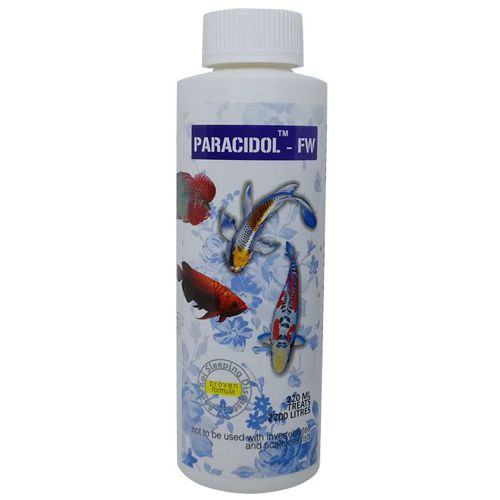
About & Origin
Paracidol is a copper-based, broad-spectrum external parasiticide made for freshwater aquariums. It's built around Cuprazine, a copper compound that has long been one of the most reliable tools against free-swimming external parasites and the visible symptoms they cause.
It's used to treat white spot / Ich (Ichthyophthirius multifiliis), anchor worm (Lernaea), fish lice (Argulus), gill flukes, costia, and the cloudy-eye that often accompanies these infections. These are among the most common parasite problems new fish bring in from a crowded shop tank or an under-quarantined shipment, so a copper-based external treatment like this is a staple in most serious fishkeepers' medicine cabinets.
Because it works by disrupting the parasite directly in the water column and on the fish's skin/gills, it treats the whole tank at once rather than a single fish — which matters, since by the time one fish shows visible spots, the free-swimming stage of the parasite is usually already present throughout the tank.
It's worth understanding why copper-based treatments in particular remain popular despite needing careful dosing: copper is one of the few compounds effective against the free-swimming stage of Ich and similar parasites, which is the stage a fish's immune system has the hardest time fighting off on its own. Newer, gentler alternatives exist, but a correctly-dosed copper treatment remains one of the most reliable options for a serious external parasite outbreak.
Left untreated, an external parasite outbreak rarely stays contained to the fish that first showed symptoms. Ich in particular has a free-swimming stage built specifically to spread between hosts, so a single fish with a handful of white spots today can mean the whole tank is carrying the parasite within a few days, even if no other fish shows visible signs yet. Fish under stress from cramped shipping, a sudden temperature swing, or poor water quality are especially vulnerable, which is why an outbreak often follows shortly after adding new stock. Catching it early — at the first fish showing spots, clamped fins, or flicking against decor — and treating the whole tank rather than waiting to see if it spreads gives the best odds of clearing it without losses.
Requirements
Copper treatments are effective specifically because copper is toxic to the parasite — which also means it demands careful, correct dosing rather than a rough guess.
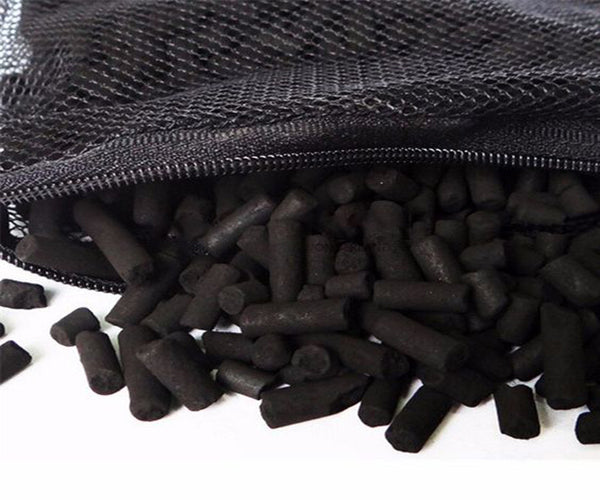
Before dosing: remove activated carbon and zeolite media from your filter, since both actively strip copper (and most medications) straight back out of the water, silently undoing the treatment.
Course of treatment: parasiticides like this are typically dosed on a schedule (commonly day 1, 2, 3, then again on day 5 and 7) rather than as a single dose, to catch the parasite's full life cycle rather than just the stage present on day one.
Not for everything in the tank: this product is not safe for invertebrates (shrimp, snails) or scaleless fish (most loaches, some catfish) — copper is genuinely toxic to them at doses that are perfectly fine for scaled fish. If you keep shrimp or scaleless species, treat in a separate hospital tank instead of dosing the display.
Re-add carbon filtration about 7–10 days after the last dose to help pull any remaining copper back out of the water once the treatment course is finished.
Test kits help: if you treat with copper regularly, a copper test kit lets you confirm the dose is in the effective-but-safe range rather than relying purely on the bottle's measuring cap, since copper's effective range and its toxic range aren't drastically far apart.
A warmer tank speeds recovery: many keepers pair a copper treatment with a gradual temperature increase (typically up to around 28–30°C for species that tolerate it), since Ich's life cycle runs faster at higher temperatures — meaning the parasite passes through its vulnerable free-swimming stage, where the medication can actually reach it, sooner rather than lingering encysted on the fish. Raise temperature slowly, and only for species that can handle the warmer water without added stress.
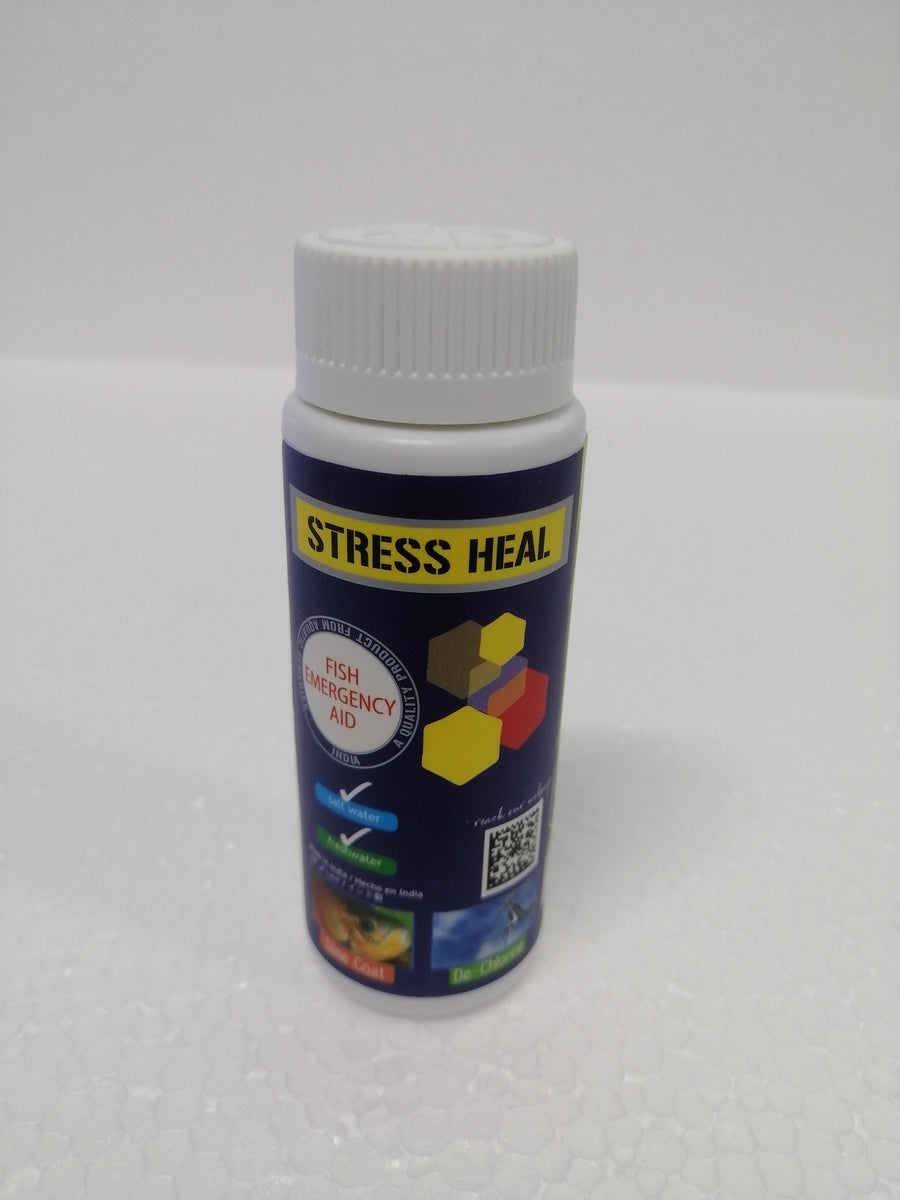
Watch the fish, not just the calendar: during treatment, keep an eye on appetite, breathing rate, and general behavior. Some stress during a course of medication is expected, but a fish that stops eating entirely or shows laboured breathing may need the dose reduced, a partial water change to dilute the medication, or a call to move it out of the treatment tank altogether.
Compatibility

Dosage & Usage Guidelines
Follow the dosing schedule on the bottle rather than a single one-off dose — copper-based treatments are designed to be applied across several days to catch the parasite at every stage of its life cycle.
- Filtration: remove carbon/zeolite media before dosing; it will otherwise absorb the medication
- Safe for: most scaled freshwater fish
- Not safe for: shrimp, snails, and other invertebrates; most scaleless fish (loaches, some catfish) — treat these separately
- Storage: keep tightly sealed, out of direct sunlight, at room temperature
- After treatment: re-introduce carbon filtration roughly 7–10 days after the final dose
- Copper test kits are a useful (optional) way to confirm dosing accuracy if treating regularly
- One of the more reliable options against the free-swimming stage of Ich specifically
- Optional warm-up: a gradual rise toward 28–30°C (species permitting) can shorten the parasite's life cycle and speed up how quickly the treatment clears an outbreak
- Monitor daily: check appetite and breathing each day of the course; reduce the dose or move a struggling fish to clean water if it seems overly stressed
- Don't stop early: finish the full course even once visible spots disappear, since the parasite's life cycle includes stages that aren't visible on the fish
If in doubt about a mixed tank containing shrimp or scaleless fish, isolate the affected fish into a separate quarantine tank for treatment rather than dosing the whole display.
Because copper accumulates in substrate and decor over repeated treatments, avoid dosing far more often than actually needed, and consider a copper test kit if you find yourself treating regularly. Keep the bottle away from children and pets, and always shake or stir before measuring a dose, since the active ingredient can settle over time.