5 Gallon Tank Dimensions: Size, Weight and Real Volume
Published: 2026-11-10 · FishyKart Blog
A standard 5 gallon tank is about 16 inches long, 8 inches deep and 10 inches tall. The common rectangular glass tank sold in this size is the 5.5 gallon: Aqueon lists it at 16 3/16 x 8 3/8 x 10 1/2 inches (41.1 x 21.3 x 26.7 cm) outside, 7 lb empty and about 62 lb filled. With gravel in, it holds only about 4.4 gallons of water, which matters for what you can keep in it.
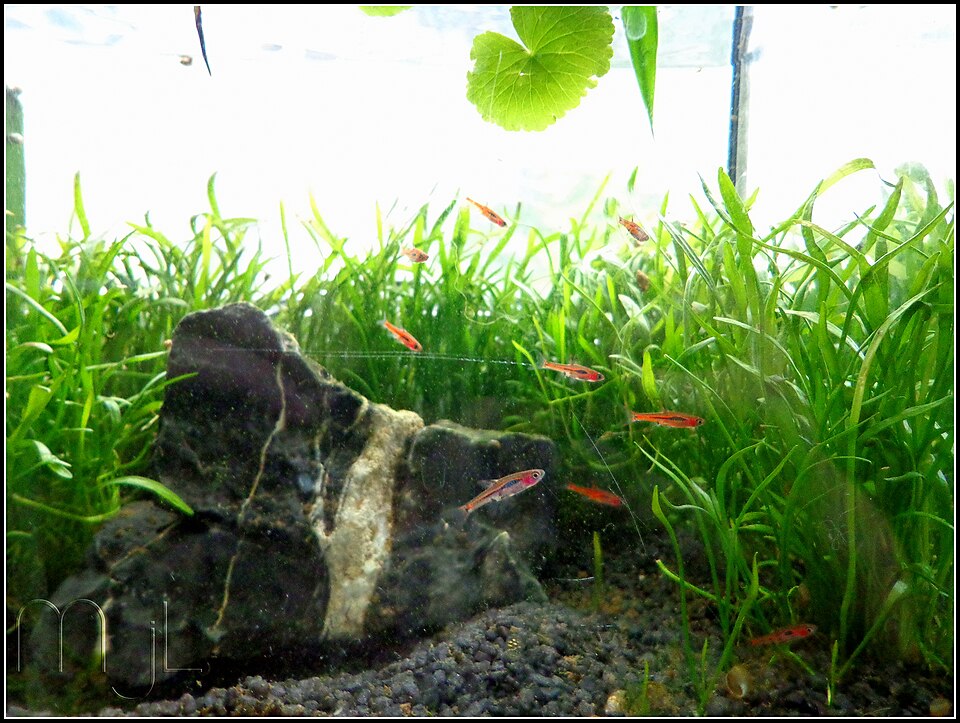
Photo: VivienneHarper - Wikimedia Commons, CC BY-SA 3.0
5 Gallon Tank Specs
| Measure | Standard 5.5 gallon (Aqueon) |
|---|---|
| Length | 16 3/16 in (41.1 cm) |
| Width (front to back) | 8 3/8 in (21.3 cm) |
| Height | 10 1/2 in (26.7 cm) |
| Footprint | 136 sq in (0.94 sq ft) |
| Empty weight | 7 lb (3.2 kg) |
| Filled weight | About 62 lb (28 kg) |
| Nominal volume | 5.5 US gallons = 20.8 liters = 4.6 UK gallons |
Source: Aqueon product catalog, "Critical dimensions for all aquariums", checked November 2026: aqueon.com. Metric values, footprint and UK gallons calculated by FishyKart. Other brands and all-in-one kits differ.
Real Water Volume
The outside dimensions multiply out to 6.2 gallons gross because they include the glass and frame. A small tank loses a bigger share to gravel: with a 2 inch bed and the water 1 inch below the rim, a 5.5 gallon holds about 4.4 gallons (16.7 liters) of water. Dose conditioner and medication for that amount; a 25% water change is just over 1 gallon. To check your own setup, use the aquarium volume calculator.
That small volume is the main thing to understand about a 5 gallon. Temperature and water quality change much faster than in a bigger tank, so a heater with a thermostat, a gentle filter and regular small water changes are not optional.
Weight and Where to Put It
At about 8.3 lb per gallon (derived from the USGS water density table), 5.5 gallons of water weigh about 46 lb. Aqueon puts the filled tank, with gravel and decor, at 62 lb. A sturdy desk, dresser or shelf can usually take that, but check that the surface is level and flat across the whole base, and keep the tank out of direct sun and away from heaters and air vents, which swing the temperature of small tanks quickly.
5 Gallon vs 2.5 and 10 Gallon
| Tank | L x W x H (inches) | Footprint | Empty / filled |
|---|---|---|---|
| 2.5 gallon mini | 12 3/16 x 6 1/8 x 8 1/8 | 0.52 sq ft | 2.6 / 27 lb |
| 5.5 gallon | 16 3/16 x 8 3/8 x 10 1/2 | 0.94 sq ft | 7 / 62 lb |
| 5 gallon mini bow | 14 3/4 x 9 1/2 x 15 1/8 | bow front | 5 / 55 lb |
| 10 gallon | 20 1/4 x 10 1/2 x 12 9/16 | 1.48 sq ft | 11 / 111 lb |
Dimensions and weights: Aqueon "Critical dimensions" table. Footprints calculated by FishyKart.
- 5 vs 2.5: the 5.5 has almost twice the floor area and about twice the water. A 2.5 gallon is too small for most fish; it suits shrimp or plants.
- Rectangle vs mini bow: the 5 gallon mini bow is narrower in length but taller (15 1/8 inches), with a curved front. It looks good on a desk but gives less swimming length and bottom area than the rectangular 5.5.
- 5 vs 10: the 10 gallon is about 4 inches longer, 2 inches deeper and 2 inches taller, with 57% more floor area and twice the water. For a beginner it is the more forgiving tank.
What Fits in a 5 Gallon
Very little, honestly. As our best fish for a 5 gallon tank guide explains, the classic choice is a single betta in a heated, filtered tank, or one dwarf pea puffer, plus snails or shrimp. Schooling fish need a group, and even the smallest species are a tight fit. Goldfish do not belong in a 5 gallon at all: they grow large and quickly pollute small volumes. If you want a community of small fish, start with a 10 gallon instead.
Before You Buy a 5
- Budget for a small adjustable heater and a gentle filter: in under 5 gallons of water, temperature swings and ammonia build up fast.
- Use a thin gravel or sand bed (1 to 2 inches) to keep as much water as possible.
- A glass lid reduces evaporation, which is a big share of the water in a small tank, and keeps jumpers like bettas in.
- Kits sold as "5 gallon" vary in shape: measure your shelf and check the listed dimensions, not just the gallon number.