Betta Bubble Nest: What It Means and What to Do With It
Published: 2026-11-15 · FishyKart Blog
A betta bubble nest is a floating raft of small, saliva-coated air bubbles that a male Betta splendens builds at the water surface to hold eggs. It is a breeding instinct, not a mood signal: a mature male builds it whether or not he has ever seen a female, and in a tank without a female the nest simply stays empty. You do not need to protect it, remove it or breed your fish because of it.
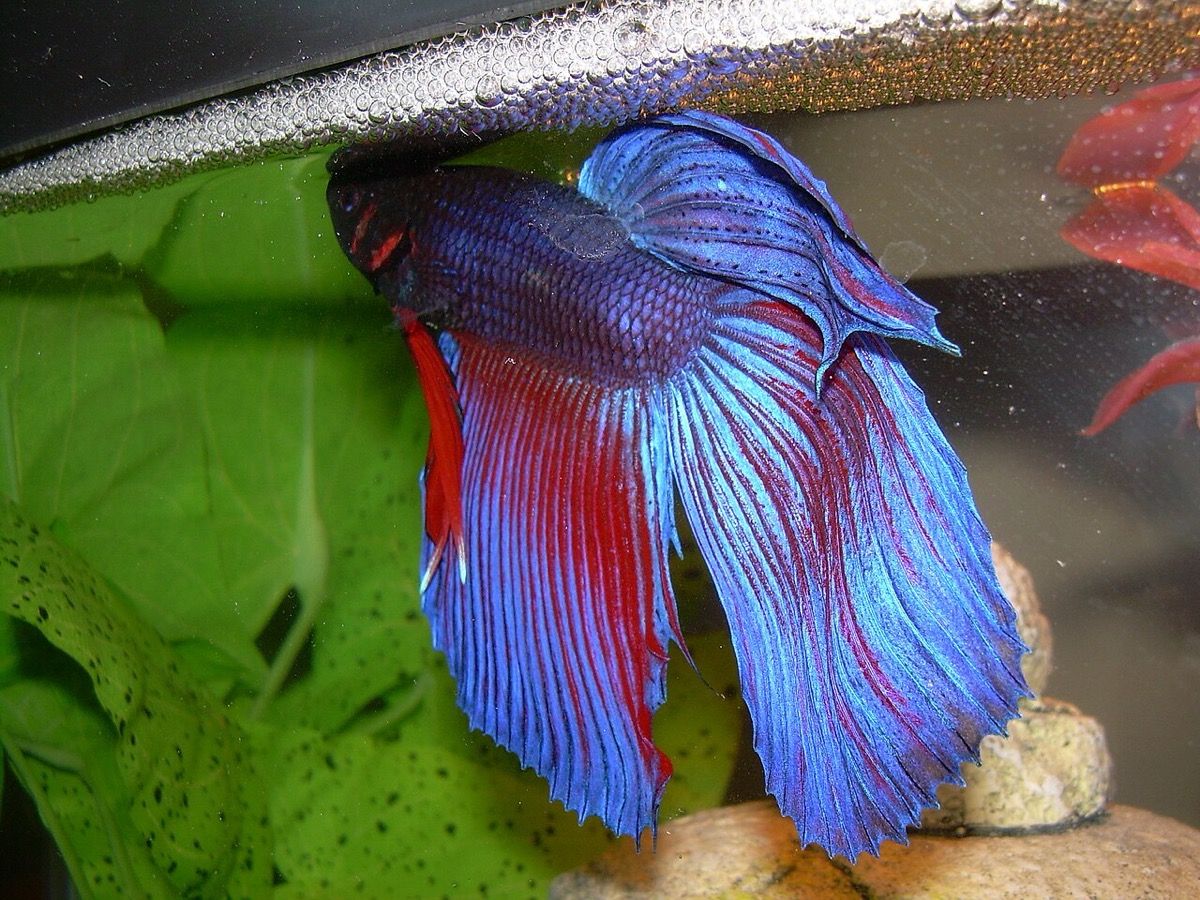
Photo: ErgoSum88 - Wikimedia Commons, public domain
Bubble Nest Facts at a Glance
| Question | Answer |
| Who builds it | mature males; females almost never |
| From what age | sexual maturity, around 4-6 months |
| How | gulps air at the surface, spits out mucus-coated bubbles, repeats for hours |
| Purpose | holds fertilized eggs near the oxygen-rich surface |
| Egg hatching | 24-48 hours after spawning, depending on temperature |
| Water it is often built in | 76-82 F (24-28 C), calm surface |
| No nest at all | normal for many healthy bettas |
Sources: Animal Diversity Web, University of Michigan (construction, hatching, maturity at about five months) and the Chewy betta bubble nest guide (temperature, females, disruption).
What a Bubble Nest Is For
In the wild, bettas live in shallow, still, warm water such as rice paddies and slow ditches, where oxygen is low below the surface. The nest keeps eggs in the top layer of water where oxygen is highest. During spawning the female releases 3-7 eggs at a time over many embraces, up to several hundred in total; the male catches the sinking eggs in his mouth and places them in the bubbles. He then chases the female away, guards the nest, repairs it and returns any egg that falls until the fry hatch about a day or two later.
That is why the size of a nest says little. A study of wild-type Siamese fighting fish in the Songklanakarin Journal of Science and Technology (2003) found that females did not prefer males with larger bubble nests, and males with bigger nests did not win more fights.
Does a Bubble Nest Mean Your Betta Is Happy?
Partly. A betta bubble nest usually appears when the water is warm, the surface is calm and the male is not stressed, so it is a good sign. It is not a health certificate: some males build nests in poor water, and many perfectly healthy males never build one. Better daily checks are:
- Appetite: eats eagerly at each feeding.
- Fins: spread, with no ragged or dark edges (see betta fin rot).
- Color: bright, not pale or faded.
- Behavior: explores the tank instead of sitting at the bottom or gasping at the top.
- Water: heater holding a steady temperature; our betta water temperature guide covers the range.
Why Your Betta Does Not Build a Nest
A missing nest is common and usually not a problem. The usual reasons:
- It is a female. Nest building is driven by male hormones, mainly testosterone; our female betta guide shows how to tell the sexes apart.
- Too young. Males start around 4-6 months, and shop bettas are often sold younger.
- Strong surface flow. A filter that churns the surface breaks the bubbles before they stick. Baffle the outflow or use a gentle sponge filter.
- Cool water. Below the usual 76-82 F range many males stop building.
- Personality. Some males simply build rarely, small or never, for their whole life.
- New tank. A betta that has just been moved often waits days or weeks before building.
If a betta without a nest also stops eating, sits on the bottom or loses color, that points to water quality or illness, not to the nest. Test the water first.
What to Do With the Nest When Cleaning
Clean the tank as usual. Without eggs the betta bubble nest has no function, and a healthy male rebuilds it, often within a day. Two small courtesies help:
- Lower the water level and refill gently instead of pouring onto the nest every time.
- Do not scoop or break the nest daily; frequent disruption can cause mild stress.
The steps of a partial water change, filter care and how much water to replace are in how to clean a fish tank. If you do have eggs in the nest, skip the water change near the surface until the fry are free swimming.
Bubble Nest vs Other Bubbles
Not every cluster of bubbles is a nest. A nest is a tight, foamy raft that the male stays under and tends, usually near a plant, leaf or the tank corner. Loose foam that covers the whole surface and does not pop, especially with a smell, is more often a protein film from overfeeding or old water, and needs a water change. Bubbles stuck to glass and plants right after refilling are just dissolved gas coming out of fresh tap water.
Do Not Breed Just Because You See a Nest
A nest is not a request for a female. Putting a male and female together without a plan often ends in torn fins, because the male attacks a female that is not ready, and a successful spawn produces dozens to hundreds of fry that need live food and separate jars as the males mature. Leave breeding to a planned setup, and give your betta the basics that matter more: a heated, filtered tank of the right size (see betta fish tank size), calm water and plants near the surface, such as those in best plants for betta fish, which males like to anchor nests to.
Choosing a betta? Compare tail types and colors in our types of betta fish guide.