How to Clean a Fish Tank: Step by Step, Without Losing Fish
Published: 2026-11-14 · FishyKart Blog
To clean a fish tank, leave the fish in, unplug the heater and filter, scrape the glass, vacuum the gravel while you siphon out 10-25% of the water, rinse the filter media in that removed tank water, then refill with dechlorinated water at the same temperature. Do it every week or two. Veterinarian Jessie Sanders (DVM, board-certified in fish practice) recommends about 10% weekly or 25% every other week for an established tank, and never more than half at once.
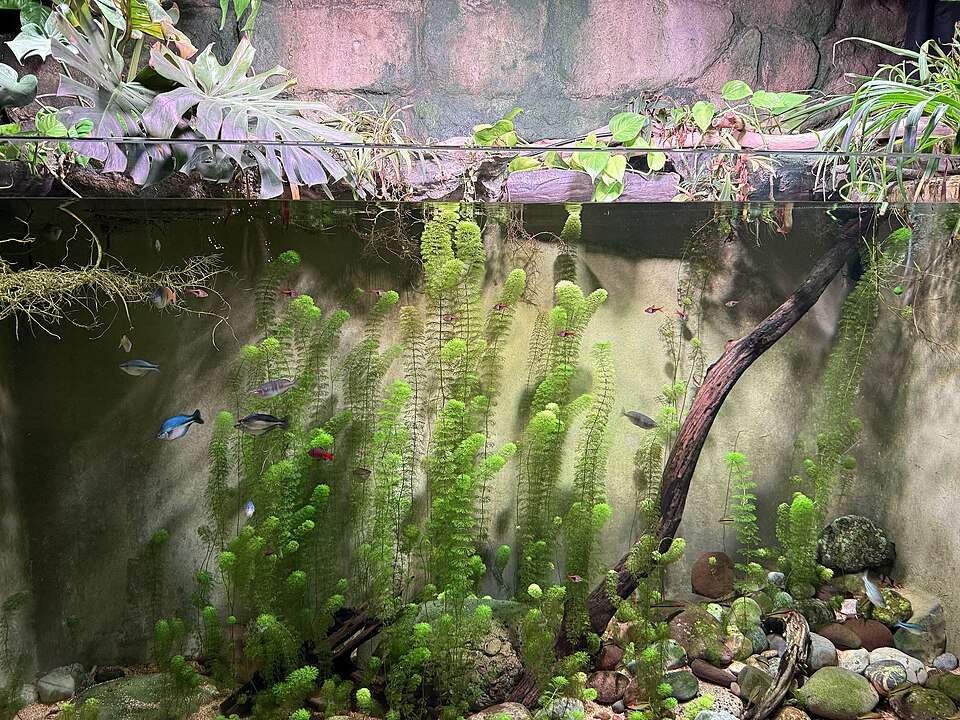
Photo: Netha Hussain - Wikimedia Commons, CC0
What You Need
- A gravel vacuum (siphon) long enough to reach the bottom.
- A bucket used only for the aquarium, never with soap.
- An algae scraper: a soft pad for acrylic, a blade or rougher pad for glass.
- Water conditioner that removes chlorine and chloramine.
- A thermometer to match the new water to the tank.
- Old towels; a test kit if you have one.
Step by Step
- Switch off and unplug the heater and filter. A heater left on above the water line can crack.
- Scrape the glass first, so loose algae falls to the bottom where the vacuum will pick it up.
- Take out and scrub decorations that have algae, with a brush and plain tank water. Leave plants and most decor in place if they look clean.
- Vacuum the gravel and remove water. Push the siphon into the gravel, let it lift and drop the stones, and move across the bottom in sections. Stop when you have removed 10-25% of the water.
- Rinse the filter media in a bucket of that removed water: squeeze the sponge a few times until the flow returns. Do not rinse it under the tap and do not replace all media at once.
- Prepare new water: add conditioner and match the temperature within about 2 F (1 C).
- Refill slowly onto a plate or decoration so the gravel is not blasted up.
- Restart the filter, then the heater after a few minutes. Check the temperature an hour later.
Steps follow the PetMD cleaning guide by Dr. Jessie Sanders: scrub decor and walls, vacuum the substrate, rinse media in removed tank water, add treated water at tank temperature, leave the fish in.
How Often to Clean Each Part
| Task | How often | Why |
| Partial water change | 10% weekly or 25% every 2 weeks | dilutes nitrate and waste |
| Gravel vacuum | with every water change | removes trapped waste and food |
| Glass and algae | weekly, or when you see film | light and viewing |
| Filter media rinse | every 2-4 weeks, when flow drops | keeps flow, protects bacteria |
| Decorations | as needed | algae build-up |
| Water test | weekly for new tanks, then every 2 weeks | tells you if the schedule works |
Our rule for when to clean more often: if nitrate keeps climbing between changes, or the water turns cloudy or smells, shorten the interval rather than doing one huge change. A heavily stocked tank, goldfish or large cichlids need more than a lightly stocked planted tank.
The Filter: Clean It Gently
Most of the bacteria that turn toxic ammonia into safer nitrate live in the filter sponge and media. Tap water contains chlorine or chloramine that kills them, so rinse media only in water taken from the tank, and replace cartridges one part at a time. Cleaning the filter, vacuuming all the gravel and changing half the water on the same day removes too much bacteria at once and can cause an ammonia spike. If a tank is new, read how to cycle a fish tank before any deep cleaning.
Mistakes That Crash a Tank
- Soap or household cleaners anywhere near the tank or bucket.
- Changing all the water or more than half at once: sudden temperature and chemistry swings stress fish.
- Taking fish out for a routine clean.
- Untreated tap water without conditioner.
- New water much colder or warmer than the tank.
- Rinsing the filter under the tap or swapping all media at once.
If the water goes milky after cleaning, see cloudy aquarium water; if fish gather at the surface afterwards, see why fish swim at the top of the tank.
Deep Cleaning an Empty Tank
A full strip-down is only for a tank that is out of use, being moved or has had a disease outbreak. Empty it, wipe it with plain water, remove white hard-water marks with white vinegar on a cloth, rinse very well, and let it dry. Before fish go back in, the tank must be set up and cycled again, because a deep clean removes the beneficial bacteria along with the dirt.