Geophagus Fish (Pearl Cichlid): Price in India and Care
Published: 2026-11-04 · FishyKart Blog
Geophagus is the name Indian shops use for Geophagus brasiliensis, the pearl cichlid: a South American cichlid covered in shining blue-green spots that sifts sand for food. At FishyKart a 2-3 inch Geophagus brasiliensis is listed at ₹299. Plan for the adult fish: it can reach 25 cm (10 inches) standard length, needs a tank about 150 cm (5 feet) long, soft sand on the bottom, and water at 22-26°C for everyday care. It tolerates a wide range of pH and temperature, which makes it hardier than most "eartheaters".
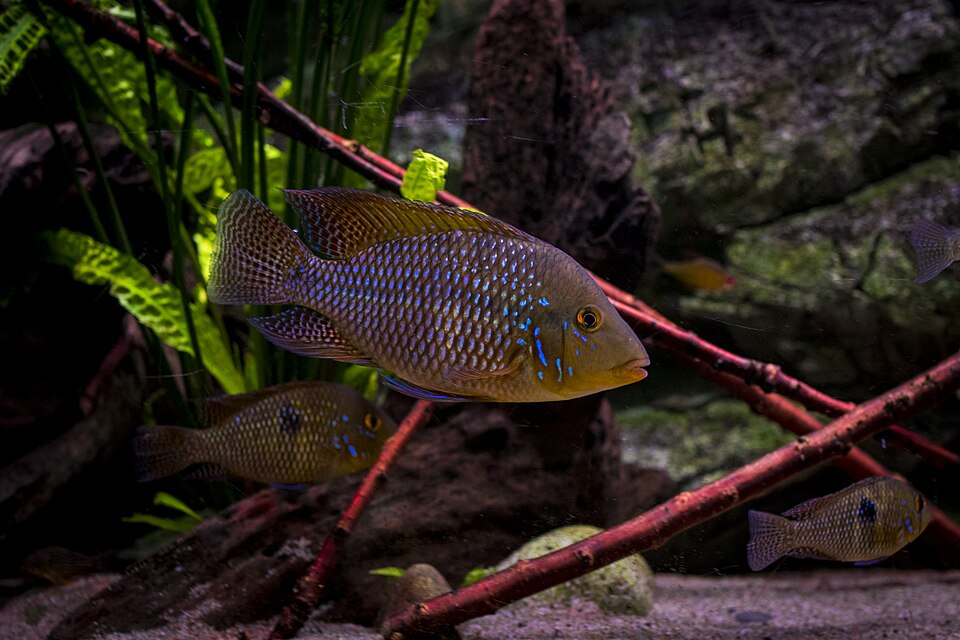
Photo: Dnoerholm - Wikimedia Commons, CC BY-SA 4.0
Geophagus Fish Price in India
Prices below are taken from FishyKart's own store. They change with stock and offers, so open the product page for the current price.
| Fish | Size sold | Price at FishyKart |
|---|---|---|
| Geophagus brasiliensis | 2-3 inch | ₹299 (regular ₹500) |
| Red Spotted Severum (possible tank mate) | 2 to 2.2 inch | ₹350 (regular ₹499) |
| Firemouth Cichlid (possible tank mate) | juvenile | ₹99 (regular ₹140) |
| Hi-Fin Pleco (bottom partner) | juvenile | ₹219 (regular ₹300) |
The fish is the cheap part. A 5 feet tank, a strong filter and fine sand cost far more, so budget for the adult setup before buying.
Geophagus brasiliensis Care Sheet
| Parameter | Value |
|---|---|
| Scientific name | Geophagus brasiliensis (written 'Geophagus' brasiliensis by SeriouslyFish, as its genus placement is unsettled) |
| Common names | Pearl cichlid, Brazilian eartheater, geophagus |
| Origin | Coastal rivers of eastern and southern Brazil and Uruguay |
| Adult size | Up to 25 cm (10 in) standard length; FishBase: 28 cm total length |
| Minimum tank | 150 x 45 cm base, about 400 litres for adults |
| Temperature | 18-28°C (64-82°F); 22-26°C is a good everyday range |
| pH | 6.0-8.0 |
| Hardness | 1-15 dGH |
| Diet | Omnivore: sinking pellets, bloodworm, brine shrimp, vegetable matter |
| Temperament | Moderately peaceful; males territorial when spawning |
Sources: SeriouslyFish species profile for 'Geophagus' brasiliensis; FishBase species summary for Geophagus brasiliensis.
Size and Growth
A geophagus sold at 2-3 inches is a juvenile. SeriouslyFish notes that males grow larger than females, often by a lot, and dominant males develop a fatty hump on the forehead (nuchal hump). FishBase gives a common length of about 9 cm, so many fish stay well below the maximum, but a healthy male in a large tank can pass 20 cm. Colour improves with age: the pearly blue spots on the body and fins become denser and brighter in adults.
Tank Setup
- Size: a 5 feet tank (150 x 45 cm base) for adults. A juvenile can live in a 3-4 feet tank for the first months.
- Substrate: soft, fine sand. SeriouslyFish says sand is ideal though not essential; with sharp gravel the fish cannot sift normally.
- Decor: driftwood, smooth rocks and a few flat stones for spawning. Rooted plants get dug up, so use Anubias and Java fern tied to wood.
- Filtration: a canister or large sponge filter; sand sifting stirs up fine waste.
- Temperature: this species tolerates cool water (FishBase records 11-37°C in the wild), so a heater is needed only in cold north Indian winters. In summer keep the tank shaded so it stays below 28°C.
- Water changes: 25-30% weekly.
Tank Mates
Geophagus brasiliensis is calmer than many cichlids of its size, but males defend territory and any very small fish may be eaten. Good partners are robust, similar-sized fish:
- Medium to large South American cichlids such as the severum, in a large tank.
- Moderate Central American cichlids such as the firemouth cichlid, with enough space and hiding places.
- Larger plecos such as the hi-fin pleco, and silver dollars.
Avoid small tetras, guppies and shrimp, and do not mix it with very aggressive fish such as Flowerhorns or adult Green Terrors, which can bully it. For an overview of other cichlids, see types of cichlids.
Feeding
In the wild this geophagus is a generalised omnivore that eats plant material, small invertebrates such as chironomid larvae, and fish fry. In the aquarium use a good sinking pellet as the main food, because geophagus feed on the bottom, and add frozen or live bloodworm and brine shrimp a few times a week. Feed young fish twice a day and adults once a day.
Breeding
SeriouslyFish describes G. brasiliensis as a biparental substrate spawner: the pair cleans a flat stone or a patch of the bottom, lays the eggs there, and both parents guard the eggs and fry. This is different from many other eartheaters, which brood the eggs in their mouths. The pair becomes territorial while guarding, so a large tank or a separate breeding tank works best.
Buy Geophagus at FishyKart
FishyKart lists young Geophagus brasiliensis at 2-3 inches. Other South American cichlids are in the cichlids collection.
View Geophagus → Browse Cichlids →