Types of Cichlids: Popular Aquarium Cichlids by Size
Published: 2026-10-29 · FishyKart Blog
Cichlids (family Cichlidae) are one of the largest fish families, with about 1,700 described species (counts range from roughly 1,600 to 1,800) from Central and South America, Africa and parts of Asia. Aquarium cichlids range from 2-inch dwarf cichlids to 12-inch-plus giants like the oscar. They are smart, colorful and often territorial, so choosing the right type for your tank size is the most important decision.
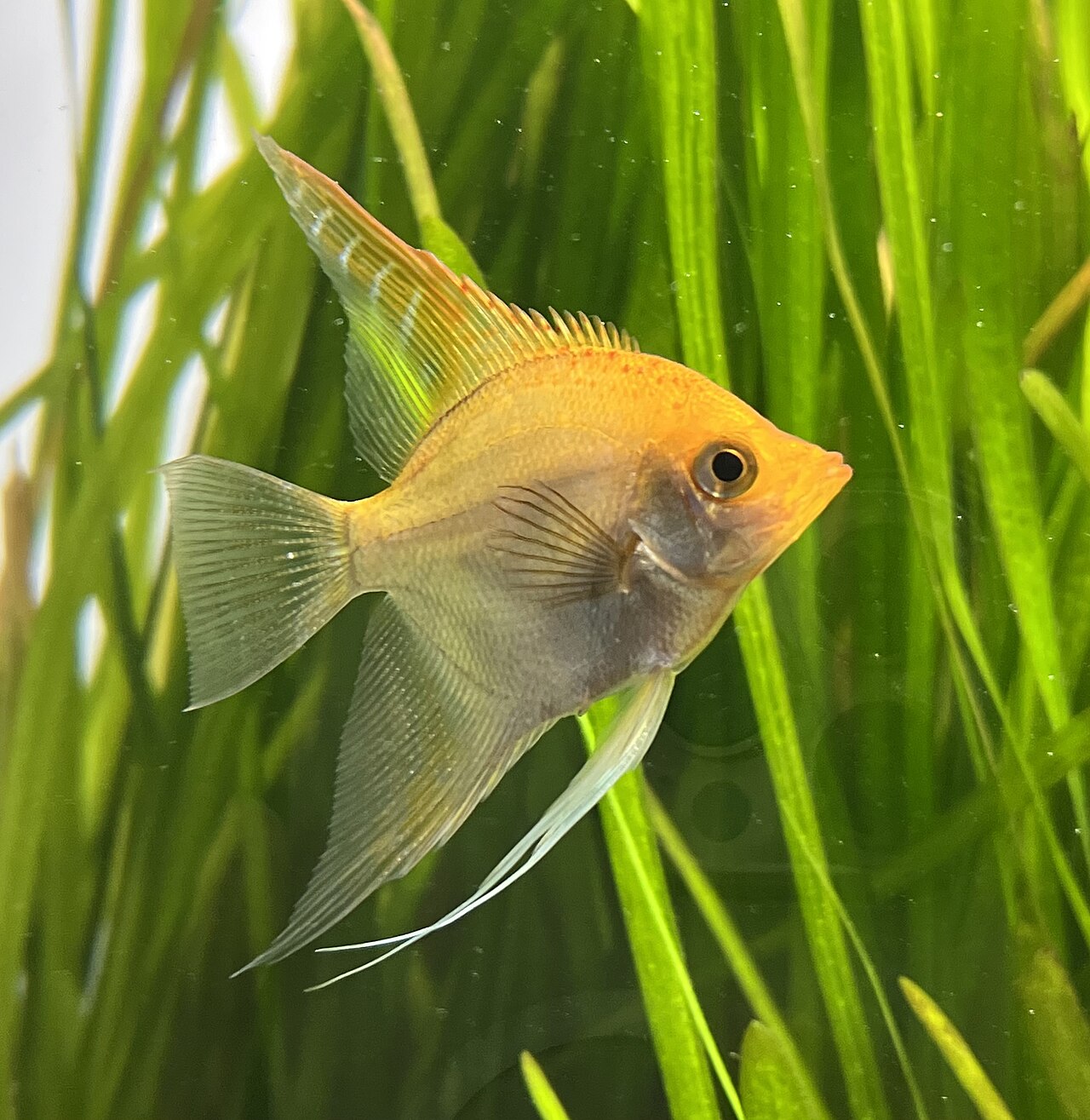
Photo: Versions111 - Wikimedia Commons, CC BY 4.0
Cichlid Types at a Glance
| Cichlid | Adult size / Tank / Temperament |
| German blue ram | 2-3 in / 20 gal / Peaceful, needs warm water |
| Apistogramma (dwarf cichlid) | 2-3.5 in / 20 gal / Peaceful, territorial when breeding |
| Angelfish | 6 in body, taller with fins / 55 gal / Semi-aggressive |
| Discus | 6-8 in / 75+ gal group / Peaceful, demanding |
| Convict cichlid | 4-6 in / 30 gal / Aggressive when breeding |
| Firemouth cichlid | 6 in / 30-40 gal / Semi-aggressive |
| Jewel cichlid | 5-6 in / 30-40 gal / Aggressive |
| Blood parrot cichlid | 7-8 in / 40-55 gal / Mostly peaceful hybrid |
| Oscar | 12-14 in / 75+ gal / Large, messy |
| Green terror | 8-12 in / 75-80+ gal / Aggressive |
| Texas cichlid | 10-12 in / 75+ gal / Aggressive |
| African cichlids (mbuna, peacocks) | 3-6 in / 55+ gal / Territorial |
Typical adult sizes and minimum tanks from aquarium references; males are often larger than females.
Dwarf Cichlids
Dwarf cichlids are the best entry point for planted community tanks. German blue rams (Mikrogeophagus ramirezi) need clean, warm water around 80-84 F. Apistogrammas come in dozens of species and prefer soft water with caves for breeding. Both stay small enough for a 20-gallon tank.
South American Cichlids
- Angelfish: tall, graceful and best known of all cichlids; see our angelfish guide.
- Discus: the "king of the aquarium," needs very clean, warm water and a group; read discus fish care.
- Oscar: a big, personable fish that eats a lot and needs strong filtration; see types of oscar fish and oscar tank setup.
- Green terror: bright and aggressive; tank mates in green terror tank mates.
Central American Cichlids
Central American cichlids are hardy and bold, and many are aggressive. Convicts breed easily, firemouths flare red throats to scare rivals, and Texas cichlids grow large. The salvini cichlid is another colorful, feisty choice. Keep them in larger tanks with rockwork that breaks lines of sight.
African Cichlids
African cichlids from Lakes Malawi and Tanganyika are colorful and live in hard, alkaline water. Malawi mbuna and peacocks, and Tanganyika species such as the frontosa, have their own setup rules; see our African cichlids guide. West African jewel cichlids are river fish and are fierce parents.
Hybrid Cichlids
The blood parrot and the polar blue tiger parrot are man-made hybrids. Their small, beak-shaped mouths make feeding slower, so choose sinking pellets that fit.
Cichlid Care Basics
- Tank size first: buy for the adult size, not the store size.
- Filtration: most cichlids are messy; aim for strong filtration and weekly water changes.
- Decor: caves, rocks and driftwood create territories and reduce fighting.
- Stocking: avoid mixing African and South American cichlids, and never mix very aggressive species with small peaceful fish.
See live cichlids in our cichlids collection.