About & Origin
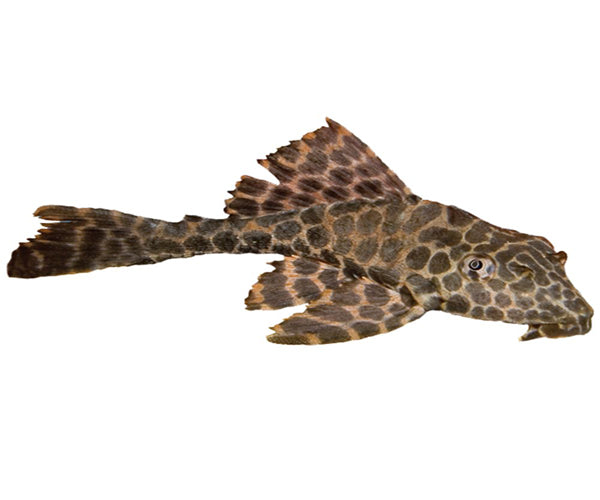
The hi-fin pleco is a large armoured catfish, most commonly sold under this name as Pterygoplichthys gibbiceps (also called the sailfin or leopard pleco), native to the Amazon and Orinoco river basins of South America. It's named for its unusually tall, sail-like dorsal fin and mottled leopard-print patterning.
Like other plecos it's a nocturnal, armoured catfish with a sucker-like mouth adapted for grazing algae and biofilm off rocks, wood, and glass -- though as it grows it becomes an increasingly general omnivore rather than a pure algae-eater.
It's genuinely one of the largest plecos commonly kept in home aquariums, and its adult size is routinely underestimated by buyers who see it sold small.
Its armoured body is covered in bony plates rather than scales, a defining trait of the Loricariidae (armoured catfish) family, and combined with its ability to breathe atmospheric air via a modified gut when oxygen is scarce, it's an unusually tough, resilient fish that can survive conditions that would stress most other tropical fish. This same hardiness is part of why several Pterygoplichthys species have become significant invasive pests in warm-climate waterways outside their native range, including parts of the southern United States and Southeast Asia -- a reminder never to release any unwanted aquarium fish into local waterways, however hardy or "harmless" it might seem.
The sail-like dorsal fin becomes more pronounced as the fish matures, and a mature, well-fed specimen with its dorsal fully raised is a genuinely striking sight in a large aquarium, which is a big part of the species' enduring popularity despite its demanding adult size.
Sexing is difficult and unreliable for most keepers outside of breeding-focused specialists, and unlike many catfish, Pterygoplichthys species have not been reliably bred in home aquarium conditions -- essentially all specimens in the trade are wild-caught or pond-raised on a commercial scale in warm-climate fish farms, not tank-bred, which is worth knowing if provenance matters to a buyer.
Requirements
This species grows to 40-50cm (16-20 inches) and needs to be planned for accordingly -- a single adult realistically needs 300+ litres (75+ gallons) with a wide footprint, driftwood (it actually rasps and ingests wood fibre as part of its digestion, and does poorly long-term without any), and strong filtration for its substantial bioload.
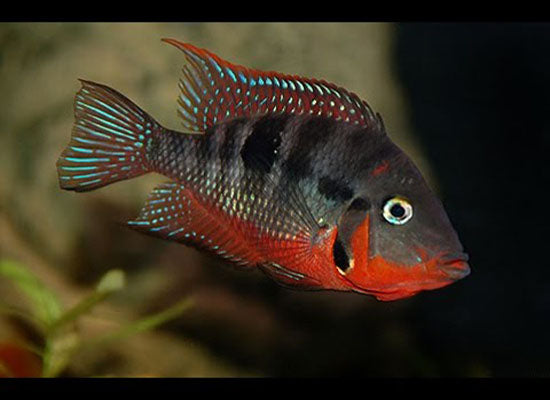
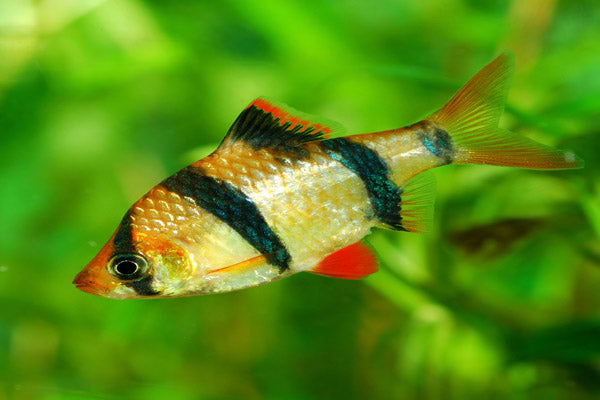
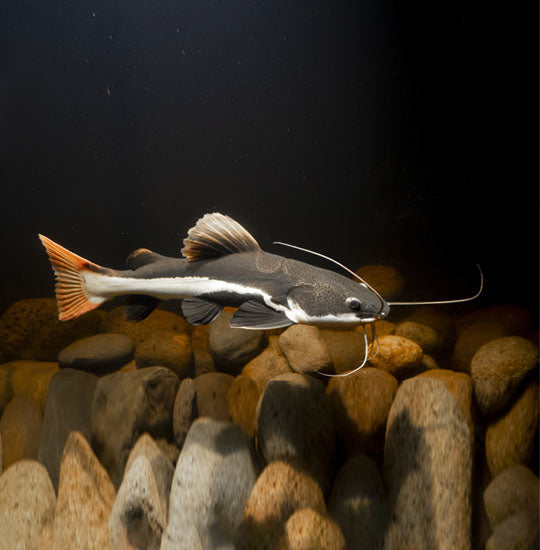
It's generally peaceful toward other fish and won't actively hunt tankmates, but it can be territorial toward other plecos and bottom-dwellers as it matures, and its size alone means small delicate fish are at some risk of being accidentally injured.
Diet shifts with age: young fish do well on algae wafers and biofilm, but adults need real supplementation -- sinking vegetable-based pellets, blanched courgette/zucchini, and driftwood to gnaw on are all important as it grows.
Driftwood isn't optional decor for this species -- it's a genuine, documented part of its digestive process, and specimens kept without any available wood to rasp on can develop digestive problems over time. A generously sized piece (or several) that the fish can comfortably graze on should be considered a standing dietary requirement, replaced or supplemented as it gets worn down.
Because it grows so large and produces a correspondingly large amount of waste, filtration and a consistent maintenance routine matter more for this species over time than for almost any small community fish -- a filter that was adequate for a young, small pleco will need upgrading well before the fish reaches full size.
A tight-fitting lid is worth having as it matures -- large plecos are strong enough to push against loosely fitted covers, and while not a classic "jumper" in the way danios are, an adult can still work its way out of a poorly secured tank given enough determination and time.
Tankmate selection should account for its eventual bulk as much as its temperament: even a fish this generally peaceful can accidentally injure much smaller tankmates simply through its size and weight while cruising or settling for the night, so pairing it with similarly robust community fish rather than delicate nano species is the safer long-term choice.
Compatibility
Water & Care Conditions
Adaptable to a fairly wide range of water chemistry, which is one reason it's such a common trade species, but never adaptable to a small tank long-term:
- pH: 6.5–7.5
- Water hardness: soft to moderately hard, 4–20 dGH
- Temperature: 24–28°C (75–82°F)
- Oxygenation: a large, high-bioload fish -- strong filtration and good oxygenation are important as it grows
- Driftwood: treat this as a dietary essential, not optional decor -- this species genuinely rasps and digests wood fibre as part of its normal diet
- Water changes: weekly partial water changes of 25-30% help manage the substantial bioload of a large, mature specimen
- Lighting: a nocturnal grazer that appreciates some shaded hiding spots (caves, wood, dense decor) alongside standard aquarium lighting rather than bright, shadow-free water all day
- Growth planning: reaches most of its large adult size within 2-4 years given good food and space, so plan and budget for the eventual 300+ litre setup well before the fish arrives at that size
- Common issues: generally hardy and disease-resistant; the main real risks are digestive problems from a diet lacking wood fibre, and stress or stunted growth from long-term undersized housing
- Acclimation: a hardy species that typically settles in well with a standard slow acclimation; providing a dark hiding spot (cave, pipe, or dense wood) on arrival helps a nervous new specimen relax faster
- Air access: capable of gulping atmospheric air via a modified gut when oxygen levels drop, an unusual adaptation among aquarium fish that adds to its overall hardiness but shouldn't be relied on as a substitute for proper filtration
- Longevity: a well-kept specimen can live 10-15 years or more, so its tank, tankmates, and filtration are worth planning with that long a timeframe in mind