About & Origin
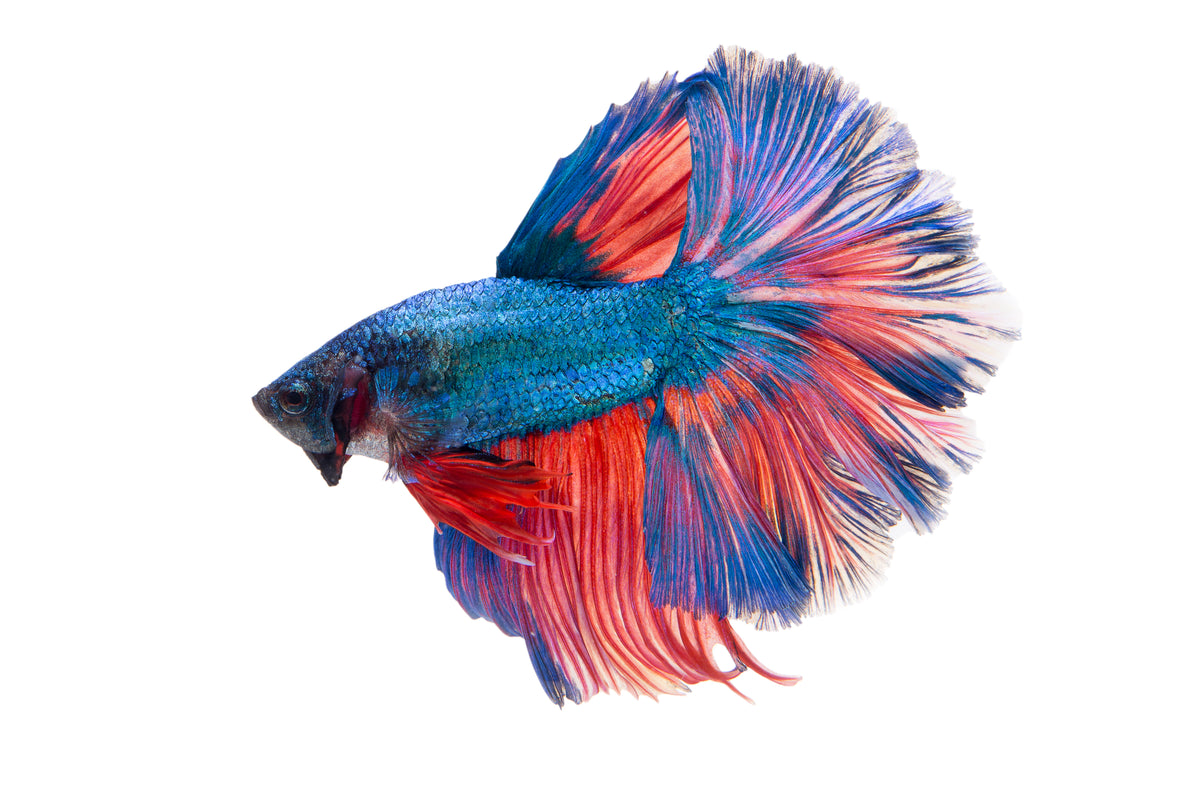
The Siamese Fighting Fish, or Betta (Betta splendens), is a small freshwater fish native to the slow-moving rice paddies, ditches, floodplains, and shallow wetlands of Thailand, Cambodia, Vietnam, and Laos. In the wild it's a fairly modestly coloured fish; the vivid colours and huge flowing fins seen in the aquarium trade, including this exclusive variety, are the result of over a century of intensive selective breeding, particularly in Thailand where betta breeding is a serious, longstanding craft.
Bettas belong to the labyrinth fish group, meaning they have a specialised organ that lets them breathe atmospheric air directly from the surface — an adaptation to the oxygen-poor, still, sometimes near-stagnant waters of their native habitat, and the reason they can survive in conditions that would stress most other fish.
In the wild, males are highly territorial toward other males, which is the origin of both their common name and their long history of ceremonial fighting contests in Southeast Asia — a real behavioural trait that still matters directly for how they should be kept today.
"Exclusive" is a trade/marketing label used for a striking or unusual colour and pattern combination within Betta splendens rather than a distinct scientific variety, so its exact appearance can vary somewhat between individual fish sold under this name.
All bettas descend from wild labyrinth fish native to the shallow rice paddies, floodplains, and drainage ditches of Thailand, and share the same core biology and behaviour regardless of the ornamental colour or fin-type label attached in the trade.
Male bettas of any colour strain are prized above all for their large, flowing fins and readiness to flare them in a dramatic territorial display when they perceive a rival, a behaviour bred and selected for over centuries in Thailand before the species reached the wider world.
The name reflects the seller's own "exclusive" or premium sourcing/selection rather than a distinct scientific variety — like every betta in the trade, it is Betta splendens, native to the shallow rice paddies and slow-moving waterways of Thailand, prized for its flowing fins and vivid colour, developed through many generations of selective breeding for ornamental display.
Requirements
A male betta should be kept alone, or as the sole betta in a community of carefully chosen, calm, non-fin-nipping tankmates — never with a second male, which will result in serious fighting.
Its long, flowing fins make it vulnerable to nipping from boisterous fish (like serpae tetras or barbs) and slow to manoeuvre, so tankmates need to be genuinely peaceful and unhurried. A tank with gentle flow suits it better than strong current, which its fins struggle against.
Feeding is easy with a good quality betta-formulated pellet as a staple, supplemented occasionally with live or frozen foods like bloodworm or brine shrimp.
One male per tank, kept alone or with carefully chosen, peaceful, fin-safe tankmates — male bettas are highly territorial toward each other and toward fish that resemble them.
Feed a betta-specific pellet as the dietary staple, since bettas are primarily carnivorous, with occasional live or frozen bloodworm or brine shrimp appreciated for variety.
A tank of at least 20 litres with a heater and gentle filtration is a far better long-term home than the small unheated bowls bettas are unfortunately still sometimes sold with.
Water quality matters more to a betta's long-term health than most keepers expect — despite the labyrinth organ letting it breathe atmospheric air, it is still highly sensitive to ammonia, nitrite, and poor water conditions, and thrives far better in a properly cycled, heated, filtered tank than the small unheated bowls it is sometimes mistakenly sold for.
A varied diet of quality betta pellets plus occasional live or frozen bloodworm/brine shrimp supports good colour and condition. As with every betta, one male per tank always, and any tankmates should be chosen carefully to avoid fin-nipping or triggering aggression.
Compatibility

Water & Care Conditions
Its labyrinth organ makes it more tolerant of still, low-oxygen water than most fish, but it still does best within these ranges:
- pH: 6.0–7.5, close to neutral
- Salinity / hardness: freshwater only, soft to moderately hard water
- Temperature: 24–28°C (75–82°F) — genuinely tropical, a stable heater is important, not optional
- Light: moderate; appreciates some floating plants or cover
- Oxygenation: uniquely tolerant of low-oxygen, still water thanks to its labyrinth organ (it breathes surface air directly), so it doesn't need strong flow — in fact it generally prefers calm water over strong current
- Common myth: despite old pet-store advice, bettas are not suited to small unheated bowls long-term — stable heated, filtered conditions in at least 15-20 litres produce a noticeably healthier, more active, longer-lived fish
- Diet: quality betta pellets as a staple, with occasional live/frozen foods for variety and condition
As a labyrinth fish, it can breathe atmospheric air at the surface via a specialised organ, tolerating lower dissolved oxygen and even still water better than most fish species.
Gentle flow and a lid with some airspace beneath it (for labyrinth breathing) suit this species better than strong current or a fully sealed tank.
Unlike most tropical fish, this fish genuinely needs a tight-fitting lid with an air gap underneath, not to prevent jumping alone but because it periodically surfaces to gulp air through its labyrinth organ, and a fully sealed lid with no airspace can leave the air it breathes stale and humid.
A heater is essential despite the labyrinth organ's tolerance for lower oxygen -- bettas are true tropical fish and become lethargic, prone to illness, and short-lived in unheated, too-cool water, contrary to the common misconception that they can live in a small unheated bowl.