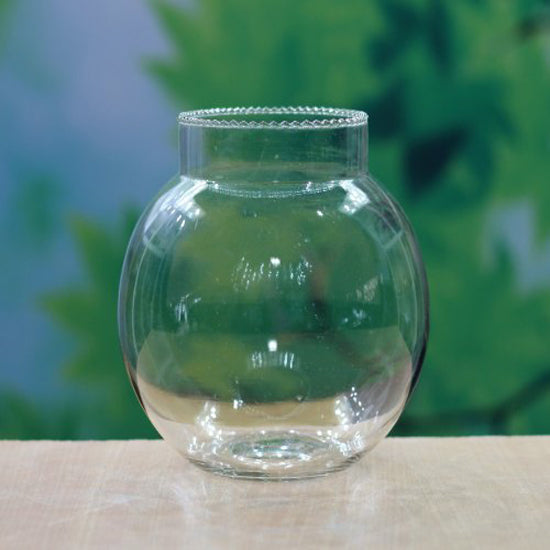
SUITABLE FOR BETTA AND SMALL FISHES
About & Origin
A small round glass bowl about 4 inches across — the smallest bowl size in this range, holding well under a litre of actual water once you allow for the curved sides and a sensible fill level. It's the classic small "fish bowl" shape, with a narrow neck and wide clear body, meant to sit on a desk, counter, or shelf.
Its main appeal is size and price: it's cheap, takes up almost no space, and needs no equipment to get started with. That makes it popular as an impulse first-fishkeeping purchase, a temporary holding container, or a small planter-style vase for something like a single sprig of an undemanding floating plant.
Construction is simple pressed or mouth-blown glass rather than cut aquarium-grade panel glass — fine for its intended light-duty role, but worth knowing it isn't built to the same standard as a proper aquarium. There's no seam to worry about (it's a single moulded piece rather than glued panels), but the glass itself is thinner than tank glass and the rim can chip if knocked against a hard edge, so it's worth handling and storing it the way you would any ordinary glassware rather than treating it as tank-grade housing.
Empty, a bowl this size weighs next to nothing — well under half a kilogram — which is part of why it's so easy to move around, clean in a sink, or set on any shelf without a second thought about the surface underneath.
Historically, the round fish bowl is one of the oldest and most recognisable pieces of aquarium-adjacent decor there is, going back well over a century as a household object — long before the modern rectangular glass aquarium with a filter and heater became the hobbyist standard. That long cultural history is exactly why bowls like this remain popular as a decorative or novelty item even though the hobby itself has moved on to much more animal-friendly housing for actually keeping fish long-term.
Requirements
Be honest with yourself about what a bowl this size can actually support: at well under a litre, it is genuinely too small to be a good long-term home for any fish, including a betta. Water quality and temperature swing far faster in a volume this small than in even a slightly larger bowl, and there's no room in the "budget" for mistakes.
Part of the problem is surface area relative to the amount of waste a fish produces: gas exchange (oxygen in, carbon dioxide and off-gassing ammonia out) happens at the water's surface, and in a narrow-necked bowl like this the surface area is small relative to the volume beneath it — the opposite of what you'd want for a healthy, stable environment. A shallow, wide-mouthed container of the same volume would actually cope better than this classic globe shape.
If you do use it to house a fish short-term (e.g. as a temporary holding container while moving or quarantining), plan on daily water testing and near-daily partial water changes, since ammonia can build up quickly with no filter and so little water to dilute it. There's no realistic way to run a proper nitrogen cycle (the beneficial-bacteria process that normally converts fish waste into less harmful compounds) in a volume this small — you're relying entirely on manual water changes to keep ammonia down, which is why this is not treated as a real long-term habitat here.
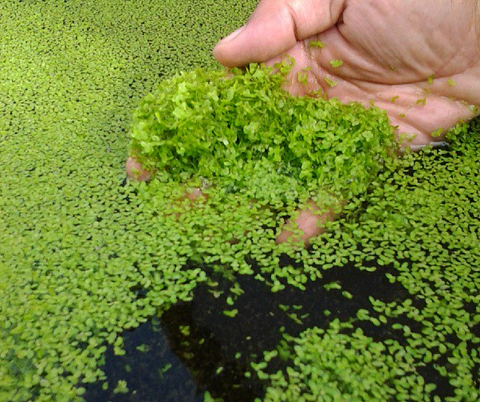
A much better long-term use for a bowl this size is as a small plant container — for something like duckweed or another floating plant — or as a short-term transport/holding vessel rather than a permanent tank. Placement-wise it needs nothing special given the low weight, just a stable, level surface out of direct sun.
Compatibility
Setup & Maintenance
If you use this bowl to keep a fish even temporarily, treat maintenance as a daily task, not a weekly one — there simply isn't enough water volume to absorb mistakes. Filled, the whole thing still only weighs roughly as much as the water inside it (well under a kilogram total, since a litre of water is about a kilogram and this bowl holds less than that) plus the glass itself, so weight is never a placement concern here the way it would be for a full-size aquarium.
- Water changes: partial changes every 1–2 days are realistic at this volume, since there's no filter or biological cycle doing ongoing work between changes
- Dechlorination: always treat tap water before adding it — chlorine/chloramine at municipal-supply levels is harmful to fish gills
- Temperature: a small open volume of water will follow room temperature closely and can swing quickly with drafts, air conditioning, or sunlight through a window — keep it out of direct sun and away from cold windowsills or draughty spots
- Cleaning the glass: a soft cloth or algae pad and plain water is enough; avoid soap or household cleaners, which leave residue that's toxic to fish even after rinsing
- Better as a plant vessel: for a low-maintenance option, a small floating or low-light plant is a much easier long-term fit for this size than a fish, and needs nothing beyond an occasional top-up
- Watch for evaporation: the small water volume and wide-ish surface mean evaporation can noticeably lower the level over just a few days, concentrating whatever is dissolved in the remaining water — top up with dechlorinated water between full changes
- Hard-water spots: if your tap water is hard, mineral deposits can build up as a cloudy film on the glass above the waterline as water evaporates — a light vinegar-and-water wipe (rinsed thoroughly afterward) clears this