About & Origin
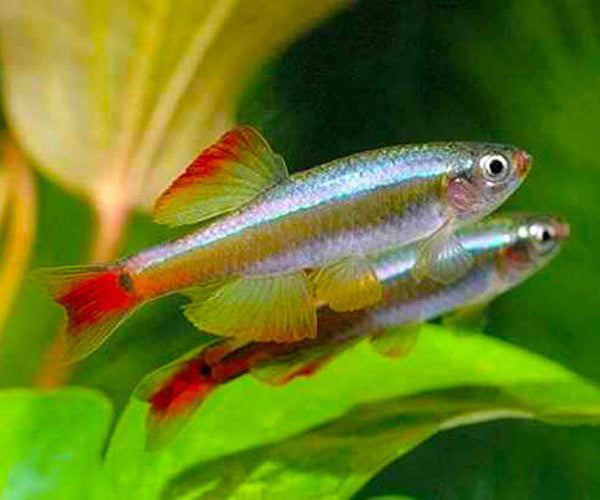
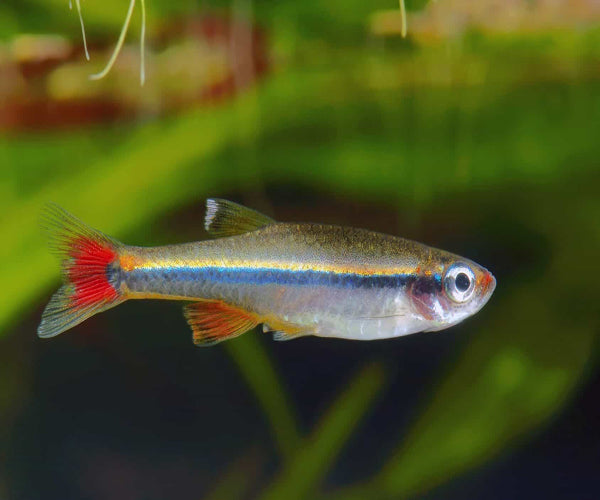
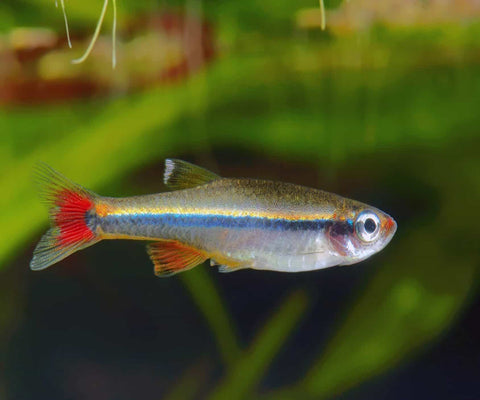
The White Cloud Mountain Minnow (Tanichthys albonubes) is a small, hardy minnow. Here in its pale, pink-eyed albino form, it originates from cool mountain streams near Guangzhou in southern China, and was historically considered nearly extinct in the wild before recovering. Unlike most popular aquarium fish, it evolved in genuinely cool, fast-flowing water rather than warm tropical rivers.
That cool-water origin makes it one of the very few classic "tropical fish shop" species that doesn't actually need a heater — it's often recommended as an entry point for keepers wanting a coldwater-friendly community fish, or as a companion species in unheated or cooler tanks alongside goldfish.
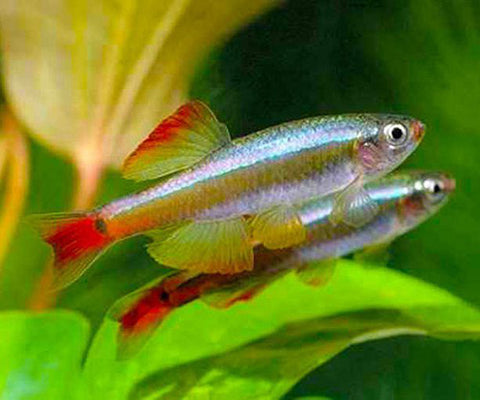
The albino form seen here lacks the wild type's dark pigmentation, giving it a pale, almost translucent pink-white body with red fin tones.
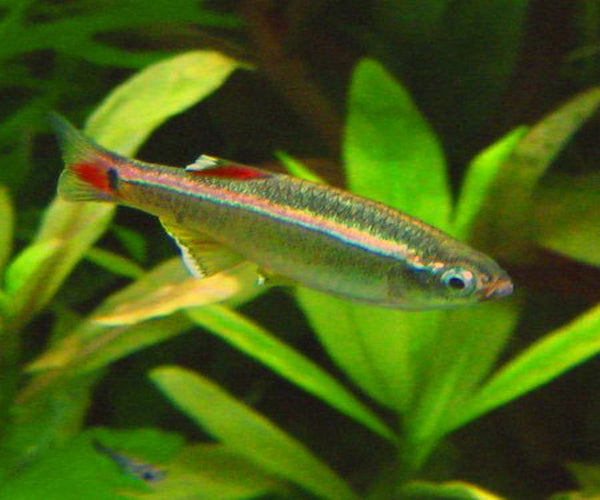
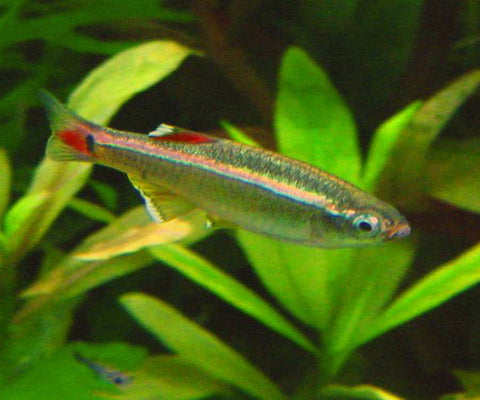
The albino form lacks the dark pigment of the wild-type White Cloud, giving it a pale, pinkish-white body with red fins and pink eyes instead of the usual olive-green body with a red-and-gold lateral stripe. This is a selectively bred colour morph rather than a distinct species, so its temperament and needs are identical to the standard White Cloud.
White Cloud Mountain Minnows were originally discovered on Baiyun (White Cloud) Mountain near Guangzhou, China, in cool, fast-flowing hill streams. Because of that origin, they are unusual among popular aquarium fish in genuinely preferring cooler water than most tropicals, and are sometimes kept as an unheated, room-temperature community fish in temperate climates.
In the wild they are now considered rare to extinct in their original habitat due to pollution and collection pressure, so most stock sold today, including albino lines, has been captive-bred for many generations.
Unlike its ordinary counterpart, the albino form lacks the dark pigment along the flanks, so the fish appears pale pink-white with pink eyes rather than the usual olive-brown body and bright reddish accents. It is farmed selectively for this trait rather than found this way in the wild, and otherwise shares the exact same biology, temperament, and cool-water requirements as the standard White Cloud Mountain Minnow.
Requirements
A hardy, easy shoaling fish — keep in groups of 6 or more. One of its biggest practical advantages is that it does not require a heater, thriving at genuinely cool room temperatures where most tropical fish would struggle.
It's peaceful and unfussy, doing well in both unheated coldwater setups and standard tropical community tanks, provided tankmates aren't so warm-water-dependent that the tank must run hot.
Feeding is easy — takes flake and micro pellets without issue, plus occasional live or frozen foods.
A very active, constantly-moving shoaler — keep in groups of at least 6, ideally more, in the middle to upper water column where they spend most of their time.
Because they tolerate cooler water so well, they're one of the few common community fish that can be kept in an unheated tank in a room that stays roughly 18-22°C year-round, though they also do fine in a standard heated tropical setup alongside slightly warmer-water tankmates.
Feeding is easy: high-quality flake or micro pellet as a staple, with small live or frozen foods like daphnia or micro-worms appreciated and useful for conditioning adults for breeding.
Because it originates from cool hill streams in China rather than tropical rainforest, it does not require a heater in most home conditions and in fact does poorly in consistently warm water above the mid-20s°C for extended periods — this makes it one of the very few true "tropical fish store" fish suited to an unheated aquarium in a temperate climate.
A planted tank with some floating cover and moderate water movement suits it well; it is not a fussy eater and takes flake, micro pellets, and small live or frozen foods readily. Because it's so undemanding on temperature, it also makes a good choice for a windowsill or unheated office tank where tropical fish would struggle.
Compatibility


Water & Care Conditions
Notably more cold-tolerant than almost any other fish typically sold alongside it:
- pH: 6.0–8.0
- Salinity / hardness: freshwater only, tolerates a wide hardness range
- Temperature: 18–22°C (64–72°F) ideally, tolerating up to around 24°C — does not require a heater in most rooms
- Light: not light-sensitive; adaptable to most setups
- Oxygenation: appreciates a bit more current and oxygenation than average, reflecting its native fast-flowing mountain-stream habitat
- Note: albino strains typically have slightly reduced vision sensitivity and can be marginally more light-sensitive than pigmented fish — subdued lighting and floating plants are appreciated
- Hardiness: considered one of the toughest and most beginner-friendly schooling fish in the trade, tolerating new-tank conditions and temperature swings better than most tropicals
- Feeding: an easy, unfussy eater that readily takes flake, micro pellets, and small live/frozen foods without special preparation
- Longevity: with stable cool-water conditions this species commonly lives 3-5 years, longer than many tropical nano fish
This species is notably more cold-tolerant than almost any other commonly sold aquarium fish, which makes it forgiving of temperature swings that would stress a typical tropical community tank.
Because they're accustomed to cool, oxygen-rich, flowing hill-stream water in the wild, good circulation and surface agitation in the tank are appreciated even though they aren't especially demanding about it in practice.
Weekly partial water changes of 20-30% help keep this species colourful and active, since like most small characins and rasboras it's sensitive to accumulating nitrates and organic waste over time even though it isn't considered a delicate species.
A mature, cycled tank with established biological filtration is a much safer home for a new shoal than a freshly set-up system, since ammonia and nitrite spikes during cycling are a common cause of losses in small schooling fish.