About & Origin
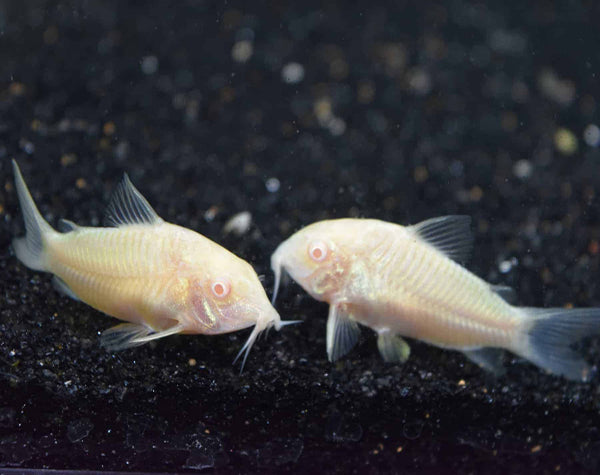
The Albino Cory is a catfish — a colour form of Corydoras aeneus, the bronze corydoras, one of the most widely kept armoured catfish in the hobby. Wild-type C. aeneus is native to slow-moving streams, floodplains, and quiet backwaters across a huge range of South America, from Colombia and Venezuela down through the Amazon basin to the La Plata region of Argentina, so it's an unusually adaptable species by cory standards.
In the wild these fish forage in loose groups along soft, silty or sandy bottoms, using their sensitive barbels to sift through debris for small invertebrates, leftover organic matter, and biofilm. The albino form lacks pigment, giving it a pale pink-white body with pink eyes, but its behaviour is identical to the standard bronze variety.
Corydoras are true bottom-feeding catfish, not scavenger fish that will thrive on leftovers alone -- they're active, social, and surprisingly playful, often seen darting to the surface to gulp air (they can breathe atmospheric oxygen through their gut, an adaptation to the low-oxygen waters they evolved in).
The albino strain isn't a separate species or a wild-caught variety -- it's a line-bred colour mutation that first appeared in commercial breeding facilities decades ago and has since become one of the most widely produced aquarium fish in the world, largely because C. aeneus breeds so readily in captivity. That ease of captive breeding is a genuine point in its favour: unlike many "exotic" imports, nearly every Albino Cory sold today was tank-raised, not wild-caught, which is both better for wild populations and means the fish tend to arrive hardier and better-adjusted to aquarium conditions.
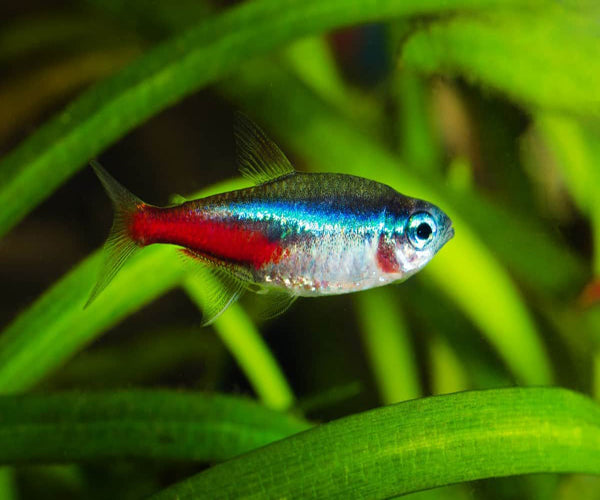
Corys are also longer-lived than most people expect from a small catfish -- a well-kept Albino Cory can easily reach 5 years and often pushes past 10, which is worth factoring in when planning a community tank around them, since they'll likely outlast several generations of shorter-lived tankmates like neon tetras.
Requirements
Albino Corys are easy-going, but a handful of details matter a lot for their long-term health.
Substrate: this is the single most important requirement. Corydoras constantly root through the substrate with sensitive barbels, and sharp gravel will wear those barbels down over time, leading to infection. Fine, smooth sand or well-rounded gravel is strongly preferred.
Group size: corys are a genuinely social, shoaling species -- keep them in groups of at least 6. A lone or pair of corys will be visibly more stressed and less active than a proper group.
Tank size: a group of 6 is comfortable in a tank from roughly 60cm/24 inches (~55–75 litres) upward, with plenty of open floor space.
Diet: sinking wafers or pellets designed for bottom feeders, supplemented with occasional live or frozen bloodworm/daphnia. They will pick at leftover flake but shouldn't be relied on purely as a "cleanup crew."
Water quality: sensitive to poor water quality and ammonia/nitrite spikes despite their toughness in other respects -- they do best in a fully cycled, established tank.
Filtration and flow: corys don't need or particularly want strong current -- in the wild they inhabit calm, slow-moving water, so a gentle-to-moderate filter outflow suits them better than a powerful powerhead-driven setup. What matters much more than flow is that the filter is actually keeping ammonia and nitrite at zero, since bottom-dwelling fish are typically the first to show stress when water quality slips, long before surface-dwelling tankmates react.
Breeding: Albino Corys are among the easier catfish to breed at home. A well-fed group, a cooler partial water change to mimic a rain event, and the classic "T-position" mating behaviour (the male positions himself against the female's barbels) are usually all it takes to trigger egg-laying, with females depositing sticky eggs on glass or plant leaves. It's a rewarding, low-effort breeding project for anyone wanting to try it, though eggs and fry will need to be separated from adults to survive in a community tank.
Acclimation: like most catfish, corys are sensitive to abrupt changes in water chemistry during transport and setup -- a slow drip acclimation over 30-60 minutes when introducing new stock reduces stress and the risk of shock-related losses considerably compared to a quick temperature-matched dump.
Compatibility
Water & Care Conditions
Albino Corys are forgiving on water chemistry compared to many South American species, which is part of why they're such a popular community fish.
- pH: 6.0–7.8 (adapts well across a wide range)
- Hardness: soft to moderately hard, roughly 2–15 dGH
- Temperature: 22–26°C (72–79°F) -- avoid the upper end of typical "tropical" ranges long-term, as sustained heat above ~27°C measurably shortens cory lifespan
- Oxygenation: benefits from good water movement and surface agitation, though their ability to gulp atmospheric air gives them a safety margin most fish don't have
Stable, clean water matters more than hitting an exact number -- sudden swings are far more likely to stress corys than being slightly outside the ideal range.
The most common health issue keepers run into isn't disease so much as physical damage: barbel erosion from sharp substrate, which shows up as shortened, frayed, or missing whiskers and can become a site for secondary bacterial or fungal infection if the substrate issue isn't corrected. Checking barbel condition is a good quick health check when buying stock -- healthy corys should have long, intact, symmetrical barbels.
Nitrate is worth watching specifically for this species: while corys tolerate a wider range of pH and hardness than many South American fish, they're comparatively sensitive to nitrate buildup, and consistently high nitrates (much above 40ppm) are a common underlying cause of unexplained lethargy or loss of appetite in an otherwise "healthy-looking" group. Regular partial water changes matter more for corys than for many equally hardy-seeming community fish.
A weekly 20-30% water change, paired with light gravel vacuuming that avoids fully disturbing the sand layer they forage in, is a good baseline routine. Because this species handles a genuinely broad pH and hardness range well, it's a forgiving choice for keepers whose tap water isn't perfectly "ideal" on paper -- consistency of care matters far more here than chasing an exact number.