About & Function
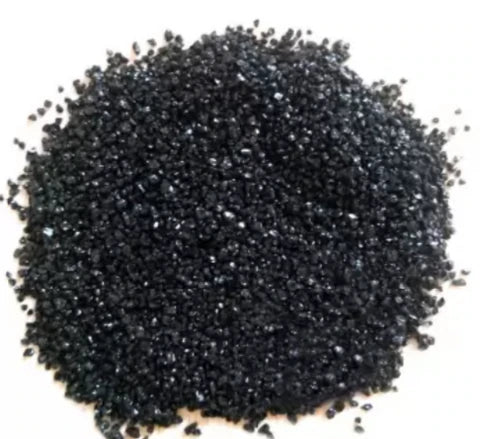
Fine black aquarium sand, sold by the kilogram. As a substrate, it lines the bottom of the tank — anchoring rooted plants, giving bottom-dwelling fish and shrimp a natural surface to forage and dig in, and hosting a portion of the tank's beneficial bacteria in its top layer. Unlike gravel, sand packs tightly enough that very little uneaten food or waste works its way down into it, which keeps anaerobic pockets from building up under a thin layer the way they sometimes do with coarse gravel.
Black substrate is popular for a specific visual reason as much as a functional one: it makes brightly coloured fish, plants, and decor stand out far more than pale gravel does, and it looks closer to the dark, tannin-stained or silty riverbed/lakebed many tropical fish naturally come from, rather than the bright artificial gravel colours common in older-style tanks. It's a especially common choice for planted tanks and nature-style aquascapes, and for showing off high-contrast fish like white clouds, neon tetras, or pale-bodied shrimp, whose colours read as washed-out against light gravel.
The sand itself is an inert, non-reactive mineral grain — it doesn't dissolve, buffer pH, or add hardness to the water, so it behaves as a purely physical substrate rather than a chemical additive. That makes it a safe, predictable base layer whether you're keeping a soft-water planted tank or a harder-water livebearer setup, since it won't push the water chemistry in either direction over time the way some "active" substrates do.
Fine sand also matters for behaviour, not just looks. A number of popular aquarium fish and invertebrates are natural sand-sifters or sand-dwellers in the wild — loaches, gobies, some cichlids, and burrowing shrimp all use loose sand to dig, sift for food, or bury themselves for cover — and a gravel substrate simply doesn't let them express that behaviour. Corydoras catfish in particular have delicate barbels around their mouths that can wear down or become irritated on sharp gravel over time, so a fine sand bed is often specifically recommended for tanks that house them.
Requirements
No power or electrical setup beyond rinsing and adding it to the tank, but a few real setup decisions affect how well it performs long-term. A typical depth is around 1-2 inches (2.5-5cm) for a flat sand bed for fish-only setups, or a deeper 2-3 inch layer at the back sloping to less at the front if you're planting root-feeding stem or sword plants directly into it, since roots need real depth to establish and anchor.
Rinse thoroughly in a bucket or under a hose before adding — sand carries much more fine dust and silt than gravel does, and skipping this step is the single most common cause of persistently cloudy, milky-looking water after a substrate change, sometimes taking days to fully settle if the sand goes in unwashed. Rinse in small batches, swirling and pouring off the cloudy water repeatedly, until the runoff comes out close to clear.
When adding it to an already-running tank, pour it in slowly and gently rather than dumping it, and consider placing a plate or bowl on the substrate first and pouring onto that to avoid stirring up a cloud that can clog filter intakes. If you're capping root-tab fertilizer or a nutrient-rich base layer underneath, keep the sand depth consistent so tabs stay buried and don't work their way to the surface.
For a brand-new tank, it's worth leveling the sand bed carefully with a straight edge or your hand before filling with water, since sand doesn't self-level the way gravel roughly does, and an uneven bed is much more visible once the tank is finished. Fill slowly against the glass or over a plate for the first inch or two of water to avoid re-disturbing a freshly leveled bed.
Compatibility


Specifications & Maintenance
Real-world specifications and ongoing upkeep once it's in the tank:
- Type: fine-grain black aquarium sand, inert (won't alter pH/hardness), safe for planted tanks, fish-only setups, and shrimp/snail colonies alike
- Coverage: roughly 1kg per small footprint at a 1-2 inch depth — buy enough kilograms to cover your tank's actual floor area at the depth you want, not just by tank size alone; a rough planning figure is about 1kg per litre of desired substrate volume, but always round up since underestimating means a second order and a partial re-do
- Before use: rinse repeatedly in a bucket or bag, agitating and pouring off the cloudy water, until the runoff runs mostly clear — this can take five or more rinse cycles for sand, noticeably more than gravel needs
- Compaction: fine sand can compact over time and trap hydrogen sulphide gas pockets underneath if left completely undisturbed for long periods — bottom-dwelling fish and shrimp that naturally sift and dig through sand help prevent this on their own, or you can stir the top layer gently by hand every so often, especially in tanks without much natural digging activity
- Cleaning: a sand-safe gravel vacuum (hovered just above the surface rather than pushed down into it, the way a gravel vac is normally used) removes waste and debris without sucking up the substrate itself; pushing a standard vacuum tip into sand will pull up large amounts of it along with the debris
- Root plants: if you're planting directly into it, root tabs pushed a couple of centimetres down give stem and sword plants a nutrient source sand alone doesn't provide, since sand itself carries very little nutritional value compared to nutrient-rich aquasoils
- Longevity: being inert and non-organic, the sand itself doesn't break down or need replacing — a well-maintained sand bed can last the lifetime of the tank with just routine surface cleaning