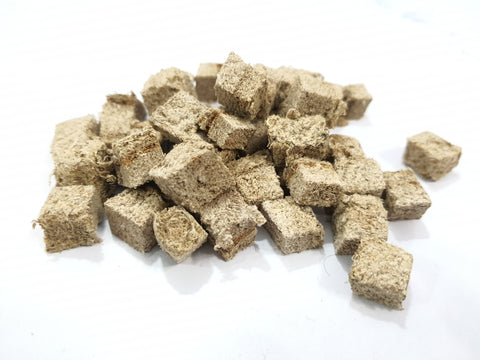
Hello pets unique food is actually tubifex worms processed by the freeze dry technique-removal of moisture under vaccum at sub-zero temperatures.
- Contains natural ingredients which outstandingly increase appetite
- Complete and balanced nutritional staple food
- High protein food
- Enhance the body shape
- Helps probiotic growth and enhances immunity
- You can use for any fishes
About
Tubifex worms are small aquatic annelid worms that live in nutrient-rich sediment in the wild, and they're a long-standing high-protein treat in the aquarium hobby. The dried form preserves the worms without refrigeration, giving a shelf-stable version of a food that's traditionally been fed live or frozen.
They're valued for their high protein and fat content, which makes them useful as a conditioning food — something fed periodically to boost growth, colour, or breeding readiness — rather than a nutritionally complete everyday staple on its own. Breeders in particular often use tubifex, live or dried, as part of a pre-spawning conditioning regimen for exactly this reason, since the extra fat and protein can help trigger and support breeding condition in species that respond to a richer diet.
Most fish find dried tubifex highly palatable — the scent and texture trigger a strong feeding response in most omnivorous and carnivorous aquarium fish, which is exactly why it's often used to tempt a reluctant eater, a newly-introduced fish that hasn't settled in yet and is refusing normal food, or to add variety to a diet that's otherwise all flakes or pellets. That same high palatability is also why it's easy to overfeed — fish will often keep eating it well past the point of being full, unlike a plain flake food many will stop taking once satisfied.
The dried, processed format sold here differs meaningfully from the live tubifex traditionally collected from sediment in polluted urban waterways, which has a well-documented history of carrying parasites and bacterial contamination absorbed from the water it grew in. Drying and processing removes that specific live-collection risk, which is a large part of why the dried/freeze-dried form has become the more commonly recommended option in the hobby over feeding live worms of unknown origin.
Requirements
Feed as a treat or supplement a few times a week rather than as the main diet — it's rich but not nutritionally balanced on its own the way a purpose-formulated staple food is, and relying on it exclusively would leave gaps in vitamins and fibre that a complete diet is designed to cover.
A small pinch goes a long way; dried tubifex expands somewhat once wet, and overfeeding rich, high-fat foods like this is a common cause of water fouling and fish digestive issues, including bloating in smaller species not used to such a calorie-dense meal.
Historically, live tubifex sourced from polluted water has been linked to disease and parasite risk — the dried, processed form used here avoids that specific issue, but it's still worth buying from a reputable source and storing it properly to avoid contamination after purchase, since improper storage can reintroduce mould or bacterial growth even in an originally clean, dried product.
It's best offered to fish species that naturally take meaty, protein-rich foods — most tropical community fish, cichlids, bettas, and many catfish will all readily accept it — rather than to strictly herbivorous species, which are better served by plant-based foods and shouldn't have their diet skewed too heavily toward animal protein.
Uneaten portions should be removed from the tank within a few minutes rather than left to sink and decay, since dried tubifex softens and fouls water noticeably faster than a plain flake food once it's wet — a small pinch left uneaten overnight can measurably affect water quality in a small tank.
If you're transitioning a fish onto it from a different diet, introduce it gradually alongside the existing food rather than swapping abruptly, both to gauge acceptance and to avoid a sudden dietary shift that can upset digestion in more sensitive species.
Compatibility

Feeding Guidelines
Because it's a rich supplement rather than a complete diet, moderation matters more here than with an everyday staple food:
- Frequency: 2–3 times per week as a treat/supplement, not a daily staple
- Portion: a small pinch per feeding — it's calorie-dense relative to its volume, and easy to overestimate how little is actually needed
- Watch for leftovers: remove any uneaten worms after a few minutes rather than letting them sink and decompose, since dried tubifex fouls water quickly once it's wet and uneaten
- Storage: airtight container, cool and dry, away from humidity which will cause clumping and spoilage well before any printed expiry date
- Signs of spoilage: discard if it develops an off smell, mould, or unusual discolouration — dried food that's absorbed moisture is not safe to feed even if it looks mostly intact
- Who to feed it to: best suited to omnivorous and carnivorous community fish, cichlids, bettas, and catfish; skip it, or feed only sparingly, for strictly herbivorous species
- Conditioning use: if using it to condition fish for breeding, increase frequency slightly in the weeks before an intended spawn rather than year-round, then taper back to occasional treat status afterward
- New-fish introductions: a small offering of dried tubifex can help settle a stressed or newly-arrived fish that's ignoring standard food, since its strong scent often triggers a feeding response other foods won't
- Rehydrating: some keepers soak a pinch briefly in tank water before feeding so it's already softened, which can make it easier for smaller-mouthed fish to take and reduces the chance of a large dry clump absorbing water and expanding awkwardly inside the tank
- Not a substitute for variety: even as a supplement, rotate it with other treat foods (bloodworm, brine shrimp, daphnia) rather than using tubifex exclusively, for a broader nutritional profile over time