About & Origin
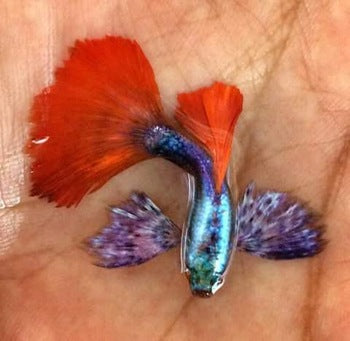
"Dumbo ear" refers to a finnage variety of the common guppy, a small livebearing freshwater fish (Poecilia reticulata), selectively bred for unusually large, wing-like pectoral fins that flare out from just behind the gills -- named for their resemblance to elephant ears. It is a cosmetic strain, not a different species, and shares the same South American livebearer origins and biology as every other guppy variety.
Guppies are livebearers, giving birth to free-swimming fry rather than laying eggs; a mated female can produce a new batch roughly every 4-6 weeks even without a male present. Because the oversized pectoral fins are purely decorative and slightly reduce manoeuvrability, dumbo ear guppies do a little better in a calm tank without fast, boisterous tankmates that might outcompete them at feeding time or nip at the extra fin.
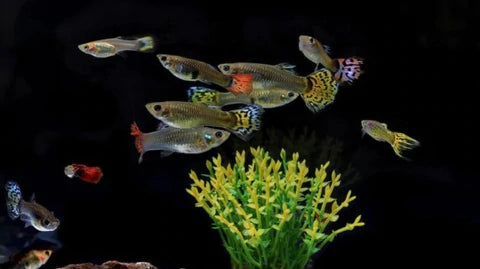
This listing is a pack of 10 fish rather than a single individual -- a practical way to establish a proper shoal in one purchase rather than buying guppies one or two at a time, since these are genuinely social, shoaling fish that look and behave better in numbers. A batch this size typically arrives as a mix of ages and, unless specified otherwise, a mix of sexes, which is worth knowing if you have a specific male:female ratio in mind for controlling breeding rate.
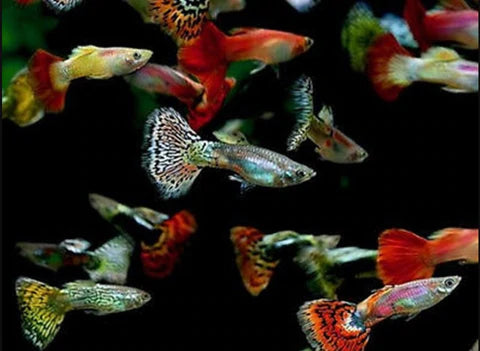
Because the dumbo-ear trait is a fin-shape mutation that can appear across many different colour lines rather than being tied to one specific colour, a pack like this may show some natural variation in body colour and pattern between individuals while all sharing the same distinctive oversized pectoral fins -- part of the appeal of buying a group rather than a single colour-matched pair.
Requirements
Care is standard guppy care, with slightly more attention to fin safety because of the enlarged pectorals.
Tankmates: avoid known fin-nippers (some barbs, some tetras) which are more tempted by the larger fin surface than with a standard-finned guppy.
Sex ratio: as with all guppies, keep more females than males (roughly 2-3:1) to avoid over-harassment of females by constant male courtship.
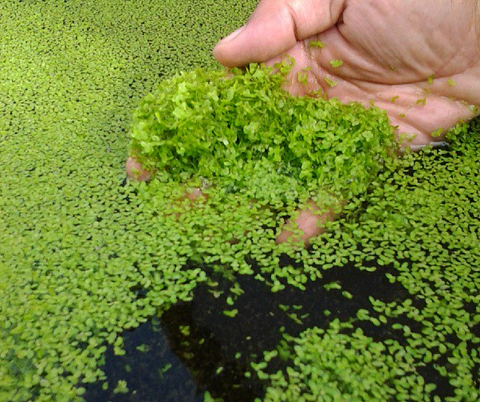
Tank size and cover: a 40-60cm tank with floating or dense planting works well, giving fry and stressed fish somewhere to retreat to.
Diet is easy -- a good flake or micro-pellet staple with occasional live/frozen foods for conditioning and colour.
Stocking a group of 10: for a mixed-sex batch this size, plan on at least a 15-20 gallon (55-75 litre) tank once the group is fully grown and any resulting fry are factored in -- guppies breed readily, and a batch of 10 unmanaged adults can turn into a much larger population within a few months. If you specifically want to control numbers, request or sort for a female-heavy or all-female group rather than leaving sex ratio to chance.
Settling in a group: introducing 10 fish at once is generally lower-stress for guppies than adding individuals one at a time into an already-established hierarchy, since a same-size group settles its social order together rather than newcomers having to integrate into an existing pecking order. Expect a short adjustment period of a day or two with some chasing as the group sorts itself out, which is normal.
Quarantine: as with any new batch of livestock, a short quarantine period (1-2 weeks) before adding to an established display tank is good practice to catch any early signs of illness or parasites before they can spread to existing stock.
Compatibility
Water & Care Conditions
Guppies are adaptable, but genuinely do best -- with the strongest colour, fullest fins, and best breeding success -- in water on the harder, more alkaline side, unlike many soft-water tetras:
- pH: 7.0–8.0
- Hardness: moderately hard to hard, roughly 8–25 dGH; a small pinch of aquarium salt is tolerated well and sometimes used to support fin health, though it isn't required
- Temperature: 22–28°C (72–82°F)
- Oxygenation: not demanding; comfortable in gentle to moderate flow
They tolerate a wider range than the ideal above, but colour, fin condition, and fry survival rates are noticeably better in clean, moderately hard, well-cycled water.
With a group of 10 fish, bioload builds up faster than with one or two -- a properly cycled filter sized for the eventual tank stocking (adults plus any fry) matters more here than for a single-fish purchase, and weekly 20-25% water changes become more important to keep ammonia and nitrite from creeping up between cleans. Test the water during the first few weeks after introducing a batch this size, since a newly-stocked tank is the point where water quality issues are most likely to surface.
Watch the group as a whole rather than just individuals: if several fish in the batch show clamped fins, lethargy, or reduced appetite around the same time, that's more likely a water-quality or new-tank-syndrome issue affecting everyone than a problem specific to one fish, and is worth checking parameters over immediately rather than waiting. An individual fish showing symptoms on its own, by contrast, is more likely a specific injury or a fish that simply arrived weaker than the rest of the batch, rather than a sign that anything is wrong with the tank itself. Isolating a single struggling fish into a small hospital container, rather than treating the whole display tank, is usually the better first step in that case.