Flowerhorn Cichlid — Complete Care Guide
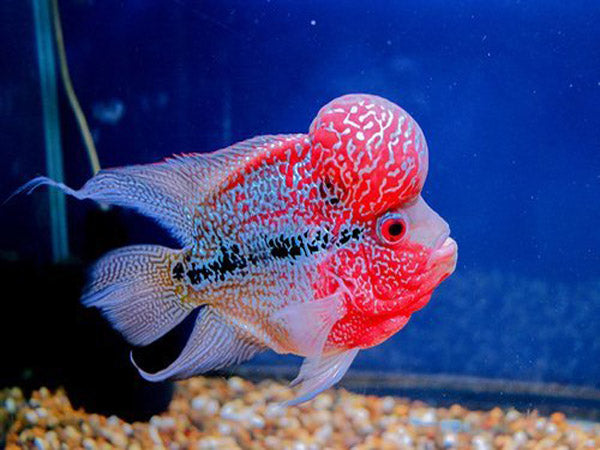
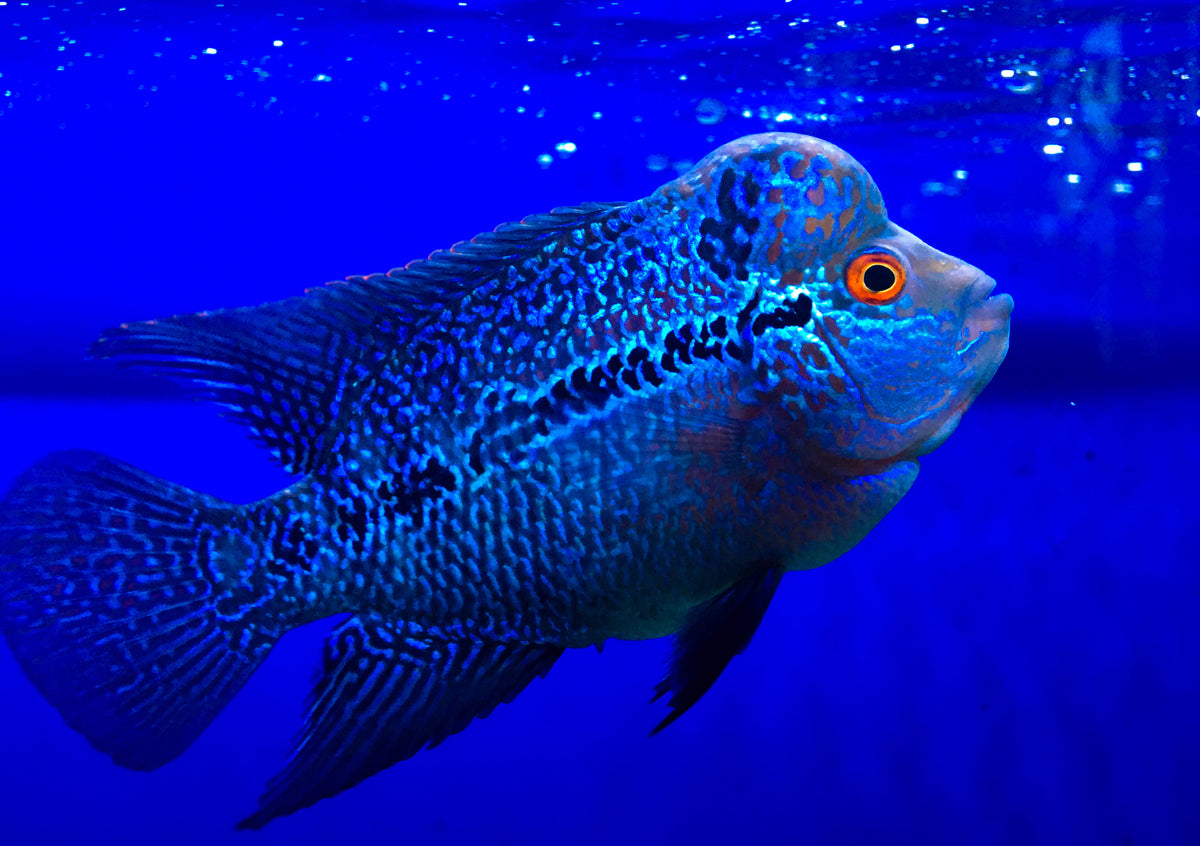
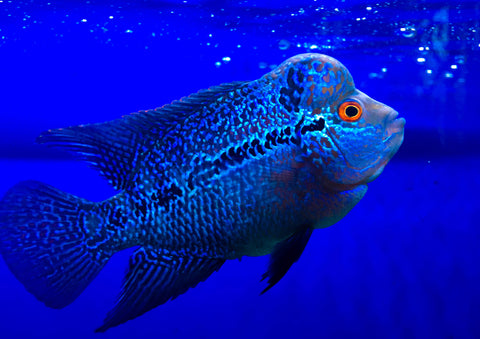
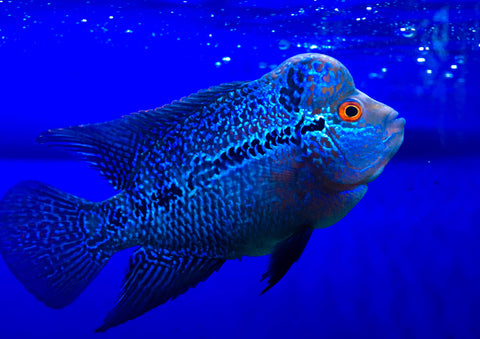
The Flowerhorn cichlid is a hybrid freshwater fish developed in Malaysia and Taiwan in the 1990s by crossing Cichlasoma trimaculatum with Cichlasoma festae. It requires a minimum 75-gallon (280-litre) tank, water temperature of 26–30 °C, pH 7.0–8.0, and a high-protein diet of cichlid pellets supplemented with krill and bloodworms. Males are identified by a prominent nuchal hump (kok) — a fatty deposit that grows with age, diet quality, and genetics. Flowerhorns are solitary, highly territorial fish best kept one per tank.
Tank Requirements
A single adult Flowerhorn requires a minimum of 75 US gallons (280 litres); pairs or fish over 30 cm need 125 gallons or more. A long tank footprint (4 ft+) is preferred over height to accommodate the fish's horizontal swimming pattern.
- Temperature: 26–30 °C (78–86 °F)
- pH: 7.0–8.0
- Hardness: 9–20 dGH
- Filtration: Canister or sump filter rated for 6–8× tank volume per hour — Flowerhorns produce high ammonia loads from their protein-heavy diet
- Water changes: 25–30% twice weekly to keep nitrates below 20 ppm
- Substrate: Fine sand or smooth river gravel — Flowerhorns dig actively; sharp substrate damages their barbels
Nitrate levels above 40 ppm directly suppress kok development and cause colour fading — the most visible signs of poor water quality in this species.
Feeding
Flowerhorns are carnivorous omnivores. The staple diet should be a high-protein cichlid pellet containing astaxanthin and spirulina — both pigment precursors that intensify the species' characteristic red-orange colouration. Hikari Cichlid Gold, Okiko Platinum, and similar pellets are industry standards.
- Frequency: Once or twice daily — only what the fish consumes in 2–3 minutes
- Protein supplements (2–3×/week): frozen bloodworms, krill, earthworms, small prawns
- Occasional treats: crickets, mealworms (high in chitin — supports immune function)
- Avoid: feeder goldfish (thiaminase content), tubifex worms (disease vector risk)
Behaviour & Tank Mates
Flowerhorn cichlids are highly aggressive and strongly territorial — individual fish establish and defend the entire tank as their territory. Single-specimen keeping is the standard recommendation. Two males housed together will fight to the point of severe injury or death.
The only reliably compatible tank mates are large plecos: the Sailfin Pleco (Pterygoplichthys gibbiceps) and Royal Pleco (Panaque nigrolineatus) can coexist in tanks of 150 gallons or more, as they occupy the bottom and are armoured against cichlid aggression. All soft-bodied or slow-moving fish should be excluded.
Common Health Issues
- Hole-in-the-Head Disease (HITH): Caused by Hexamita sp. parasites, exacerbated by nitrates above 40 ppm and vitamin C/D deficiency. First sign: small pits around the lateral line and head. Treatment: Metronidazole (400 mg/10L) + water quality correction.
- White Spot Disease (Ich / Ichthyophthirius multifiliis): Triggered by temperature drops below 24 °C or stress. Treatment: raise temperature to 30 °C + formalin-based medication for 5–7 days.
- Bloat (Dropsy): Caused by overfeeding or low-quality protein sources leading to internal bacterial infection. Symptoms: pine-cone scale appearance, lethargy. Treatment: Kanamycin or Maracyn Plus; fast fish 3 days before medicating.
- Fin Rot (Aeromonas / Pseudomonas spp.): Secondary infection from chronic poor water conditions. Treat the water first; add API Furan-2 or equivalent antibiotic only if tissue loss is visible.
Why Buy from FishyKart?
FishyKart sources Flowerhorn cichlids exclusively from specialist breeders in Malaysia, Thailand, and India who maintain bloodlines for kok development and colour intensity. Every fish is quarantined for a minimum of 7 days before dispatch and shipped in oxygen-sealed, temperature-insulated bags with live arrival guarantee across India. We stock baby Flowerhorns (3–5 cm) through to adult display fish (20+ cm) — contact us for current availability and pricing.
About & Origin
The flowerhorn is an ornamental cichlid -- not a wild species but a man-made hybrid, developed from crosses between several Central American cichlids (including trimac, red devil, and other Amphilophus/Vieja lineages) starting in Southeast Asia in the 1990s. It was bred specifically for its exaggerated nuchal hump (the 'flower' in its name) and vivid, often near-fluorescent colouration.
Because of its hybrid origin there's no single natural habitat or behaviour pattern to describe -- flowerhorns inherit the boldness, intelligence, and territorial instincts of their Central American cichlid ancestors, often to an intensified degree through selective breeding for temperament as much as looks.
It's an intelligent, highly interactive fish that recognises its owner and will often 'beg' at the glass, which is part of its enduring popularity despite its difficult temperament.
The nuchal hump ("kok" in the hobby's own terminology) is one of the flowerhorn's defining and most debated traits: its size and shape vary enormously between individuals and lines, it develops mainly as the fish matures over its first one to two years, and genetics play a far bigger role in its eventual size than diet or "hump-growth" supplements marketed to boost it -- a fish's ultimate hump size is largely set by its parentage, not by anything an owner adds to the food bowl. Colour and pattern are similarly variable and prized: the ideal, most sought-after individuals show bold, high-contrast markings (often called "flowerline" or pearl-scale patterning) against a vivid red, orange, or yellow base, though exactly which traits are most desirable shifts with hobbyist fashion and varies by region.
Because it's an artificial hybrid line rather than a natural species, flowerhorn breeding is an active, ongoing pursuit in its own right within the hobby, with different bloodlines (Kamfa, Zhen Zhu, Golden Monkey, and many others) prized for different combinations of hump size, pattern, and body shape, and individual fish sold at hugely varying prices depending on how closely they match a given bloodline's ideal.
Requirements
Flowerhorns are notoriously aggressive and territorial, more so than most of their parent species, and adults commonly reach 25-30cm. A single specimen needs at least 200 litres (55 gallons), ideally more, with minimal decor to reduce injuries during its frequent territorial displays and to leave clear swimming space it will patrol constantly.
This is a fish that is realistically best kept alone, one per tank -- pairing it with almost anything, including other flowerhorns, risks serious injury or death to the smaller/weaker fish. Community stocking is not a realistic goal with this species.
It's a large, food-driven predator: a high-protein pellet formulated for flowerhorns or large cichlids is the easiest staple, with occasional live or frozen shrimp and other protein for conditioning and colour.
Décor should be functional rather than decorative: smooth, securely anchored rock and driftwood arranged to give sightline breaks without offering an aggressive fish anything sharp to injure itself on during its frequent territorial charges at the glass or at its own reflection. Live plants are generally not worth attempting -- between the fish's size, digging, and general disregard for its surroundings, all but the toughest, well-anchored species get uprooted or destroyed quickly.
A secure, heavy lid is essential: flowerhorns are powerful, food-motivated jumpers, especially at feeding time, and an open tank top is a genuine escape and injury risk with a fish this size and this driven.
Filtration needs to be well oversized relative to the tank's nominal volume given the size, appetite, and waste output of a single large flowerhorn -- canister filtration or a sump rated for a notably larger tank is the norm among serious keepers of this species, not an optional upgrade.
Compatibility
Water & Care Conditions
As a hybrid without one wild habitat, care follows general large-cichlid guidelines rather than a specific native water chemistry:
- pH: 6.5–7.8
- Water hardness: moderately hard, 8–20 dGH
- Temperature: 26–30°C (79–86°F)
- Oxygenation: strong filtration is essential given its size and appetite -- a heavily stocked bioload from a single large fish
- Water changes: larger, more frequent partial water changes (25-30% weekly) than a small community tank needs, given the heavy bioload of a single large predatory fish; ammonia and nitrite should always read zero
- Diet & colour: a varied, high-quality diet supports both growth and colour development, but genetics -- not any specific "colour-boosting" food or supplement -- ultimately sets the ceiling on how vivid a given fish's colouring becomes
- Common issues: as with other large, heavily-fed cichlids, "hole in the head" disease (linked to poor diet and water quality) and obesity from overfeeding are the most avoidable real health risks, alongside injuries from territorial glass-charging or clashes with any tankmate
- Growth planning: a young flowerhorn grows quickly and reaches most of its adult size and hump development within its first one to two years, so the eventual 200+ litre setup should be planned for from the start rather than upgraded to reactively
- Lighting: moderate aquarium lighting works well and helps show off colour without being a significant factor in this species' well-being one way or another
- Substrate: smooth sand or fine gravel suits a fish that digs and rearranges its tank regularly, reducing the risk of injury compared to sharp or coarse material
- Handling: this species can be stressed or injured by rough netting given its size and strength -- a soft, appropriately sized container is safer for moving an adult than chasing it with a net