About
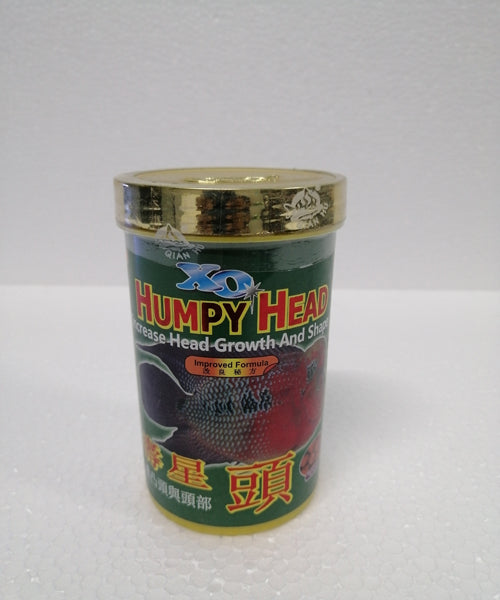
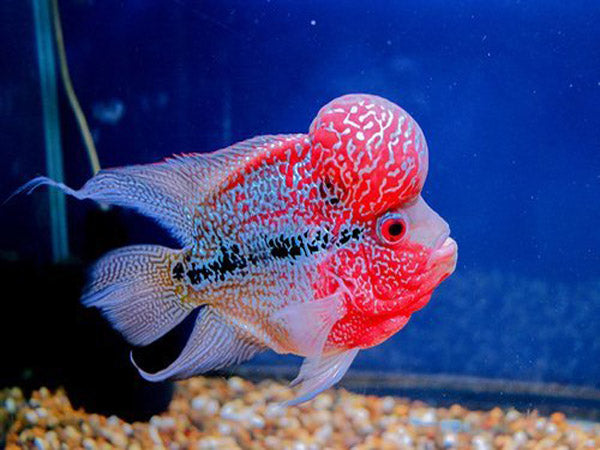
Humpy Head is a 100 gram flowerhorn cichlid food specifically marketed around promoting the species' signature nuchal hump — the prominent head bump that's a major part of what makes flowerhorns desirable as a show fish. It's a high-protein formula, often boosted with specific supplements believed to support head growth. Flowerhorns themselves are a man-made hybrid cichlid, not a wild species, developed from crosses between several Central American cichlids and bred specifically for bold colour and, in many lines, this exaggerated head shape.
It's worth being upfront that head-hump development in flowerhorns is influenced by genetics, hormones, age, and individual variation as much as diet — a head-growth food can support and complement a fish's natural potential, but it isn't a guarantee of a dramatic hump on every individual regardless of its genetic background.
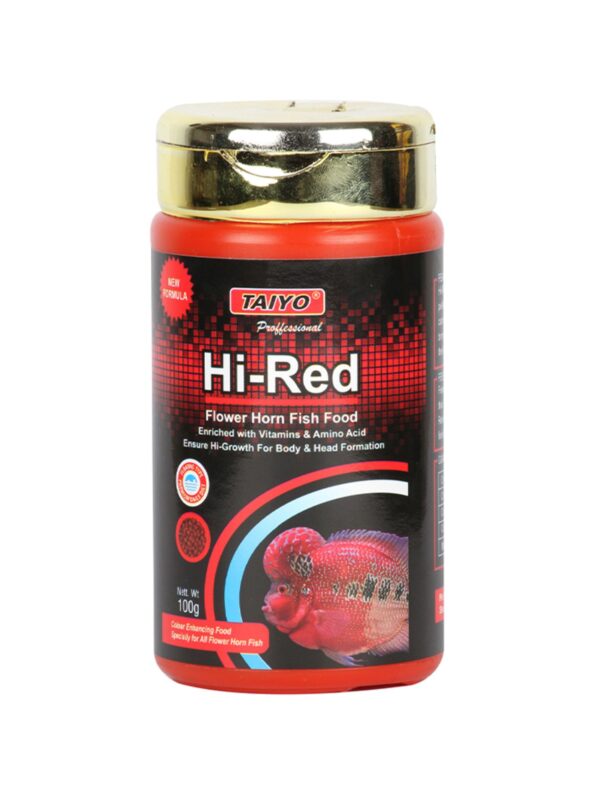
Beyond the head-growth angle, it functions as a standard high-protein flowerhorn staple, supporting the fast growth and large appetite typical of the species.
Head-growth formulas like this typically lean on ingredients thought to support the fatty tissue growth involved in a developed nuchal hump, alongside the usual colour-enhancing and protein-rich base common to flowerhorn foods generally — it's an addition to a standard high-quality diet rather than a fundamentally different category of food.
Requirements
Feed according to fish size and appetite — flowerhorns are large, food-driven cichlids, so portion control matters even with a food that's marketed toward growth; overfeeding still fouls water and risks obesity regardless of the formula's intent.
Because it's protein-rich, uneaten portions break down quickly and can affect water quality faster than plant-based foods — strong filtration and prompt removal of excess food are worth pairing with this diet. Most flowerhorns are also kept alone due to their territorial nature, so feeding is typically a simple one-fish routine without tankmate competition to manage.
Store sealed, cool, and dry; discard if the food develops a rancid smell, which happens faster with high-fat, high-protein formulas than with plain flake foods.
Any visible hump-growth effect builds up gradually over weeks to months of consistent feeding rather than appearing quickly — a genetically promising young fish fed this way over time is a more realistic expectation than a dramatic short-term change in an older, already-mature individual.
Pellet size should match the fish's current mouth size — check the packaging for a size guide relative to the fish's length rather than assuming any flowerhorn pellet fits any size fish comfortably. Introducing a new food gradually alongside an existing one, rather than switching abruptly, tends to go more smoothly with a fussier eater.
Compatibility
Feeding Guidelines
As with any flowerhorn food, portioning and freshness matter for a fish with a large appetite and high bioload:
- Feeding amount: size-appropriate portions, 1–2 times daily, adjusted to the individual fish's appetite
- Realistic expectations: supports natural head-growth potential; genetics and age play a large role too
- Storage: sealed, cool, dry place; discard if rancid-smelling
- Shelf life: best used within a few months of opening
- Timeline: any hump-growth benefit builds gradually over weeks to months of consistent feeding, not a quick fix
- Best suited to: a young, genetically promising fish fed consistently over time rather than an older individual expecting a sudden change
- Water quality: a large, heavy-feeding fish on a high-protein diet needs strong filtration and prompt removal of uneaten food
- Variety: alternating with occasional frozen or live treats gives closer-to-natural dietary variety alongside the head-growth formula
- Container check: discard if pellets clump, smell off, or show moisture damage, a sign of spoilage even within the stated shelf life
- Feeding frequency: one to two size-appropriate feedings daily for an adult, more frequent smaller feedings for a growing juvenile
- Solo feeding: most flowerhorns are kept alone, so feeding is typically a simple routine without competition from tankmates
- Protein source: check the ingredient list for a named fish or shrimp meal near the top as a quick indicator of overall quality