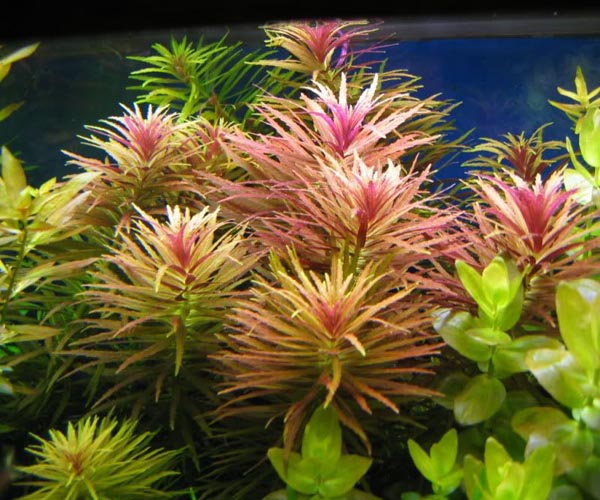
About & Origin
Limnophila aromatica is a fragrant aquarium stem plant, sometimes called rice paddy herb, native to Southeast Asia, where — true to the name — it grows in flooded rice paddies, ditches, and shallow wetlands, and is even used as a fresh culinary herb in some regional cuisines when grown emersed.
Grown submerged in the aquarium, it becomes a striking stem plant: narrow, aromatic leaves in whorls along an upright stem, with the underside of the leaves showing purple-red tones that intensify under strong light — the trait this "purple" form is specifically selected and sold for.
It's a popular midground-to-background accent plant in planted aquascapes, valued for adding warm colour to an otherwise green layout without needing a difficult red plant.
In the wild the plant is amphibious: it grows just as readily emersed, poking above the waterline of a paddy field, as it does fully submerged. That dual habit is part of why it adapts so well to aquarium life — a submerged stem is really just the plant reverting to one of its two natural growth forms, rather than being coaxed into an unnatural one. The whorled leaf arrangement (several narrow leaves radiating from each node around the stem, rather than opposite pairs) gives it a distinctive feathery silhouette that stands out against broader-leaved neighbours.
Left to grow tall and unpruned, a single stem can reach the surface of a standard-height tank within a few weeks under good light, at which point it will often push emersed leaves above the waterline and, given enough time and the right conditions, even flower — something most fully submerged aquarium stem plants rarely do.
The rice-paddy-herb name isn't just historical trivia — the plant genuinely is eaten fresh in parts of Vietnamese and Southeast Asian cooking, valued for its aromatic, slightly citrus-and-cumin scent when the leaves are crushed. That same essential-oil content is thought to make it somewhat less palatable to grazing fish and shrimp than many softer-leaved stem plants, which is part of why it tends to survive well even in tanks that also house herbivorous or omnivorous fish that nibble at other greenery.
Requirements
Limnophila aromatica is moderately demanding — easy to keep alive, but needs the right conditions to show its purple colour.
Light: moderate to high light is what brings out the red-purple leaf undersides; in low light it stays mostly green.
CO2: not mandatory, but supplemental CO2 noticeably improves both growth density and colour intensity — a common "high-tech" choice, but manageable without CO2 too if colour is a secondary concern.
Nutrients: benefits from a nutrient-rich substrate and regular liquid fertiliser, especially iron, which supports the red pigmentation.
Planting and propagation: root as a stem plant, trim the growing tip to encourage bushier side growth, and replant healthy cuttings as it grows leggy at the base.
Water flow: gentle to moderate current around the stems is enough — Limnophila doesn't need to be blasted by an outflow, and very strong flow can flatten the whorled leaves against the stem, spoiling the feathery look the plant is grown for.
Common growing mistake: in low light without CO2, the stem tends to stretch out with long gaps between leaf whorls ("legginess") rather than staying compact — if that happens, the fix is more light and a hard trim-and-replant rather than trying to nurse the existing leggy growth back into shape.
Because it grows relatively quickly under good conditions, it's a good candidate for keepers who want to practise regular stem-plant trimming and propagation without risking an expensive or fussy species.
Substrate: a nutrient-rich planted substrate or root tabs placed near the base help it establish faster, though — like most stem plants — it draws a meaningful share of its nutrition through the leaves from the water column too, so it isn't strictly dependent on a specialist substrate the way heavy root-feeders like Amazon swords are.
Positioning: because it can grow tall quickly, it's best planted toward the middle or back of the tank where its height won't shade out lower foreground plants once it fills in.
Compatibility
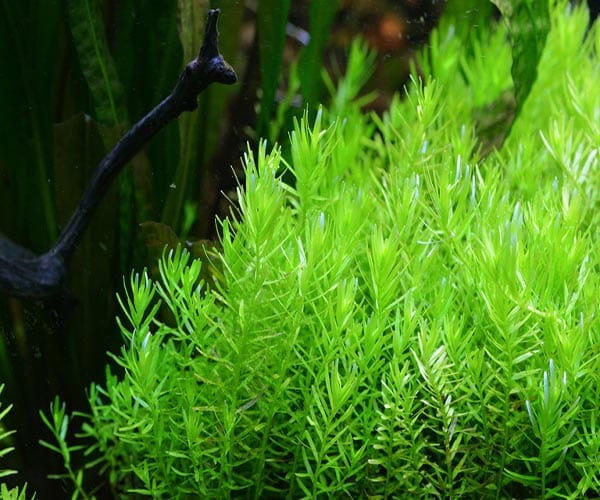
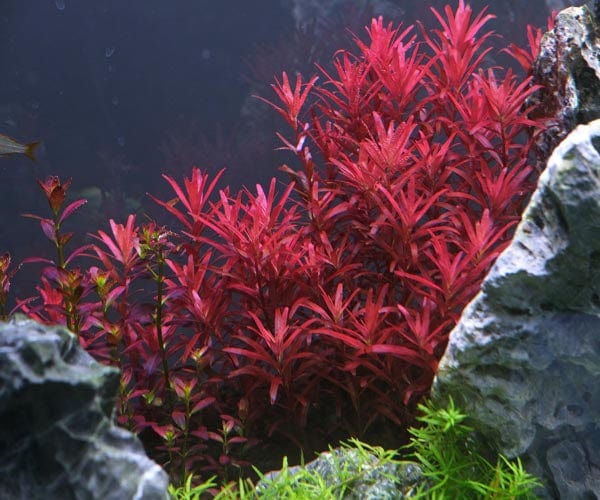
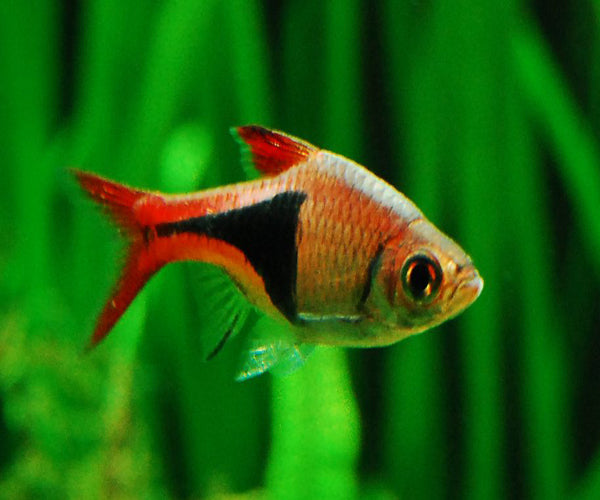
Water & Care Conditions
As a plant that naturally lives half in, half out of shallow tropical water, Limnophila aromatica is fairly forgiving of parameter swings, though its colour is a much more sensitive indicator of conditions than its survival is. It does best within these ranges:
- pH: 6.0–7.5
- Hardness: soft to moderate, roughly 2–12 dGH
- Temperature: 22–28°C (72–82°F)
- Light: moderate to high, ideally with CO2 and iron-rich fertiliser for the best purple-red colour
- Oxygenation / CO2: like most stem plants grown for colour, it responds well to supplemental CO2 injection alongside good surface agitation for gas exchange — the two aren't in conflict as long as CO2 diffusion happens before the water reaches the surface
Outside these ranges it will usually survive but grow more green than purple, and more sparsely without adequate light and nutrients. A sudden move between very different water conditions (for example, straight from a soft, low-light shop tank into a hard, high-light display tank) can also cause a temporary shed of older leaves while the plant adjusts — new growth typically comes in fine once it settles.
Routine maintenance is straightforward: trim the top few centimetres of each stem every one to two weeks once the plant is established, and either discard the cuttings or replant them elsewhere in the layout to bulk up the group — a healthy stem plant patch is really just an ongoing cycle of cutting and replanting rather than a "set and forget" purchase.
Nutrient dosing matters as much as light for this species: a balanced liquid or all-in-one fertiliser covering nitrogen, phosphorus, potassium, and trace elements will support faster growth, but iron specifically is the nutrient most closely tied to how strongly the purple-red colour develops, so a fertiliser regime that's light on iron will tend to leave the plant looking more olive-green than the vivid purple it's sold for, even with otherwise good light and CO2.