About & Function
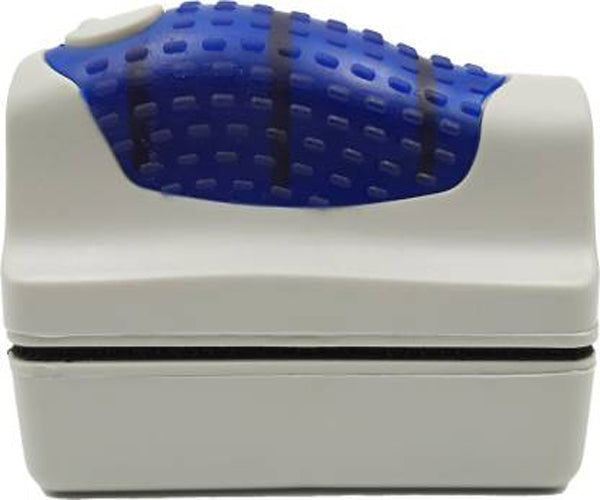
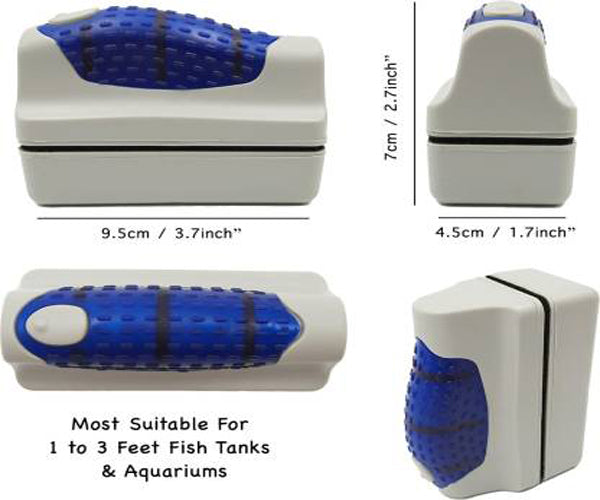
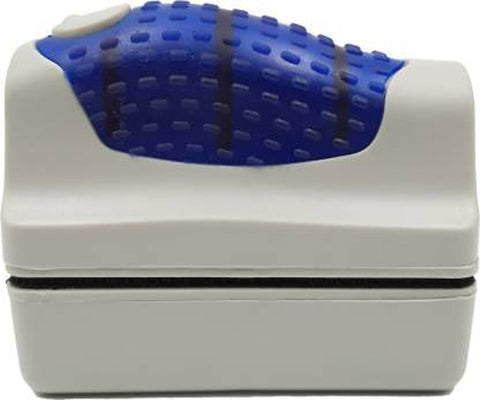
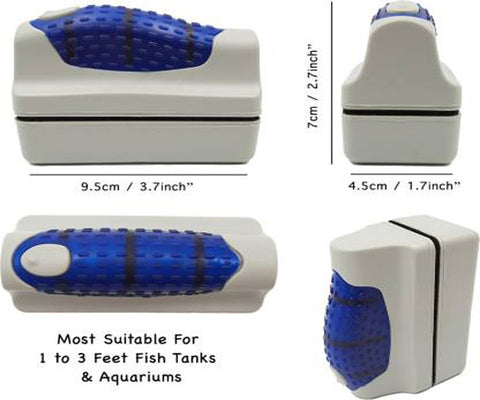
A magnetic aquarium cleaner is a pair of magnetic scrubbing pads — one that stays inside the tank pressed against the glass, and one that you hold and move on the outside. The two halves attract through the glass, so sliding the outer pad around the tank drags the inner scrubbing pad across the glass with it, letting you clean algae off the inside surface without ever getting your hands wet or opening the lid.
This solves one of the most routine and mildly annoying jobs in fishkeeping: algae film builds up on the glass constantly, especially under decent lighting or in a well-lit room, and scrubbing it off by hand means submerging your arm, disturbing the fish, and stirring up debris from the substrate. A magnetic cleaner turns that into a quick, low-disturbance wipe-down from outside the tank.
Most magnetic cleaners use a scrubbing pad on one side (for tougher algae) and a softer felt or foam pad on the other, so the same tool handles both routine touch-ups and more stubborn buildup. They're sized for different glass thicknesses, so choosing one rated for your tank's actual glass thickness matters for the magnets to hold properly.
Because it never has to enter the water, it's also one of the few maintenance tools that carries essentially zero risk of introducing contaminants, cross-tank pathogens, or accidental fish injury. It also means no rolled-up sleeve, no wet arm smelling faintly of tank water, and no disturbing whatever's resting near the glass — a genuinely low-friction way to keep the front and side panels clear for viewing between full cleaning sessions.
For planted or heavily aquascaped tanks in particular, where reaching into the water risks knocking loose plants or disturbing carefully arranged hardscape, a magnetic cleaner lets you keep the glass clear without touching anything else inside the tank at all.
Requirements
A magnetic cleaner is fully passive — no power, no batteries, nothing to plug in. Its only real "requirement" is being correctly matched to your tank.
Glass thickness: the magnets need to be strong enough to hold together through the glass but not so strong they're unmanageable — cleaners are sold rated for a specific glass thickness range (thin nano-tank glass vs. a thicker large-aquarium panel), so check your tank's actual glass thickness before choosing a size.
Acrylic tanks: a cleaner designed for glass can scratch acrylic if it's the wrong grade of scrubbing pad — acrylic-safe versions use a softer pad specifically to avoid this, so this matters if your tank isn't glass.
Starting the magnets: most cleaners need you to hold the two halves together outside the tank first to "link" them magnetically before placing the inner pad against the glass, rather than trying to align them separately through the glass from a distance.
Buoyancy safety: if the inner pad ever detaches and sinks, most models are designed to float or at least not immediately crush anything fragile below, but it's worth fishing it out promptly rather than leaving a loose magnet sitting on top of delicate plants or substrate for an extended period.
It works on tanks of essentially any size — the only real variable is matching magnet strength/pad size to your glass thickness and how much surface area you need to cover. A cleaner rated too weak for a thick tank panel will simply lose contact and slip off mid-clean, while one rated far stronger than needed can be needlessly hard to slide and more likely to trap grit against the glass with more force behind it.
Compatibility


Specifications & Maintenance
There's no water chemistry to manage here — care is entirely about keeping the pads effective and grit-free:
- Rinse the scrubbing pad regularly: trapped substrate grains or grit on the pad are the most common cause of glass scratches, so rinse it under clean water whenever you notice grit has built up, and especially before each use.
- Match the pad to the algae: use the softer felt/foam side for light routine films and reserve the coarser scrubbing side for stubborn spot algae, rather than defaulting to the harshest pad every time.
- Dry storage between uses: letting the pads dry out between cleanings reduces the chance of them harbouring algae or bacteria that gets reintroduced to the glass next time.
- Replace worn pads: most models have replaceable scrubbing pads once they wear thin or lose their grip — replacing just the pad rather than the whole magnet assembly is usually the cheaper long-term option.
- Keep it away from other magnets and electronics: strong aquarium magnets can interfere with pacemakers, credit-card strips, and some electronics, so store and handle with that in mind.
- Handling technique: smooth, steady, slightly overlapping passes clear algae more evenly than fast, jerky strokes, and reduce the chance of the two halves losing their magnetic grip mid-pass.
- Corners and edges: most designs can't reach fully into tank corners, so a small handheld algae scraper or old credit card is still worth keeping around for the areas the magnetic cleaner can't reach on its own.
- Don't force it across obstacles: decorations, equipment, or a heater positioned near the glass can snag or dislodge the inner pad as you slide the cleaner past — plan your cleaning path around hardscape rather than pushing through it.
- Check magnet strength over time: if the two halves start slipping or losing contact through the glass, the magnets themselves may be weakening with age — this is uncommon but eventually happens with heavy daily use over several years.
With occasional rinsing and gentle handling, a decent magnetic cleaner easily lasts for years of regular glass maintenance and quickly becomes one of the more-used tools in a maintenance routine.