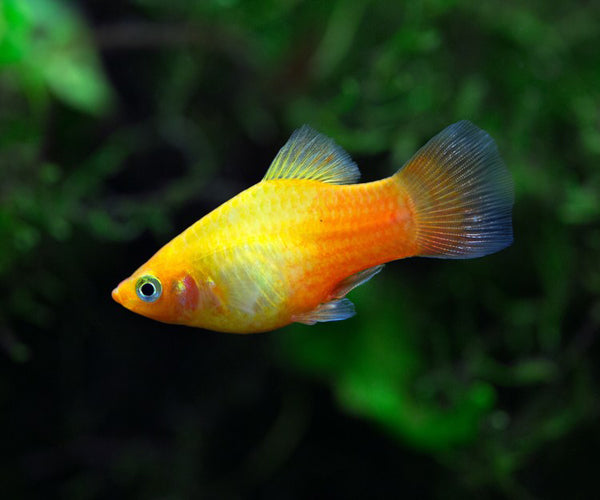
About & Origin
The Mango Platy is a small, peaceful livebearer fish and a popular beginner aquarium species — a warm orange-yellow colour form of Xiphophorus maculatus, the southern platyfish, whose wild ancestors come from slow-moving rivers, streams, and coastal waters across Mexico, Guatemala, and Belize. It's one of the most popular livebearers in the hobby thanks to its small size, peaceful temperament, and easy care.
In the wild, platies live in loose shoals in shallow, well-vegetated water, feeding on algae, small invertebrates, and plant matter -- an omnivorous diet that carries over directly into the aquarium. Platies are also known for a natural tolerance of brackish water, since wild populations occur in coastal drainages where fresh and salt water mix — a trait rarely needed in home aquaria but a useful indicator of how adaptable the species is to imperfect conditions overall. Females noticeably outgrow males, typically reaching around 6cm against a male's 4–5cm, and males are further distinguished by a modified anal fin called a gonopodium used to fertilise females internally — the same reproductive structure found across all livebearers in the wider Poeciliidae family, including guppies and mollies.
Like all platies, it's a livebearer that gives birth to free-swimming fry rather than laying eggs, and it breeds readily and often in a mixed-sex group, making it a popular fish for keepers who enjoy watching the full life cycle unfold without special breeding setups. The name "platy" is shortened from the genus Xiphophorus's older classification, and decades of selective breeding for colour (rather than fin shape, unlike its close relative the swordtail) have produced dozens of named strains — Mango is one of the straightforward solid-colour options, prized for a warm, saturated tone rather than any pattern or fin modification.
Requirements
Standard platy husbandry applies (female-heavy sex ratio, 60cm/24in+ tank for a small group, omnivorous flake/pellet diet plus vegetable matter, more cold-tolerant than most tropicals, fry appear unexpectedly in mixed-sex groups so plan ahead).
This strain specifically: the mango orange-yellow tone is a colour-only selection with standard platy body and finnage — no shape or fin differences from the wild-type Southern Platy. Colour intensity responds well to carotenoid-rich food (a bit of brine shrimp or a colour-boosting flake) and tends to look duller on a plain diet.
Group composition: keep more females than males, roughly 2–3 to 1, to spread out the courtship attention males direct at females and reduce stress on any single fish. Platies are prolific livebearers — a mature female can produce a new brood roughly every 4–6 weeks, and because she stores sperm internally, will keep giving birth for months even without a male present.
Diet: a mostly omnivorous flake or micro-pellet diet, supplemented with vegetable matter such as blanched zucchini or a spirulina-based food, since platies graze on algae and plant matter readily in the wild and benefit from the same variety in captivity.
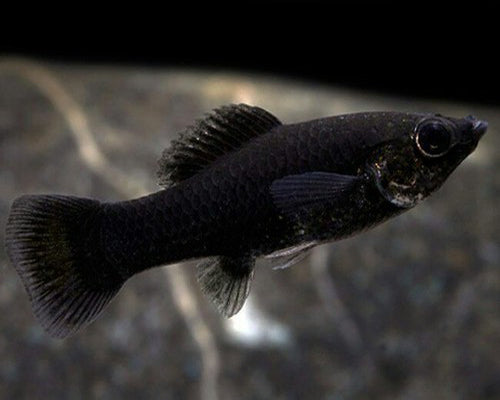
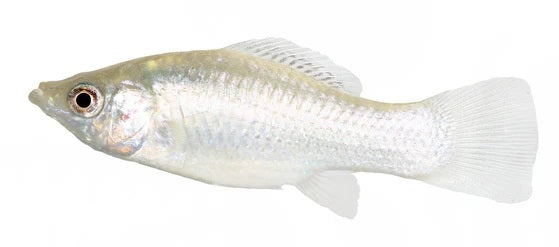
Temperament and stocking: peaceful and active, making it a reliable community fish alongside other similarly calm species — small tetras, corydoras, and other livebearers all make suitable tankmates, while anything large or aggressive enough to see a platy as prey should be avoided. A secure lid is still worth having, since livebearers in general are more prone to jumping than their leisurely swimming style suggests, especially when startled.
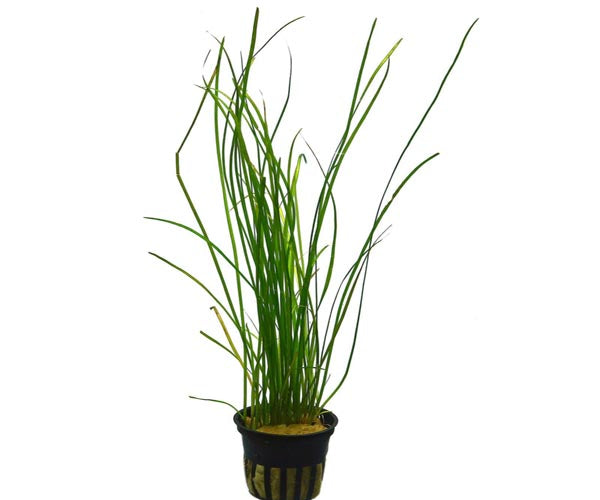
Tank size and cover: a 60cm (24in) tank comfortably suits a small group, and floating or fine-leaved plants give both fry and any stressed females somewhere to retreat — useful since adult platies, including the fry's own parents, will readily eat newborns given the chance.
Compatibility

Water & Care Conditions
- pH: 7.0–8.2
- Hardness: moderately hard to hard, roughly 10–28 dGH
- Temperature: 18–26°C (64–79°F)
Platies are forgiving on exact numbers, but for this colour strain a fading or washed-out orange-yellow tone is a useful early cue that something in the water (or the diet) needs attention before other symptoms show.
Standard community filtration is fine; consistency and cleanliness matter more than precision here.
Platies are notably more cold-tolerant than most popular tropical fish, comfortably handling the lower end of their temperature range without a heater in many mild climates — a real practical advantage if you're keeping an unheated tank. Weekly water changes of around 20–25% keep colour vivid and reduce the risk of fin rot or ich, both of which are far more often triggered by inconsistent water conditions than by any fragility in the species itself. Well-kept platies typically live 3–4 years, somewhat longer than many other popular livebearers, and this colour strain carries no known health quirks beyond standard platy care. Fry appear unexpectedly in any mixed-sex group once fish mature, usually within a few months of purchase, so it's worth deciding in advance whether you want to manage a growing colony or keep sexes separate. Weekly 20–25% water changes keep colour and fin condition at their best and reduce the risk of fin rot or ich, which in this species is almost always linked to inconsistent water quality rather than any inherent delicacy. A well-kept Mango Platy typically lives 3–4 years, and its hardiness across a fairly wide temperature and hardness range is a large part of why platies remain a default recommendation for anyone new to livebearers. Watch for the usual early stress signs — clamped fins, reduced appetite, or fading colour — and treat any of them as a prompt to check water quality first.