About & Origin
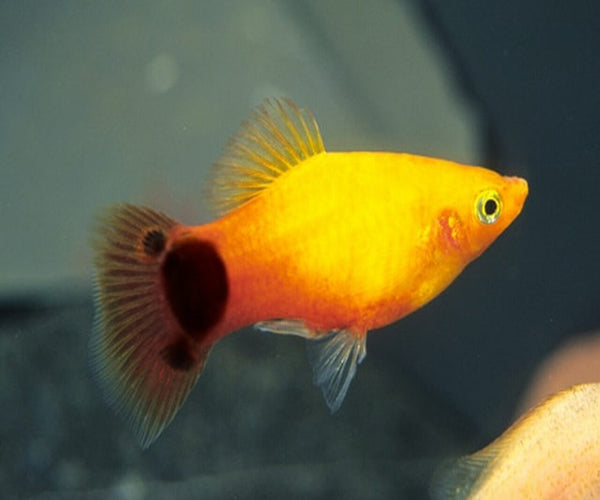
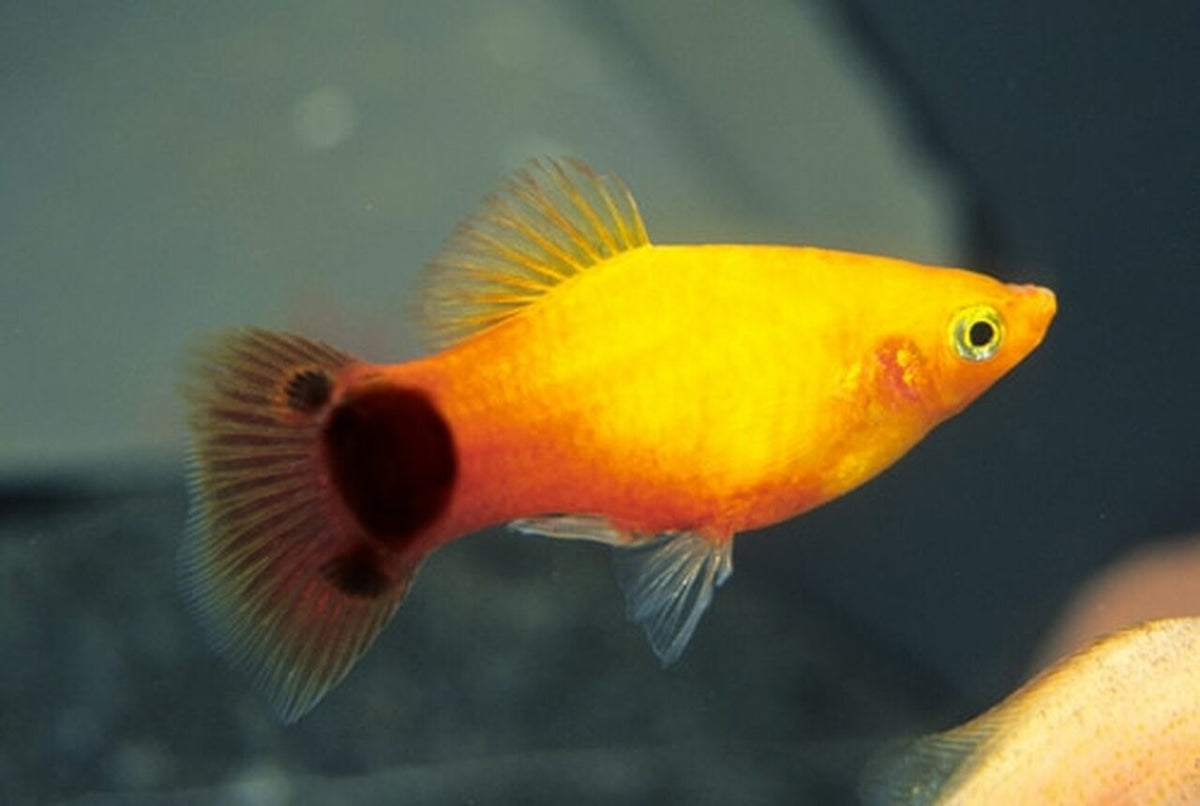
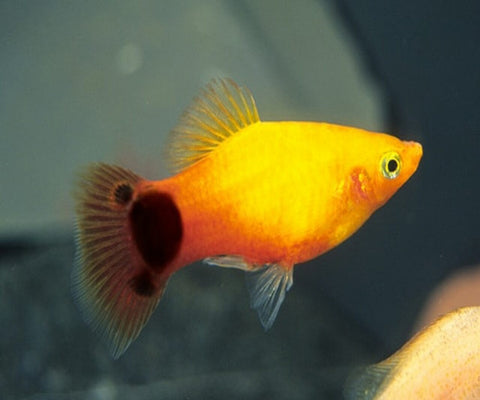
The Mickey Mouse Platy is a small, peaceful livebearer fish and a long-standing favourite among beginner-friendly aquarium species — a colour/pattern variant of Xiphophorus maculatus, the southern platyfish, named for the distinctive dark spots near the base of the tail that resemble a cartoon mouse silhouette. Its wild ancestors are native to slow-moving rivers, streams, and coastal waters of Mexico, Guatemala, and Belize, and it remains one of the most instantly recognisable platy strains thanks to its cartoon-adjacent name and markings.
Aside from the namesake tail marking, it behaves and lives exactly like any other platy -- a small, peaceful, active swimmer that spends time in open water and among plants, feeding on algae, small invertebrates, and general aquarium foods. Like other platies, it tolerates a genuinely wide range of water conditions, a trait inherited from wild populations that live in everything from clear mountain streams to brackish coastal drainages where fresh and salt water mix. Females run noticeably larger than males (roughly 6cm versus 4–5cm), and males carry the modified anal fin, called a gonopodium, used for internal fertilisation — the same reproductive structure shared across the whole livebearer family, including guppies and mollies.
As a livebearer, it gives birth to free-swimming young and breeds readily in a mixed-sex group, which is part of why platies remain one of the most recommended beginner fish for anyone wanting an easy, low-maintenance livebearer. Decades of selective breeding have produced dozens of named platy colour and pattern strains, and Mickey Mouse is one of the most recognisable — the tail-base spotting is a fixed genetic marking rather than a body-shape or fin difference, so it doesn't change the fish's silhouette the way finnage-selected strains do.
Requirements
Standard platy husbandry applies (female-heavy sex ratio, 60cm/24in+ tank for a small group, omnivorous flake/pellet diet plus vegetable matter, more cold-tolerant than most tropicals, fry appear unexpectedly in mixed groups).
This strain specifically: the "mouse" spots near the tail base are a fixed pattern trait rather than a body-shape or fin difference, so care is otherwise identical to a standard platy. The pattern is genetically recessive in some breeding lines, so fry from a Mickey Mouse pair can occasionally come out without clear spotting — not a sign of anything wrong, just normal variation in how the trait is inherited.
Group composition: keep more females than males, around 2–3 to 1, to reduce the constant courtship chasing that stresses females in male-heavy groups. Platies breed readily and often — a mature female can produce a new brood roughly every 4–6 weeks and, since she stores sperm, can keep having fry for months from a single mating.
Space and cover: a 60cm (24in) tank suits a small group well, and floating or fine-leaved plants give fry somewhere to hide from the adults, who will otherwise eat their own newborns without hesitation.
Diet: an omnivorous flake or micro-pellet as the staple, with some vegetable matter (blanched zucchini or spirulina-based food) included regularly since platies naturally graze on algae and plant material in the wild.
Temperament: peaceful and active, making it a solid community fish alongside other calm species like small tetras, corydoras, and fellow livebearers — avoid pairing it with anything large or aggressive enough to view it as prey. A secure lid is worth having regardless — livebearers generally jump more readily than their unhurried swimming style would suggest, particularly when startled.
Compatibility

Water & Care Conditions
- pH: 7.0–8.2
- Hardness: moderately hard to hard, roughly 10–28 dGH
- Temperature: 18–26°C (64–79°F)
Platies are forgiving on exact numbers as long as conditions stay stable. There's nothing pattern-specific to watch for beyond normal platy health signs — the "mouse" spots don't fade or change with water quality the way overall body colour can.
Standard community filtration is sufficient; consistency matters more than precision.
Platies tolerate cooler water noticeably better than most tropical community fish, often doing fine without a heater at the lower end of their range in a mild climate. Weekly 20–25% water changes support good colour and fin condition and cut down on fin rot and ich risk, both of which are almost always tied to inconsistent water quality rather than the fish itself being delicate. A well-kept platy typically lives 3–4 years, and the Mickey Mouse pattern carries no particular health considerations beyond the general species care outlined above. In a mixed-sex group, expect fry to appear within a few months of the fish maturing — worth planning for in advance whether you intend to manage an expanding colony or keep the sexes apart. Weekly 20–25% water changes support good colour and fin health and reduce fin rot/ich risk, both usually tied to inconsistent water conditions rather than any fragility in the fish itself. A well-kept Mickey Mouse Platy typically lives 3–4 years given stable water and a varied diet, and its broad tolerance for varying water conditions is a large part of why platies remain a go-to recommendation for anyone starting out with livebearers. Clamped fins, reduced appetite, or fading colour are the usual early stress signals worth treating as a cue to check water parameters first.