Customer Reviews
About & Origin
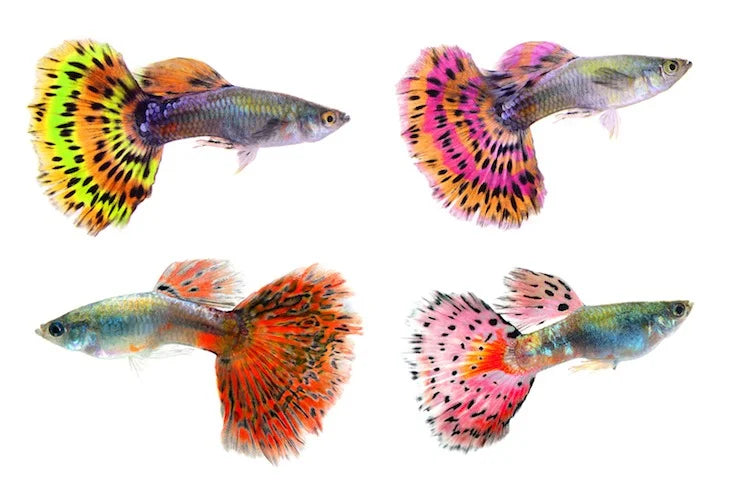
The Guppy is a small, hardy livebearer fish (Poecilia reticulata), native to freshwater streams of Trinidad and Tobago and parts of northeastern South America (Venezuela, Guyana, Brazil), though thanks to over a century of selective breeding it now exists in an enormous range of colours, fin shapes, and patterns far removed from the more modestly coloured wild form. This listing offers a mixed assortment of colourful male guppies.
Guppies are livebearers, giving birth to free-swimming fry rather than laying eggs, and are famously prolific breeders — a trait, along with their extreme hardiness and adaptability to a wide range of water conditions, that has made them one of the most widely kept aquarium fish in the world and a common subject in evolutionary biology research.
Guppies (Poecilia reticulata) are livebearers native to freshwater and brackish streams across northeastern South America and some Caribbean islands, now naturalised in warm-climate waterways worldwide due to widespread introduction, including for mosquito control.
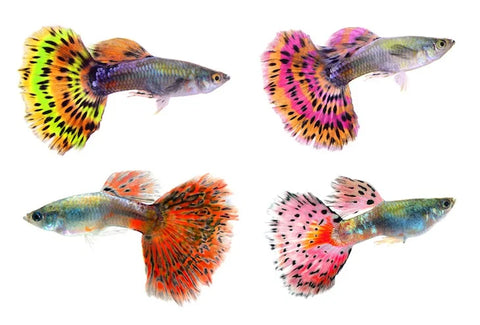
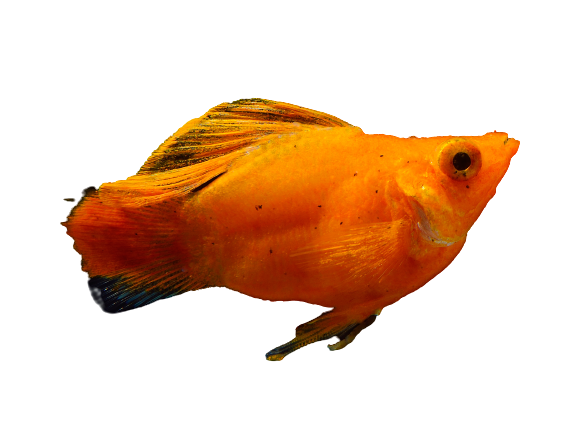
This "mixed colour" male listing reflects the huge range of colour and finnage variation achieved through generations of selective breeding — no two males in a mixed batch are quite identical, offering a colourful, varied display shoal rather than a single uniform strain.
As livebearers, males are easily distinguished from females by their smaller size, more slender body, larger and more colourful fins, and modified anal fin (the gonopodium) used in reproduction.
Guppies (Poecilia reticulata) originate from freshwater and brackish streams across northeastern South America and the Caribbean, and have been selectively bred for well over a century into an enormous range of tail shapes and colour patterns. "Mixed colour male" stock means an assortment of colour/finnage strains sold together rather than a single fixed variety, so individual fish in the same batch can look quite different from one another.
Requirements
Guppies are easy, peaceful, and highly adaptable — one of the best genuine beginner fish. Kept as males only (as in this listing), there's no risk of unplanned breeding; mixing males and females will result in frequent, fast-multiplying broods of fry.
They do well in small groups and are not strict shoalers the way a tetra is, though they're more settled and colourful in the company of their own kind. Their flowing tails make them vulnerable to fin-nipping tankmates, so boisterous nippy fish should be avoided.
Feeding is very easy — takes flake, pellets, and live or frozen foods without any fuss.
Guppies are prolific breeders — a male kept with females will readily produce fry, so if breeding isn't wanted, keep males only, or be prepared to manage the resulting population.
An easy, adaptable community fish suited to a wide range of peaceful tankmates; avoid fin-nipping species, since male guppies' long, colourful fins are a tempting target.
Omnivorous and unfussy — a good-quality flake or pellet as a staple, with live or frozen foods and some algae/plant matter rounding out the diet.
A tightly fitting lid is worthwhile, since guppies are capable jumpers, especially when startled.
As livebearers, males are the smaller, more colourful, more slender-bodied sex and do not need a female present to display full colour — a male-only group avoids the constant breeding that comes with mixed-sex guppy keeping, which can quickly overwhelm a small tank with fry. Males can spar mildly over territory and female attention but are rarely seriously aggressive in adequate numbers and space.
Guppies are unfussy eaters accepting flake, pellets, and live/frozen foods readily, and a varied diet helps maintain vivid colour. Because assorted strains are mixed in this listing, individual fish may show different degrees of hardiness/finnage delicacy, so keep an eye on any particularly long-finned individuals for nipping damage.
Compatibility

Water & Care Conditions
One of the most adaptable and forgiving fish in the hobby:
- pH: 6.8–7.8, doing best on the neutral-to-slightly-alkaline side
- Salinity / hardness: freshwater, tolerates moderately hard water well; also tolerates a touch of aquarium salt
- Temperature: 22–28°C (72–82°F)
- Light: not light-sensitive
- Oxygenation: standard filtration and flow are more than sufficient; an exceptionally hardy, forgiving species overall
- Fin health: long, flowing tail varieties are more prone to fin damage from nippy tankmates or rough decor edges than short-finned strains
- Water hardness: guppies generally do best in moderately hard, slightly alkaline water rather than very soft acidic conditions, unlike many of the blackwater tetras/rasboras on this list
- Feeding: unfussy, a varied diet of flake, pellets, and occasional live/frozen foods supports vivid colour
- Longevity: typically lives 2-3 years, shorter-lived than many other community fish
- Tank position: spends most of its time in the upper-to-middle water column
- Filtration: standard community filtration is sufficient; guppies are not particular about flow rate
Guppies are among the most chemistry-tolerant common aquarium fish, but do best and stay healthiest long-term in moderately hard, slightly alkaline water rather than very soft, acidic conditions.
Stable parameters and good filtration matter more to long-term health and colour than chasing an exact number — guppies are hardy but not indestructible, especially in poorly maintained water.
Weekly partial water changes of 20-30% help keep guppies colourful and active, since like most small characins and rasboras it's sensitive to accumulating nitrates and organic waste over time even though it isn't considered a delicate species.
A mature, cycled tank with established biological filtration is a much safer home for a new shoal than a freshly set-up system, since ammonia and nitrite spikes during cycling are a common cause of losses in small schooling fish.