About & Origin
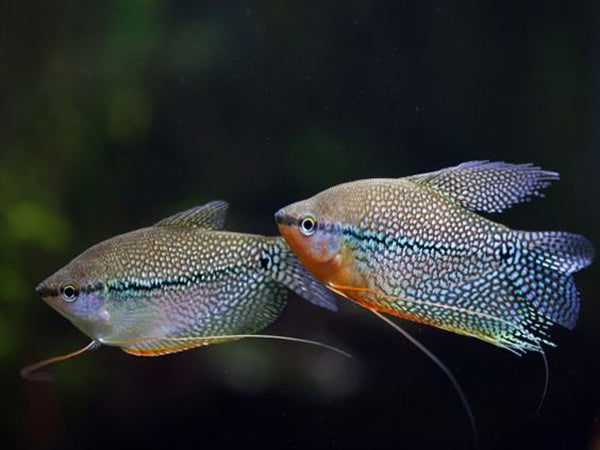
The pearl gourami (Trichopodus leerii) is a larger, generally more peaceful labyrinth fish native to slow, blackwater swamps and densely vegetated streams of Malaysia, Sumatra, and Borneo. Its body is covered in a fine, pearl-like speckled pattern with a distinctive dark horizontal stripe running from the eye to the tail, and males develop an orange throat and chest as they mature.
Like other labyrinth fish it has evolved a labyrinth organ for gulping air at the surface, letting it thrive in the still, oxygen-poor blackwater habitats it comes from. It's widely considered one of the calmest, most community-friendly gourami species, generally more tolerant of other fish (including other gourami) than the smaller dwarf gourami.
Males are readily distinguished from females once mature by their extended, pointed dorsal and anal fins and the orange colouring across the throat and chest during breeding condition, while females stay rounder-bodied with shorter fins. Pearl gourami are also bubble-nest builders like most labyrinth fish, with males constructing a floating nest of bubbles at the surface to house eggs after spawning -- a genuinely interesting behaviour to witness in a mature, settled pair. The species was first described to science in the 1850s and has remained a steady presence in the aquarium trade ever since, prized for combining real size and presence with an unusually calm temperament for a gourami.
Requirements
Pearl gourami are a relatively easy, peaceful centrepiece fish for a larger community tank.
Tank size: it grows larger than a dwarf gourami (up to around 10-12cm/4-5"), so it appreciates a tank of at least 75-90cm (30-36") long as an adult.
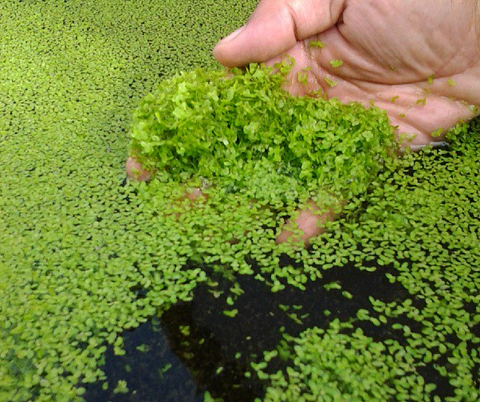
Tankmates and surface access: generally peaceful with similarly-sized community fish; still benefits from some floating plant cover for security and easier access to the surface to breathe.
Diet is easy -- flake or micro-pellet staple, with live/frozen foods (bloodworm, brine shrimp) appreciated for conditioning and best colour.
Temperament: among the more peaceful gourami species, though males can become territorial toward each other and toward similarly-shaped fish as they mature -- keeping a single male, or a proper male-female pair with enough space, avoids most conflict.
Access to air: as a labyrinth fish, it needs to reach the surface periodically to breathe atmospheric air, so avoid a fully sealed lid with no air gap and keep floating plant cover manageable enough that it doesn't block the whole surface.
Tankmates: generally compatible with other calm, similarly-sized community fish -- avoid notorious fin-nippers, since a mature male's long, trailing fins are a real target. Given its adult size, a single pearl gourami can work well as a peaceful centrepiece fish in a community tank built around smaller, similarly calm species.
Compatibility
Water & Care Conditions
Coming from warm, soft, acidic Southeast Asian blackwater:
- pH: 6.0–7.5
- Hardness: soft to moderately hard, roughly 5–18 dGH
- Temperature: 24–28°C (75–82°F)
- Oxygenation: tolerant of low-oxygen, still water thanks to its labyrinth organ, though clean, well-maintained water is still important for long-term health
Gentle filtration with calm surface movement suits it better than strong current, since strong surface agitation can interfere with the labyrinth organ's need for calm air access and disrupt bubble-nest building. Weekly water changes of 20-25% support long-term health and colour, and a well-kept pearl gourami commonly lives 4-6 years, longer than many similarly-sized community fish. Watch for clamped fins, reduced appetite, or a fish struggling to reach the surface as general early stress signals -- with a labyrinth fish, difficulty accessing air is worth checking as a possible tank-setup issue (a sealed lid or overly dense floating cover) rather than assumed to be illness. Ich and fin rot are the two most common issues seen generally, both usually tied to inconsistent water quality rather than any particular fragility in this species. Given its labyrinth organ, it's genuinely more tolerant of lower dissolved oxygen than most community fish, though clean, well-maintained water remains important for overall health regardless.