About & Origin
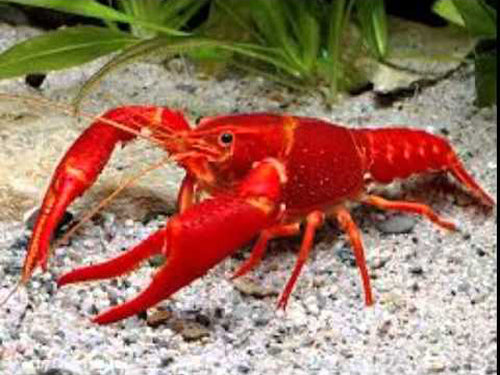
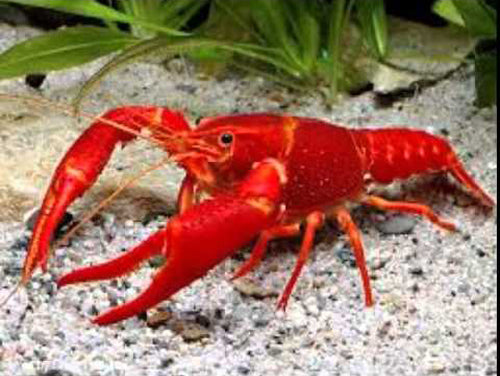
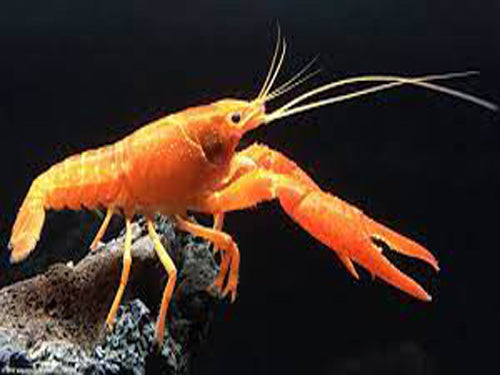
Freshwater "lobsters" sold in the aquarium trade, including this Red Lobster, are almost always crayfish (family Cambaridae) rather than true lobsters, which live only in the sea. This deep red colour form is a selectively bred freshwater crayfish variety, most commonly linked to Procambarus species originally from the southeastern United States.
It's a hardy, bold, and active invertebrate that spends much of its time digging, foraging, and reshaping its tank's décor. Like all crayfish, it periodically moults its exoskeleton to grow, appearing pale and soft-shelled for a short vulnerable period afterward.
Freshwater crayfish are naturally territorial and largely solitary, defending burrows and feeding areas against rivals in the wild — behaviour that follows directly into the tank, where two crayfish sharing a small space will often fight, sometimes fatally, especially around moulting when one is soft-shelled and defenceless. Their constant digging, foraging, and visible curiosity about their surroundings has made crayfish popular among keepers looking for an invertebrate with real, almost mammal-like personality rather than a purely decorative addition. Sold small, this crayfish reaches its full adult size, typically around 10–13cm, within roughly its first year given consistent feeding and stable water conditions. The deep red colouring is one of the most consistently sought-after crayfish strains in the trade, prized for standing out clearly against typical tank backgrounds and substrates.
Requirements
Red is the most common colour form of the freshwater crayfish sold as "lobster" in the trade, and its needs are standard crayfish care: at least 20 gallons (75L) for one adult with a tight-fitting lid (crayfish climb and escape readily), kept solo or in a species-only setup since crayfish fight over hides and during moulting, with driftwood, caves, or a pot to dig into. Feed an omnivorous scavenger diet -- sinking pellets, blanched vegetables, occasional protein, and a calcium source for shell growth after each moult. Given its bold, defensive temperament, this crayfish is best kept alone or in a genuinely species-only setup rather than mixed with other invertebrates.
Escape risk: crayfish climb well and will use filter intakes, décor, or plant stems to reach the rim of an open tank, so containment needs to be genuinely secure, not just a loosely fitted cover. Because it can survive out of water for a surprisingly long time thanks to gill structures adapted for brief air exposure, an escaped crayfish found too late may already be beyond saving.
Tankmate risk: even a well-planned community setup isn't fully safe — this crayfish will eat small or slow tankmates opportunistically and damage live plants through digging and grazing, so most keepers stick to hardscape décor and either solo housing or larger, fast-swimming fish that stay clear of the substrate.
Compatibility
Water & Care Conditions
Water needs match any Procambarus-type crayfish: pH 7.0-8.0, moderately hard mineral-rich water, 20-24C (no heater usually needed), and good oxygenation. The saturated red colouring is a fixed trait of this strain rather than something diet affects -- what water stability actually influences is how well this crayfish handles each moult, so keep parameters as steady as possible, especially in the vulnerable soft-shelled days right after shedding. Mineral content matters too — soft, mineral-poor water can leave the new shell noticeably weaker after each moult regardless of colour strain. Watch for lethargy, reduced appetite, or a moult that seems to be taking unusually long, since a crayfish's hard exoskeleton can otherwise mask developing health issues until they're fairly advanced. A fully cycled tank before introduction also matters more than the parameter ranges alone suggest, since this species tolerates ammonia and nitrite poorly despite its general hardiness. A fully cycled tank before introduction matters more than the parameter ranges alone suggest, since ammonia and nitrite are poorly tolerated. Well-kept crayfish of this type commonly live 2–4 years, reaching their adult size of roughly 10–13cm within the first year under good feeding. Copper-based medications, sometimes used to treat fish parasites, are toxic to crayfish and any other invertebrates sharing the tank, so always check labels before treating a mixed setup.