About & Origin
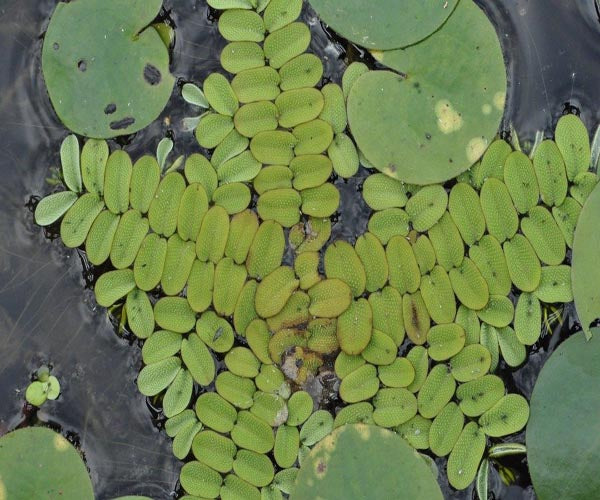
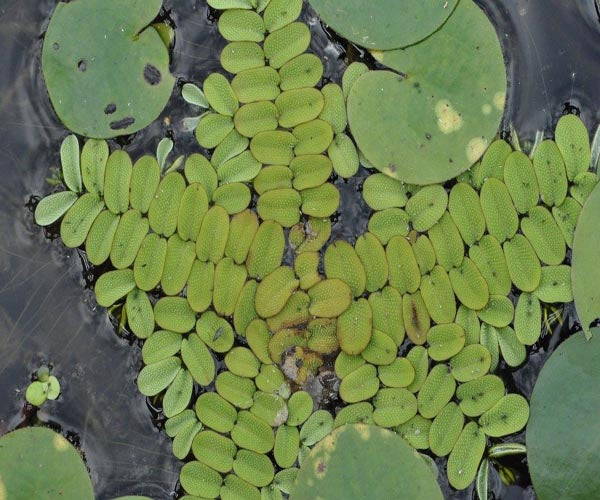
Salvinia natans is a small, free-floating fern rather than a rooted plant — it belongs to the genus Salvinia, a group of aquatic ferns found across still and slow-moving fresh water in Africa, Asia, Central Europe, and South America. Unlike duckweed, which is a true flowering plant, Salvinia is a fern that reproduces by spores rather than seeds, though in the aquarium it's grown almost entirely through simple vegetative branching rather than anything spore-related.
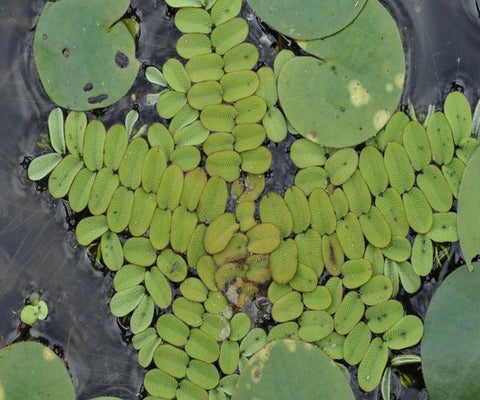
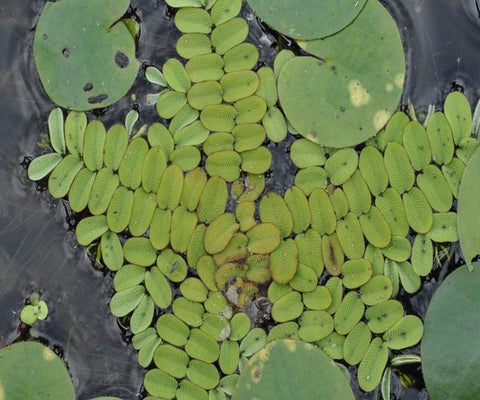
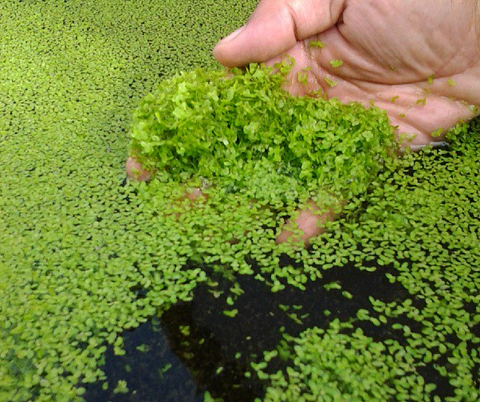
Each plant consists of pairs of small, oval, slightly folded leaves covered in fine water-repelling hairs that trap a thin layer of air, giving the foliage a velvety, faintly silvery sheen and keeping it from waterlogging even when packed densely at the surface. This trapped air layer is also why Salvinia bounces back to the surface if briefly pushed under — the hairs are genuinely hydrophobic, not just decorative. Below the waterline hangs a feathery, root-like third leaf that isn't a true root at all — botanically it's a modified, finely divided leaf that helps stabilise the plant in the water and takes up nutrients directly from the water column, doing the practical job of a root without being one.
In the wild, Salvinia natans can carpet the surface of ponds, ditches, and slow backwaters entirely during warm months, then die back or overwinter as dormant buds when conditions cool — a hardier, more temperate-tolerant floating plant than many purely tropical floaters, which is part of why it's naturalised in parts of Europe well outside the tropics.
In the aquarium it's grown for much the same reasons as duckweed — surface shade for fish that prefer dimmer conditions, nutrient export between water changes, and cover for fry and shrimp escaping larger tankmates — but its larger, more clumped leaf pairs make it easier to net out or thin selectively by hand than tiny individual duckweed fronds, and it doesn't slip through filter slots, overflow gaps, and equipment holes in the same relentless way duckweed tends to.
fishykart.com sources live Salvinia natans directly rather than shipping preserved material, so what arrives is actively growing and ready to establish on your tank's surface.
Requirements
Salvinia natans is an easy floating plant overall, but a handful of conditions make the difference between a thin, struggling scatter of leaves and a thick, healthy carpet.
Surface space and stillness: like any floater, it needs open, relatively calm water to sit on. Strong surface agitation from filter outflow, powerheads, or airstones will constantly flip and submerge the leaves; once waterlogged, that trapped air layer is lost and the leaf tends to rot rather than recover, so a low-flow corner of the tank suits it best.
Light: wants moderate to bright light falling directly on the surface, not filtered through other floating plants or a dense canopy above it. In dim tanks it thins out, the leaf pairs shrink, and growth slows noticeably; under good light it multiplies steadily by producing new branches at each leaf node, doubling its coverage in a matter of weeks.
Nutrients: feeds directly from the water column, particularly nitrogen, so it does well in tanks with an established bioload from fish waste and leftover food. In a very lean, heavily-planted, nutrient-starved setup it benefits from occasional liquid fertilizing to keep growth steady rather than stalling out.
Handling: the leaves are more delicate than their compact appearance suggests — avoid crushing or excessive handling when moving plants around, and keep it well clear of filter intakes, where it will quickly foul the intake and rot rather than surviving being pulled against the mesh.
Containment and thinning: propagation is entirely vegetative — healthy plants branch and split into new individuals on their own with no seeds or spores involved in normal aquarium culture, so a modest starter portion multiplies into a full surface cover within a few weeks under good conditions. Because of that, regular thinning by hand (simply netting out excess) is a normal, expected part of upkeep rather than a sign anything has gone wrong.
Compatibility
Water & Care Conditions
Salvinia natans tolerates a broad range of freshwater conditions, but grows fullest and most compact within these ranges:
- pH: 6.0–7.5, though it copes reasonably well outside this range for short periods without immediate harm
- Salinity / hardness: freshwater only, soft to moderately hard water is fine; it does not tolerate brackish or marine conditions and should never be exposed to salt
- Light: moderate to bright light directly on the surface; low light causes thin, sparse growth with pale, undersized leaf pairs rather than the plant simply dying
- Temperature: 18–28°C (64–82°F) — notably more tolerant of cooler, unheated tanks than many tropical floaters, reflecting its Central European and temperate range; it will also tolerate the warmer end of a tropical community tank without issue
- Oxygenation: not demanding in itself, but a thick, unmanaged mat reduces gas exchange and light penetration at the surface, which can indirectly affect fish and other plants beneath it — thin it back regularly and keep some open water rather than letting it close over the surface completely
Outside these ranges it won't necessarily die off outright, but growth slows noticeably and the leaf pairs shrink and space out along the stem rather than forming a dense, tightly packed mat. Watch for yellowing or a loss of that velvety surface texture as an early sign conditions have drifted outside its comfort zone, well before the plant collapses entirely — by the time whole leaves are browning and sinking, conditions have usually been unsuitable for some time.