About & Origin
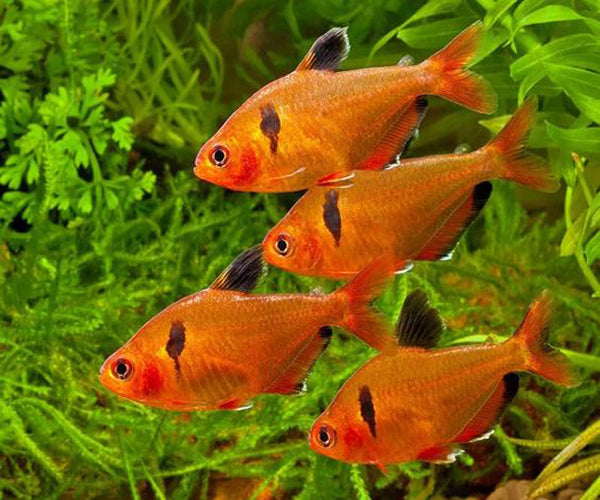
The Serpae Tetra (Hyphessobrycon eques) is a deep-bodied, blood-red tetra native to the Amazon, Paraguay, and Guaporé river basins of South America, where it shoals through slow-moving, densely vegetated streams and floodplain waters.
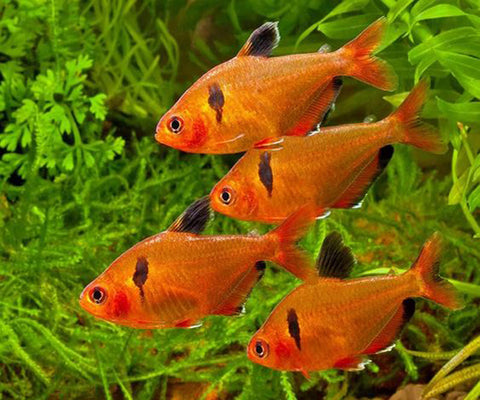
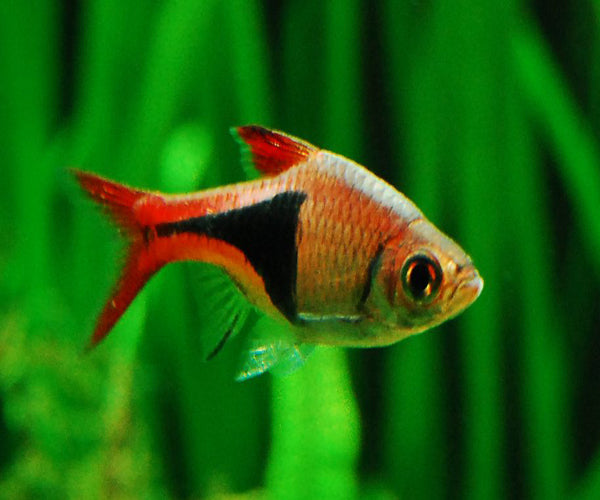
It's one of the most striking red tetras in the trade — a rich brick-to-blood red body with a distinctive black shoulder patch and black-edged fins — and has been a long-standing aquarium favourite for its colour and hardiness.
It's also, honestly, one of the tetras with the strongest reputation for nipping — a trait rooted in real shoal dynamics, not a myth, which matters more for stocking choices than its origin story.
The Serpae Tetra (Hyphessobrycon eques) is a deep-red-bodied tetra with a distinctive black shoulder patch, native to slow-moving streams and floodplain waters across the Amazon, Paraguay, and Guaporé river basins in South America.
It's noticeably more assertive than many classic community tetras, with a reputation for nipping the fins of slower-moving or long-finned tankmates, particularly when kept in too small a group — this is a real, well-documented behavioural trait, not just an occasional exception.
Its bold colouration and active nature have made it a long-standing aquarium favourite despite (and partly because of) its more feisty personality compared to gentler tetra species.
Its common name references the Rio Serpa (a former name for a stretch of the Amazon basin) rather than any connection to snakes, despite the coincidental sound of the name.
The Serpae Tetra (Hyphessobrycon eques) is native to slow-moving, densely vegetated blackwater tributaries of the Amazon, Paraguay, and Guaporé basins in South America. Its deep blood-red body with a black shoulder patch and black-edged fins makes it one of the more vividly coloured small tetras, though it has a reputation as one of the nippier members of the family.
Requirements
The Serpae Tetra genuinely needs a larger group than most community tetras — 8 to 10 or more — specifically because it is known to nip fins, and that tendency is significantly worse in small groups, where the fish direct that energy at tankmates instead of each other. In a proper-sized shoal, most of that behaviour stays within the group as normal social pecking order.
Because of this, it's best avoided with slow-moving, long-finned tankmates such as bettas, guppies, or fancy livebearers, and does much better alongside other robust, similarly fast-moving fish. It's an easy feeder, taking flake, pellets, and live or frozen foods without fuss.
Keeping a larger group (8-10+) genuinely reduces fin-nipping behaviour by spreading out aggression within the shoal itself rather than directing it at tankmates — this matters more for this species than for most other tetras.
Best avoided with slow-moving, long-finned tankmates such as bettas, fancy guppies, or angelfish; pairs better with similarly fast, robust community fish that won't be an easy target.
An unfussy omnivore — takes flake and pellets readily, with live or frozen foods appreciated but not required.
Serpae Tetras are genuinely more prone to fin-nipping than most community tetras, especially in groups smaller than eight or when kept with slow, long-finned tankmates like bettas or fancy guppies — a larger, well-fed shoal in a spacious tank with plenty of visual cover meaningfully reduces this behaviour by spreading their energy across each other rather than concentrating it on a single target.
A generous, varied diet with regular feedings helps keep a Serpae shoal calmer and less prone to directing energy toward nipping tankmates; underfed or understocked groups tend to be the nippiest.
Compatibility


Water & Care Conditions
Hardy and adaptable, tolerating a wider range than many South American tetras:
- pH: 5.5–7.5
- Salinity / hardness: freshwater only, soft to moderately hard water
- Temperature: 22–28°C (72–82°F)
- Light: moderate; not especially light-sensitive
- Oxygenation: standard filtration and flow are sufficient; a genuinely hardy, forgiving species once stocking (group size and tankmates) is right
- Compatibility caution: best avoided alongside slow-moving, long-finned fish such as bettas or fancy guppies given its fin-nipping tendency
- Group size: a larger group (eight-plus) in a spacious, well-decorated tank noticeably reduces nippy behaviour compared to a minimal group
- Feeding: regular, generous feedings of flake, pellets, and occasional live/frozen foods help reduce nippy behaviour
- Longevity: commonly lives 5+ years in a well-maintained community tank
- Tank position: a mid-water swimmer, appreciates planting and visual cover to diffuse energy
- Filtration: standard, well-maintained community filtration is sufficient for this hardy species
- Substrate: not particular about substrate type or decor style
- Substrate: not particular about substrate type or decor style
Reasonably adaptable to a range of water chemistry, though it originates from soft, slightly acidic South American waters and does best long-term in similar conditions.
As with most active, somewhat territorial shoalers, stable water quality and adequate swimming space help keep behaviour calmer and reduce fin-nipping incidents.
Weekly partial water changes of 20-30% help keep Serpaes colourful and active, since like most small characins and rasboras it's sensitive to accumulating nitrates and organic waste over time even though it isn't considered a delicate species.
A mature, cycled tank with established biological filtration is a much safer home for a new shoal than a freshly set-up system, since ammonia and nitrite spikes during cycling are a common cause of losses in small schooling fish.