African Butterfly Fish Care: Tank, Food and Tank Mates
Published: 2026-10-29 · FishyKart Blog
The African butterfly fish (Pantodon buchholzi) is a 4-5 inch surface hunter from slow, vegetated waters of West and Central Africa. Its wide pectoral fins look like butterfly wings, and it waits just under the surface for insects to fall in. It needs a tank with a wide surface of around 30-40 gallons, calm water, floating plants and a tight lid, because it jumps.
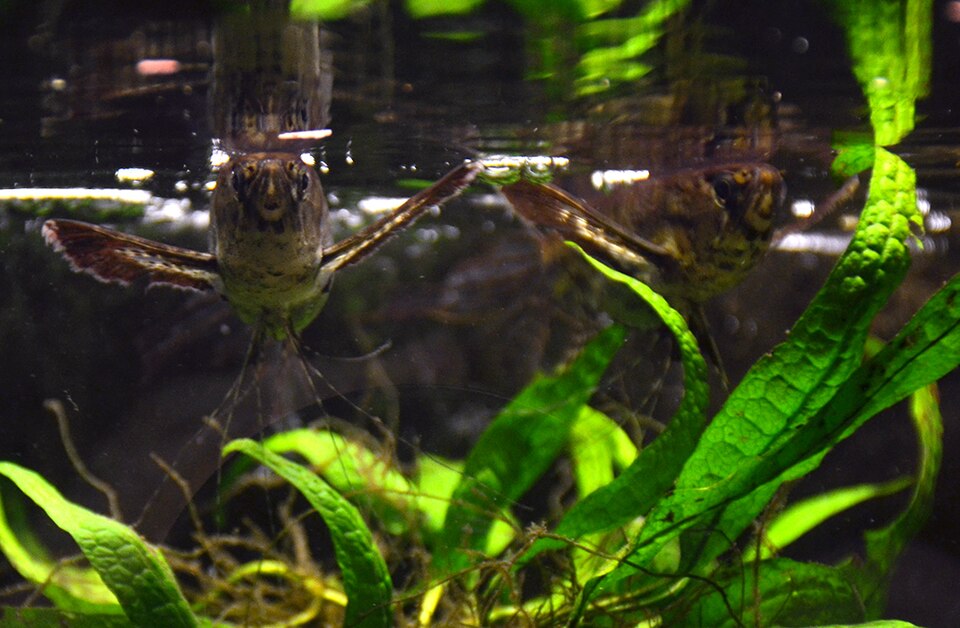
Photo: Vassil - Wikimedia Commons, CC0
| Parameter | Value |
| Scientific name | Pantodon buchholzi |
| Origin | West and Central Africa (Niger, Congo basins and nearby) |
| Adult size | 4-5 in |
| Tank | 30 gal recommended (about 21 gal minimum), wide surface, tight lid |
| Temperature | 73-86 F |
| pH | About 6.0-7.5, soft to medium water |
| Diet | Surface carnivore: insects, floating pellets, frozen foods at the surface |
| Temperament | Ignores larger fish, eats any fish that fits in its mouth |
Tank Setup
- Surface first: the fish lives in the top inches of water. A long, wide tank gives it room to patrol.
- Gentle flow: use a filter with a soft outflow; strong surface current stresses it.
- Floating plants: duckweed, water sprite or hornwort give cover; leave some open water for feeding.
- Lid: close all gaps and keep a little air space above the water.
Feeding
African butterfly fish rarely take food from the middle or bottom of the tank. Offer:
- Live or frozen insects: flightless fruit flies, small crickets, mealworms.
- Floating carnivore pellets or sticks.
- Frozen bloodworms and brine shrimp placed at the surface.
Feed small amounts once or twice a day.
Tank Mates
Choose fish that stay in the middle and bottom and are not fin nippers: corydoras, kuhli loaches, bichirs, ropefish, larger peaceful tetras and calm cichlids such as angelfish. Avoid tiger barbs and other nippers, and other surface fish such as hatchetfish that compete for the same space or get eaten.
Keeping More Than One
They can be aggressive to each other, especially in small tanks. Give each fish its own floating cover and enough surface length.