Clown Loach - Complete Care Guide
Published: 2026-10-26 · FishyKart Blog
Clown Loach (Chromobotia macracanthus) is sold at a size that misrepresents what the fish becomes: most specimens in stores measure 1.5-3 inches, genuine babies, while adults commonly reach 8-12 inches - a six-to-eightfold size increase that catches buyers who stock a tank around the store-bought size rather than the eventual adult. It's also a decades-long commitment: at least 10 years is typical in captivity, with some individuals documented living 20 years or more.
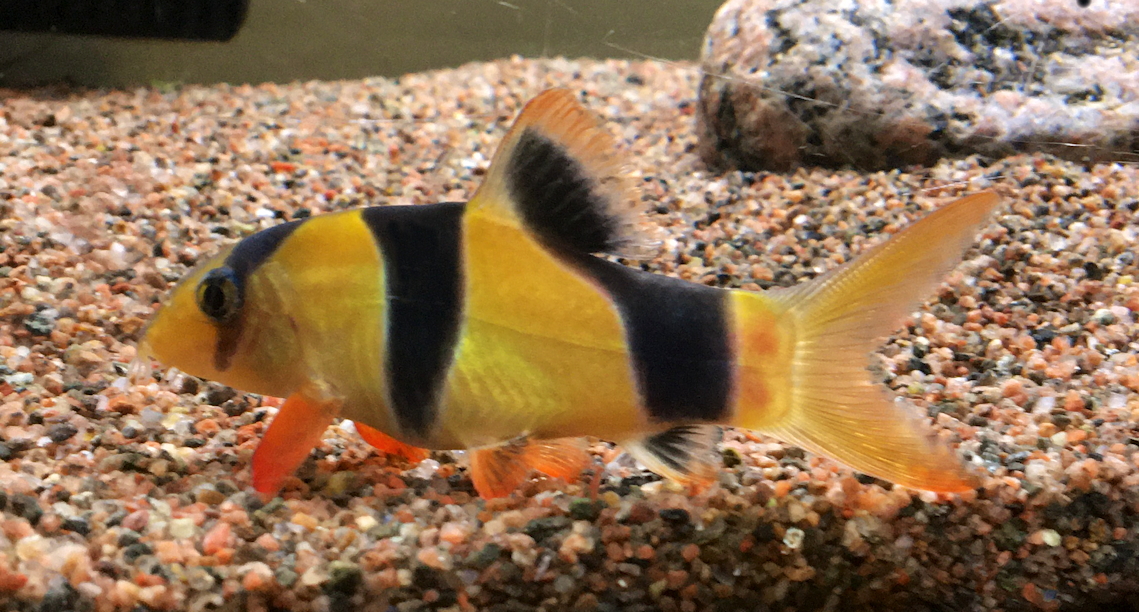
Photo: Tommy Kronkvist - Wikimedia Commons, CC BY-SA 4.0
| Parameter | Value |
| Store size | 1.5-3 in (juvenile) |
| Adult size | 8-12 in |
| Lifespan | 10-20+ years |
| Minimum group | 5 |
| Tank for adult group of 5 | 125+ gallons |
The Size Trap
A 2-inch Clown Loach at point of sale looks like a small, easy addition to a modest community tank. Growth is slow but relentless - a 55-gallon tank supports the fish reasonably well up to about age 3 or 6 inches, but a full-grown adult group of 5 eventually needs 125 gallons or more. Planning tank size around the juvenile rather than the eventual adult is the single most common mistake with this species.
A Multi-Decade Commitment
10 years is the typical captive lifespan floor, and well-maintained individuals regularly reach 15-20 years or more. Buying a Clown Loach is closer to committing to a large dog than a typical community fish - the tank, space, and care plan needs to hold up over a timescale most aquarium purchases don't require.
Audible Clicking Is Normal
Clown Loach produces distinct clicking sounds, most noticeable during feeding or excitement, sometimes described as a buzzing noise. New keepers sometimes mistake this for a warning sign - it's a normal species behavior, not an indicator of stress or illness.
Social Needs Scale With the Fish
Like Kuhli Loach, Clown Loach should never be kept alone - a group of 5 minimum is standard. Unlike Kuhli Loach's compact adult size, though, that social requirement has to be planned around a much larger, much longer-lived fish, which is why the tank size math escalates so much further for a full Clown Loach group.
Unusually Prone to Ich
Clown Loach has a reputation among keepers as an ich magnet, often showing symptoms of white spot disease before other fish in the same tank do. Its scaleless skin also makes it more sensitive to standard ich medications than scaled fish, so treatment needs a loach-safe approach rather than a full-strength standard dose.
Buy Clown Loach Online
FishyKart stocks Clown Loach for keepers ready for a large, long-term species.
Shop Clown Loach