About & Origin
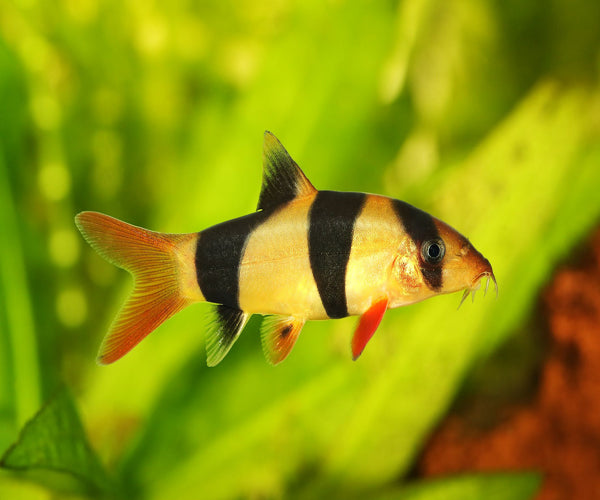
The Clown Loach (Chromobotia macracanthus) is a large, long-lived loach that comes from the fast-flowing rivers and forest streams of Sumatra and Borneo, Indonesia. It's one of the most recognisable freshwater fish in the hobby: a bright orange body crossed by three broad black bands, with a torpedo-shaped body built for weaving through submerged roots and driftwood.
Clown Loaches are highly social, intelligent, and often described as one of the most "personable" aquarium fish — they recognise their keeper, interact with tankmates, and are known for an odd but completely normal habit of resting on their sides that alarms new keepers unnecessarily.
Two things buyers should know up front: Clown Loaches grow much larger than their juvenile size suggests (commonly 20–30cm/8–12in in a mature aquarium, more in the wild), and they're genuinely long-lived — a well-kept Clown Loach can live 15–20+ years. This isn't a small, short-term fish; it's a long-term commitment that will need a much larger tank as an adult than it does as the small juvenile most people buy.
In the wild, Clown Loaches undertake seasonal migrations along river systems, moving between habitats to spawn — a behavior that's part of why they're notoriously difficult to breed in a typical home aquarium; nearly all Clown Loaches in the trade are still wild-caught or farm-collected from natural spawning events in Indonesia rather than aquarium-bred. Their odd resting-on-the-side habit, along with occasional loud clicking sounds they make (a genuine, harmless form of communication between individuals), regularly worries first-time keepers who aren't expecting either behavior — both are completely normal for a healthy fish.
As they mature, Clown Loaches develop a distinct social hierarchy within their group, with individuals recognisable by subtle differences in banding pattern and behavior — long-term keepers often report being able to tell their fish apart individually, something rarely said about most other freshwater aquarium species. Growth is notably slow, especially past the first couple of years, which is part of why so many are sold and kept for years at a fraction of their eventual adult size.
Requirements
Clown Loaches have real, specific needs that are easy to underestimate when buying a small juvenile.
Group size: a highly social species that should be kept in groups of 5 or more — a lone or paired Clown Loach is a stressed Clown Loach.
Tank size: fine in a modest tank while young, but plan for 75+ gallons for an adult group — this is a long-term, large-tank fish, not a permanent resident of a small community setup.
Sensitivity: notably sensitive to poor water quality and to many medications, particularly those containing copper — treat the whole tank with care when medicating.
Diet: omnivorous scavengers that happily eat sinking pellets, wafers, and are famous for hunting down and eating snails — useful natural pest control in a snail-troubled tank.
Décor: appreciates driftwood, smooth rocks, and hiding spots roomy enough for a group to shelter together.
Substrate: a smooth, fine substrate (sand or rounded gravel) is much kinder to their sensitive barbels and undersides than sharp gravel, which can cause abrasions and secondary infection over time.
Growth planning: because this is such a slow-growing, long-lived fish, it's genuinely reasonable to keep a small group in a modest grow-out tank for the first couple of years, provided there's a firm plan and the space available to upgrade to a much larger tank well before the group outgrows its housing — buying Clown Loaches without that long-term plan is one of the most common regretted purchases in the hobby.
Compatibility with décor: avoid sharp-edged rock or decor that could injure their sensitive skin as they squeeze into tight hiding spots, a favourite behavior of this species; smooth caves, PVC pipe, or driftwood tunnels are all safer, popular choices that groups will readily use and defend as shared shelter.
Compatibility
Water & Care Conditions
Clown Loaches need consistently good water quality more than they need a specific number on the dial:
- pH: 6.0–7.5
- Water hardness: soft to moderately hard, roughly 5–12 dGH
- Temperature: 25–30°C (77–86°F) — warmer than a typical community tank
- Oxygenation: appreciates good water movement and well-oxygenated water, in line with their native fast-flowing river habitat
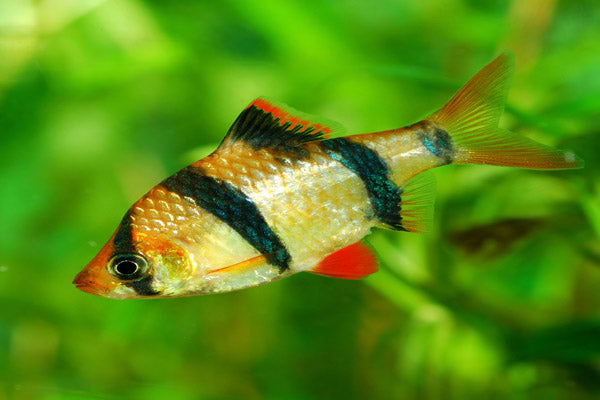
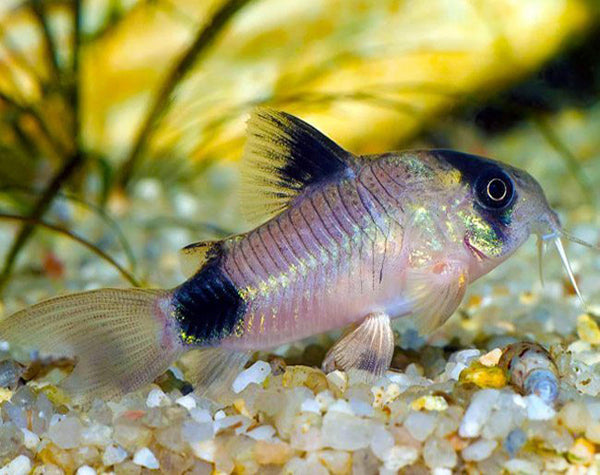
Stable, clean, well-filtered water matters more here than for most community fish — Clown Loaches are noticeably more sensitive to ammonia, nitrite, and poor maintenance than hardier tankmates like barbs or corydoras. A mature, well-cycled tank with strong biological filtration is essential before adding this species; they're a poor choice for a newly set up tank still working through its initial cycle.
Medication sensitivity: as scaleless-adjacent fish (loaches have small, deeply embedded scales and a thinner protective mucus layer than most fish), Clown Loaches are notably intolerant of copper-based medications and many standard treatments dosed at full strength — always research a specific medication's loach-safety before treating a tank containing them, and consider a separate quarantine/hospital tank for any fish that needs medicating rather than treating the whole display.
Water changes: generous, regular partial water changes (20-30% weekly) support both their sensitivity to water quality and their large adult bioload — this is not a "top off occasionally" fish once it reaches full size.
Common health issues: like most loaches, they're highly susceptible to ich, often showing symptoms earlier and more visibly than other tankmates, which makes them a useful early-warning species in a mixed community. Skin injuries from sharp decor or aggressive tankmates can also lead to secondary bacterial or fungal infection given their sensitive integument, so prompt treatment of any visible wound is worthwhile.