Goldfish — Complete Care Guide & Types
Published: 2026-09-19 · FishyKart Blog
The Goldfish (Carassius auratus) is the world’s most popular ornamental freshwater fish and an ideal first pet for beginners, children, and experienced hobbyists alike. Originally domesticated in ancient China over 1,000 years ago from wild carp, goldfish come in dozens of varieties ranging from hardy single-tailed Common and Comet goldfish to delicate double-tailed Orandas and Ryukins. They live 10–15 years with proper care — some pond specimens exceeding 20 years. Fancy goldfish require a minimum 20 gallons (75 litres) per fish; common goldfish thrive in outdoor ponds where they grow up to 30 cm.
_2.jpg)
Photo: James St. John — Wikimedia Commons, CC BY 2.0
Types of Goldfish
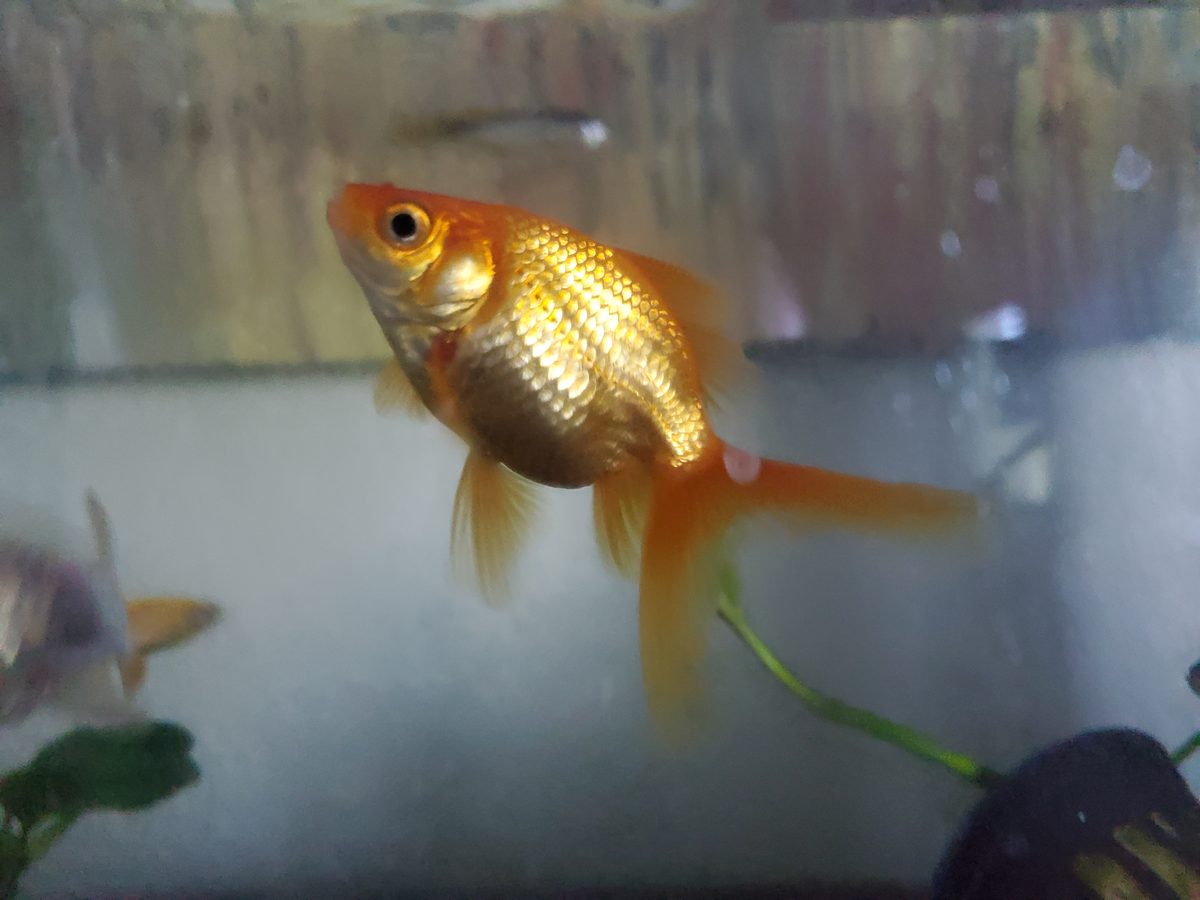
Photo: Ry362 — Wikimedia Commons, CC BY-SA 3.0
- Common Goldfish: Single tail, streamlined body, orange or red. Hardy, can grow to 30 cm in ponds. Best for outdoor ponds or large tanks.
- Fantail: Double tail, egg-shaped body. Most popular beginner fancy goldfish. Temperature tolerant and robust.
- Oranda: Double tail with a fleshy wen (hood) on head. Sensitive to cold — keep above 18°C. Available in red, red-white, chocolate, and blue.
- Ryukin: Deep hump-backed body, long flowing twin tail. More active than Orandas. Excellent pond and aquarium fish.
- Shubunkin: Single tail with calico (blue, red, black, white, orange) colouration. Nacreous scales give a transparent, jewel-like appearance. Hardy pond fish.
- Ranchu / Lionhead: No dorsal fin, prominent head growth. Delicate — requires heated tank and gentle filtration. Top-of-the-line show fish.
Tank Requirements
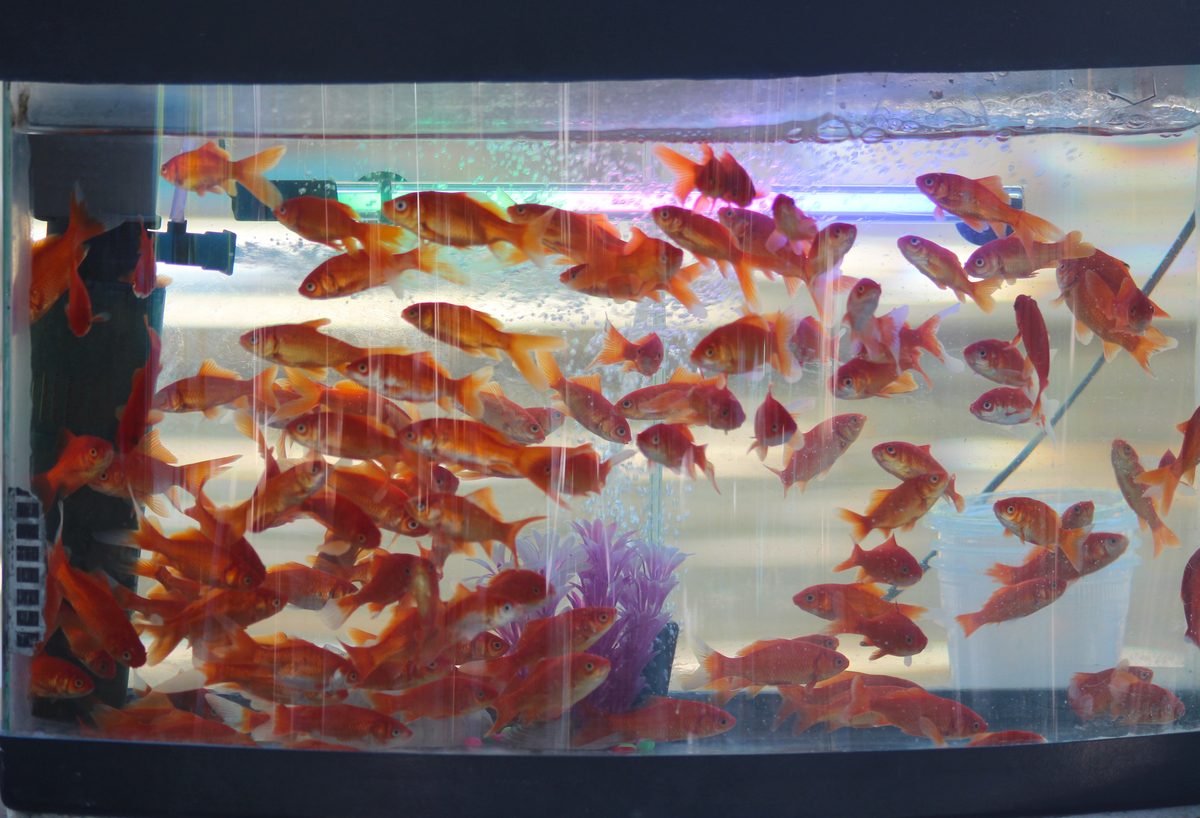
Photo: علاء — Wikimedia Commons, CC BY-SA 3.0
- Tank size: Minimum 20 gallons (75 litres) for the first fancy goldfish + 10 gallons per additional fish. Common goldfish need 30+ gallons each.
- Temperature: 18–24°C (64–75°F) for most varieties. Common varieties often need no heater in a warm room; Orandas and Ranchus prefer 20–23°C.
- pH: 7.0–8.0; hardness 5–19 dGH
- Filtration: Goldfish produce heavy waste — use a filter rated for 2–3× tank volume per hour minimum. Canister or HOB (hang-on-back) filters are best.
- Substrate: Sand or smooth pebbles. Avoid sharp gravel — goldfish forage on the bottom and can injure their mouths.
- Water changes: 25–30% weekly. Goldfish are messy; ammonia spikes are the #1 cause of death.
- Aeration: Goldfish need high oxygen levels — add an airstone or sponge filter especially in summer.
Goldfish bowls are not suitable — they lack filtration, aeration, and adequate space. This stunts growth and shortens lifespan to 1–2 years instead of 10–15.
Feeding
- Pellets / flakes: Hikari Goldfish Gold or Tetra Goldfish flakes — sinking pellets are better to reduce gulping air (which causes swim bladder issues)
- Vegetables: Blanched peas (shell removed), spinach, zucchini — excellent for digestion and preventing constipation
- Frozen foods: Bloodworms, brine shrimp — 2–3 times per week as protein supplement
- Live food: Daphnia, mosquito larvae — natural diet items that improve immune function
Feed 2 times daily, only what fish consume in 2 minutes. Goldfish will always appear hungry — overfeeding is the most common beginner mistake and causes fatal ammonia spikes and swim bladder disease.
Common Diseases
- Ich (White Spot) (Ichthyophthirius multifiliis): Salt-grain spots on body. Raise temperature to 26°C + aquarium salt + Ich-X treatment.
- Swim Bladder Disease: Fish floats sideways or upside down. Usually caused by overfeeding or gulping air. Fast for 2–3 days, then feed blanched peas.
- Fin Rot (Aeromonas / Pseudomonas): Frayed, discoloured fins. Improve water quality immediately + API Fin & Body Cure.
- Anchor Worm / Fish Lice: Visible parasites attached to body. Treat with potassium permanganate bath + API General Cure.
- Dropsy: Pinecone-like scale raise, bloated abdomen. Bacterial kidney infection — difficult to treat; isolate immediately and use Kanamycin.
Goldfish vs Koi — Which is Right for You?
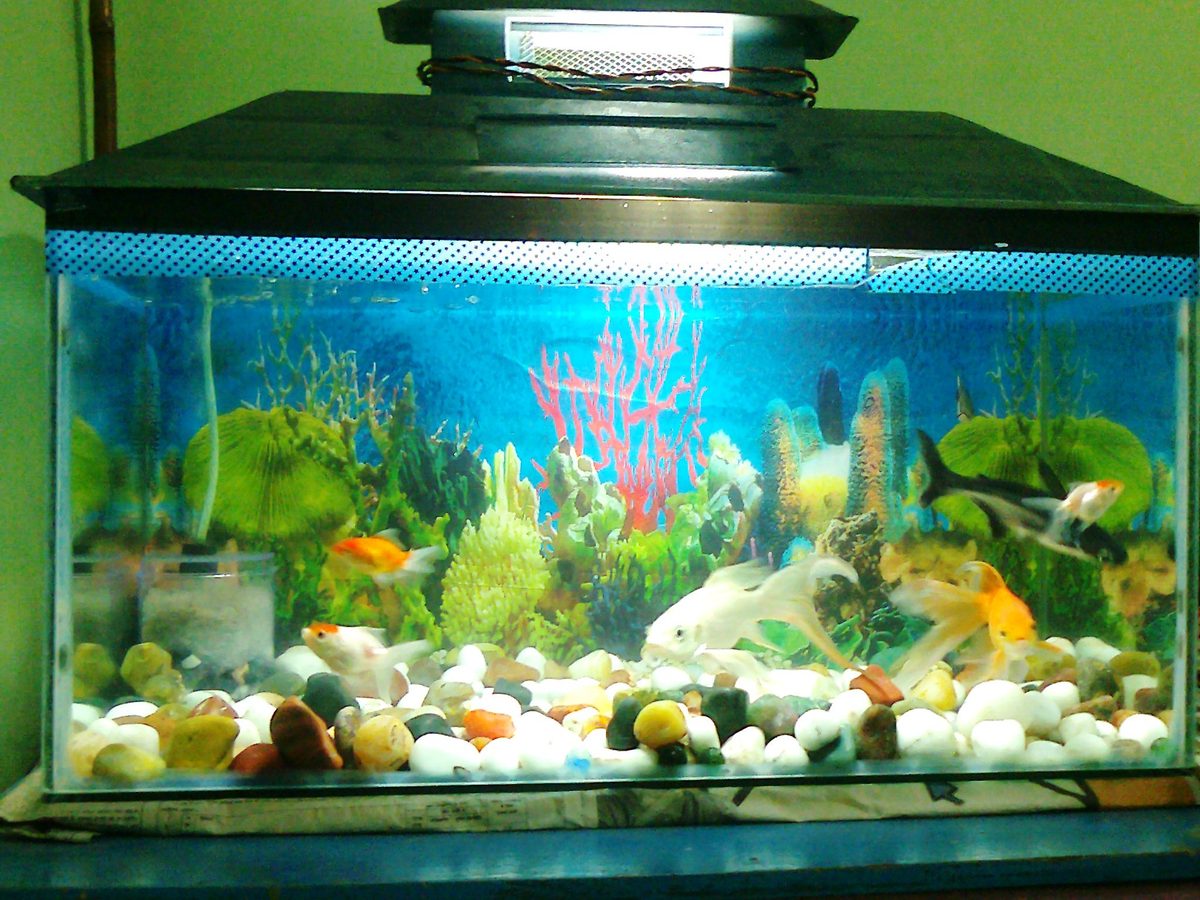
Photo: Ashu0203 — Wikimedia Commons, CC BY-SA 3.0
- Goldfish: Smaller (15–30 cm), suitable for indoor tanks from 20 gallons, 100+ colour varieties, easier to maintain.
- Koi (Cyprinus rubrofuscus): Much larger (60–90 cm), require outdoor ponds of 1,000+ litres, higher water quality demands.
- Verdict for beginners: Start with goldfish in a 30–40 gallon tank. Upgrade to koi pond once you understand water chemistry and filtration.
Browse FishyKart’s Goldfish & Koi collection for both species.
Buy Goldfish Online
FishyKart sources goldfish from trusted breeders and importers. Every fish is quarantined, health-checked, and packed in oxygen-filled bags with thermal insulation for transit.
Buy Goldfish → Browse Collection →