Hydra in Fish Tank: Identify, Risks to Fry and Shrimp, Removal
Published: 2026-10-29 · FishyKart Blog
Hydra are tiny freshwater animals related to jellyfish and corals, usually only about 2-15 mm long, with a thin body attached to glass, plants or decor and a crown of 5-12 thin tentacles. They are harmless to adult fish and people, but their stinging tentacles catch newly hatched fry and baby shrimp, so they are a real problem in breeding and shrimp tanks.
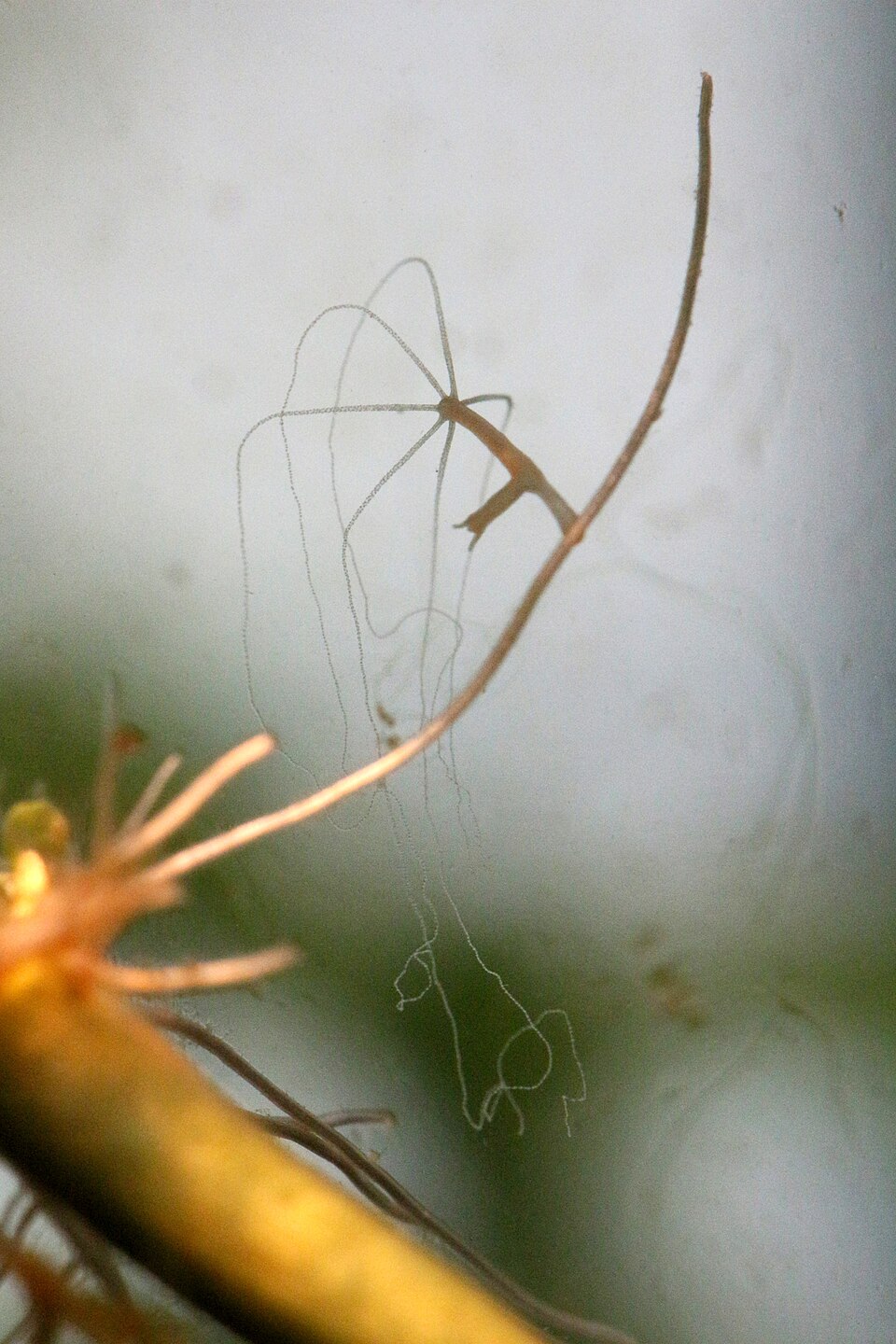
Photo: Marta Boroń - Wikimedia Commons, CC BY 2.0
How to Identify Hydra
| Feature | Hydra |
| Size | About 2-15 mm when stretched out |
| Shape | Thin stalk with a ring of tentacles at the top, like a tiny palm tree |
| Color | White, brown, or green (green hydra contain algae) |
| Behavior | Stays attached, contracts into a small blob when touched |
| Where | Glass near the light, plants, filter intake, decor |
Hydra are often confused with planaria, but planaria crawl and have no tentacles. See planaria in aquarium.
Why Hydra Matter
Each tentacle carries stinging cells that paralyze tiny animals. Hydra eat copepods, daphnia, baby brine shrimp and anything else small enough to catch, including fry of livebearers such as guppies and newborn cherry shrimp. Adult fish and adult shrimp are too large to be harmed. Hydra also reproduce quickly by budding, so a few can become hundreds when food is plentiful.
Why Hydra Appear
They come in on plants, live food or water from other tanks. Numbers explode when there is a lot of tiny food in the water, for example when feeding baby brine shrimp to fry or overfeeding fine powder food.
How to Remove Hydra
- Cut the food supply: feed less and remove leftovers. Many hydra shrink and disappear when starved.
- Manual removal: scrape them off the glass and siphon them out during water changes.
- Fish that eat them: gouramis such as honey gouramis and dwarf gouramis, and mollies, are often reported by keepers to pick at hydra, though results vary. Do not add them to a fry or shrimp breeding tank.
- Fenbendazole: the most common shrimp-safe chemical treatment, dosed as the label says. It kills hydra and planaria but also kills snails, so move snails first. Remove dead hydra and do a partial water change afterward.
- Heat: some keepers raise the temperature of shrimp-free tanks to kill hydra, but this risks the other animals, so it is not a first choice.
Prevention
- Rinse new plants and inspect them before adding them, or keep them in a separate container for a while.
- Hatch and rinse live food so only the food goes into the tank, not the water it came in.
- Feed fry small amounts several times a day rather than one large dose that drifts around the tank.
- Keep an eye on the front glass under the light, where hydra are easiest to spot early.
When Not to Worry
In a community tank with adult fish only, a few hydra are mostly a curiosity. They are worth removing in tanks with fry, shrimp colonies or a 5-gallon (19-liter) nano setup where they can spread quickly. For small shrimp tanks, see the best fish for a 5 gallon tank.