Honey Gourami Care: Male vs Female and Tank Mates
Published: 2026-10-28 · FishyKart Blog
The honey gourami (Trichogaster chuna) is the gentle option among gouramis: about 1.5-2 inches long, slow-moving and rarely aggressive, it suits community tanks where a dwarf gourami might pick fights. Native to the Ganges and Brahmaputra basins of India, Bangladesh and Nepal, it is a labyrinth fish that breathes air from the surface, is often reported to live 4-6 years, and needs warm water around 72-82°F with gentle flow.
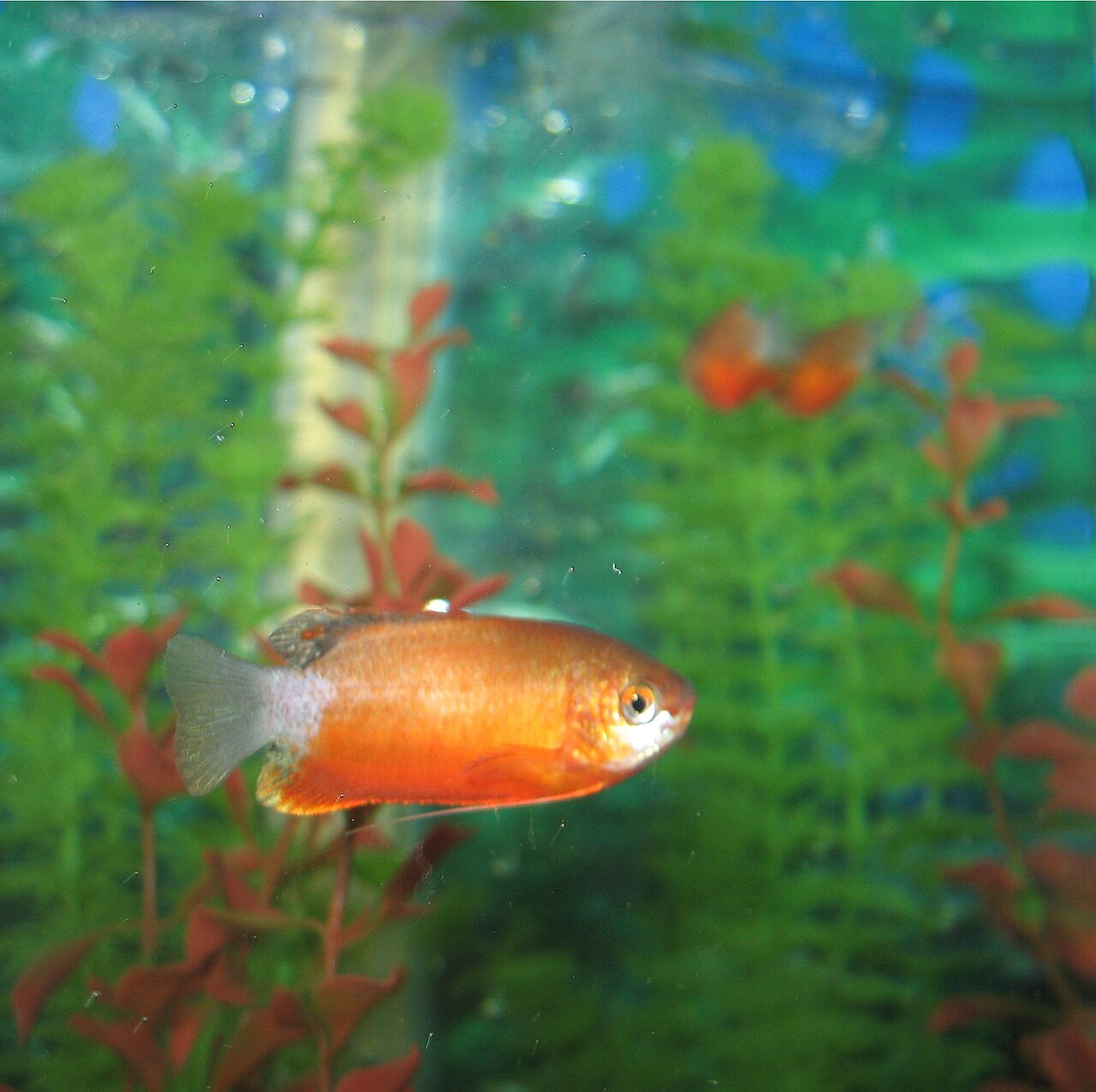
Photo: Eevaya - Wikimedia Commons, CC BY-SA 4.0
| Parameter | Value |
| Scientific name | Trichogaster chuna (formerly Colisa chuna) |
| Origin | India, Bangladesh, Nepal |
| Adult size | 1.5-2 in (4-5 cm) |
| Lifespan | Often reported as 4-6 years |
| Temperature | 72-82°F (22-28°C) |
| pH | 6.0-7.5 |
| Minimum tank | About 15 gallons for a pair; 20 gallons for a group |
| Temperament | Peaceful, can be shy |
| Breathing | Labyrinth organ, takes air at the surface |
Male vs Female
Most honey gouramis in stores are pale and look alike, but a mature male in good condition changes completely. When he is ready to breed, his body turns deep honey-orange, and the throat and belly darken to blue-black. Females stay silvery-tan with a brown stripe along the side. The bright "red honey" and "gold honey" fish sold in shops are colour forms bred in captivity, so both sexes of those can look orange; check the throat colour on males in breeding dress.
Bubble Nests and Breeding
Like bettas, male honey gouramis build bubble nests at the surface, usually among floating plants. The male coaxes the female underneath, collects the eggs and guards the nest. Floating plants such as duckweed or hornwort give him an anchor and give the female cover to retreat. Remove the female after spawning if the male becomes pushy.
Why the Surface Matters
Because honey gouramis breathe air, they need access to the surface with warm, humid air above the water. Keep a lid on the tank and leave a gap between water and lid; cold, dry air drawn in at the surface can stress labyrinth fish. Strong filter flow is also a problem: they are weak swimmers, so baffle the output or use a sponge filter.
Honey Gourami vs Dwarf Gourami
The two are often confused. The dwarf gourami is larger, more colourful and more territorial, and is prone to a viral disease (dwarf gourami iridovirus) that has hit many commercial stocks. The honey gourami is smaller, calmer and generally hardier, which makes it the safer pick for a peaceful community.
Tank Mates
- Good: harlequin rasboras, small tetras, corydoras, kuhli loaches, otocinclus
- Avoid: bettas, larger or territorial gouramis, fin-nippers such as tiger barbs and any fish that outcompetes them for food
Gouramis are listed in our rainbows and gouramis collection.