Molly Fish Tank Mates: Good Choices and Fish to Avoid
Published: 2026-11-02 · FishyKart Blog
Mollies are peaceful livebearers, but they have one strict need that decides their tank mates: hard, alkaline water. SeriouslyFish gives pH 7.0-8.5, hardness 15-30 dGH and 70-82°F (21-28°C) for the short-finned molly. The best molly fish tank mates are fish that like the same water: platies, swordtails, guppies, some rainbowfish, hard-water barbs and tetras, plus an adaptable bottom grazer. Soft-water fish such as neon tetras and discus are a poor match even though they are peaceful.
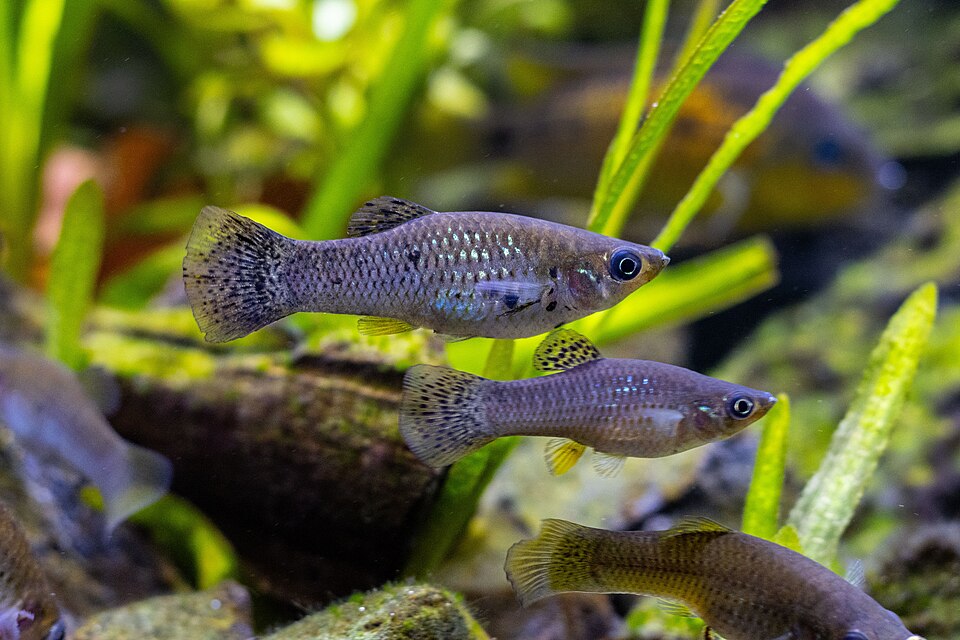
Photo: Dnoerholm - Wikimedia Commons, CC BY-SA 4.0
Best Molly Tank Mates Compared
Water values below are from SeriouslyFish species profiles. The shared range with mollies is what matters: aim for about 72-79°F (22-26°C) and pH 7.0-8.0 when mixing these fish.
| Tank mate | Adult size | Temperature | pH | Why it works |
|---|---|---|---|---|
| Platy (Xiphophorus maculatus) | 2 in (5 cm) | 68-79°F (20-26°C) | 7.0-8.2 | Same hard water, peaceful, similar diet |
| Swordtail (Xiphophorus hellerii) | up to 5.5 in (14 cm) | 61-82°F (16-28°C) | 7.0-8.0 | Hard-water livebearer; needs a long tank |
| Guppy (Poecilia reticulata) | up to 2.4 in (6 cm) | 63-82°F (17-28°C) | 7.0-8.5 | Close relative with the same water needs |
| Rosy barb (Pethia conchonius) | up to 4 in (10 cm) | 61-75°F (16-24°C) | 6.0-8.0 | Hardy and active; works only in the cooler part of the molly range |
| Black widow tetra (Gymnocorymbus ternetzi) | 2.4 in (6 cm) | 68-79°F (20-26°C) | 6.0-7.0 (adapts higher) | Sturdy tetra; keep 12+ to curb fin nipping |
8 Good Tank Mates for Mollies
- Platies. The easiest match: small, peaceful and happy in the same hard water. Platies and mollies are often sold side by side as the "molly and platy" group.
- Swordtails. Larger and more active. Males form pecking orders, so keep one male or several in a large tank. See the swordtail fish guide.
- Guppies. Peaceful and colourful, with the same water needs. The guppy tank mates guide covers mixed livebearer tanks.
- Endler guppies. Tiny relatives of the guppy that suit a planted molly tank. Note that they can cross with guppies.
- Rainbowfish. SeriouslyFish names some rainbowfish as good molly tankmates. Choose hardy species that tolerate pH above 7.0 and need a long tank.
- Hard-water barbs. The rosy barb is a robust, peaceful barb that tolerates alkaline water, but it prefers cooler water, so keep the tank at about 72-75°F (22-24°C).
- Black widow tetras. One of the few common tetras that copes with harder water. Keep a large group so they do not nip.
- Bristlenose pleco. A small, adaptable algae grazer for the bottom. The bristlenose pleco guide has its tank needs.
Fish to Avoid With Mollies
- Soft-water fish: neon and cardinal tetras, discus and most rasboras. They are peaceful, but they want soft, acidic water while mollies weaken in it.
- Fin nippers: tiger barbs and serpae tetras may chase and nip mollies, especially long-finned and balloon forms.
- Large or aggressive cichlids: Oscars, Flowerhorns and Green Terrors will eat or bully mollies.
- Goldfish: they prefer cooler water and produce a heavy waste load; they belong in their own tank.
- Dwarf shrimp, if you want shrimplets: adult shrimp are usually ignored, but mollies eat baby shrimp.
Keeping Peace in a Molly Tank
Most molly "aggression" is males chasing females. SeriouslyFish advises several females per male for the short-finned molly and at least two females per male for the sailfin molly, whose males fight each other during spawning. A practical start is 1 male to 3 females. Dense plants such as hornwort give females and fry places to rest.
Space also matters. Plan at least 20-21 gallons (about 80 litres) for a small group of short-finned mollies and 25-30 gallons for sailfins; the molly fish tank size guide has a full table by type. If you keep mollies with guppies or platies, expect a steady supply of fry. Adults eat many of them, so add floating plants if you want some to survive.
Water Settings for a Mixed Molly Tank
- Temperature: 72-79°F (22-26°C) suits mollies, platies, guppies and widow tetras together. Detailed ranges are in the molly fish temperature guide.
- pH and hardness: pH 7.0-8.0 and moderately hard to hard water. Soft or acidic water makes mollies prone to shimmying, fungus and clamped fins.
- Salt: not needed. SeriouslyFish notes that calcium and magnesium in hard water matter more than salt, and many tank mates do not like salt.
Mollies and Tank Mates at FishyKart
FishyKart sells several molly colour forms together with platies and swordtails, so a whole livebearer community can be set up from one order.
Browse Mollies & Platies → View Black Molly →