Bristlenose Pleco Care: Diet, Tank and Breeding
Published: 2026-10-28 · FishyKart Blog
The bristlenose pleco (genus Ancistrus) is the pleco most people should actually buy: it stays around 4-5 inches, grazes algae from glass and wood, and is easy to breed. Adult males grow the fleshy "bristles" on the snout that give the fish its name. It does well at 72-80°F in a tank from about 15-20 gallons, but it is not a self-feeding cleaner: it needs vegetables, algae wafers and a piece of driftwood to stay healthy for what is often reported as a 5-10 year lifespan. How large each variety gets is covered separately in our bristlenose pleco size guide.
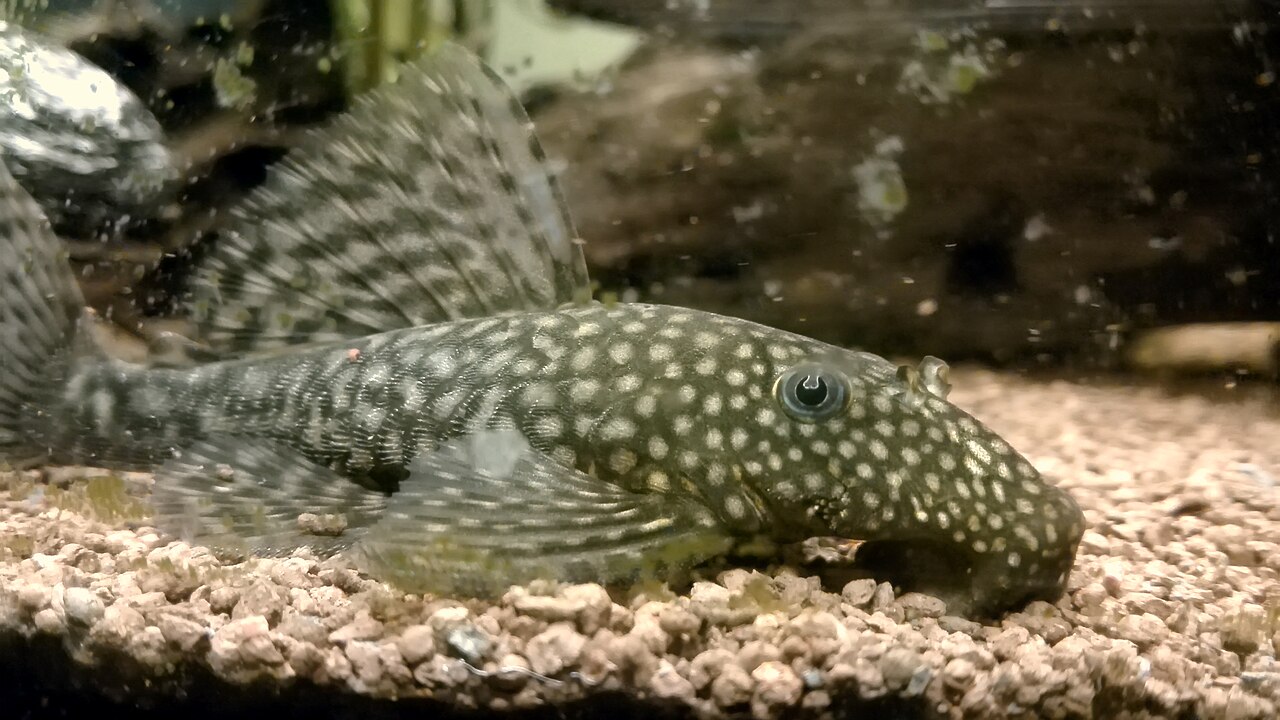
Photo: Júlio Reis - Wikimedia Commons, CC BY-SA 4.0
| Parameter | Value |
| Genus | Ancistrus (common aquarium form often sold as A. cf. cirrhosus) |
| Origin | Captive-bred form of uncertain origin; the genus lives in South American rivers |
| Adult size | 4-5 in (10-13 cm) |
| Lifespan | Often reported as 5-10 years |
| Temperature | 72-80°F (22-27°C) |
| pH | 6.5-7.5 |
| Minimum tank | About 15 gallons (60 x 30 cm) for one or a pair; 20-30 gallons is more comfortable |
| Diet | Algae, wafers, vegetables, driftwood fibre |
| Must-have decor | Driftwood and a cave |
Diet: The Part Most Owners Get Wrong
A new bristlenose clears algae quickly, then starves once the glass is clean. Plan its food from day one. Offer algae wafers or sinking vegetable pellets daily and blanched vegetables such as zucchini, cucumber or spinach a few times a week, removed after a day so they do not rot. Small amounts of protein like bloodworms are fine as an occasional extra. A bristlenose with a sunken belly is not getting enough food.
Why Driftwood Is Not Optional
Bristlenose plecos rasp on wood and eat the soft surface layer, and keepers have long found they do better with it in the tank. Driftwood also gives cover for this mostly nocturnal fish, which spends the day tucked away and comes out after the lights go off. New driftwood can tint water brown with tannins, which does no harm.
Breeding in a Home Tank
Bristlenose plecos are one of the easiest catfish to breed. Give a pair a cave or tube about the width of the male. The female lays a clutch of orange eggs inside, and the male guards and fans them until the fry hatch and absorb their yolk sacs, about a week or more. The fry then graze on the same wafers and vegetables as adults. Remove extra males if they fight over caves.
Waste and Water Quality
Plecos eat a lot and produce a lot of waste, so overfilter: a filter rated for a larger tank and weekly water changes keep nitrate down. Sudden water swings stress them, and poor water shows first as clamped fins and lost appetite.
Tank Mates
Bristlenose plecos are peaceful and fit most community tanks: corydoras, tetras, honey and dwarf gouramis, livebearers and shrimp. Avoid keeping several males in a small tank, and avoid large aggressive cichlids that can injure them.
Catfish and algae eaters are listed in our live fish collection.