Siamese Algae Eater - Complete Care Guide
Published: 2026-10-25 · FishyKart Blog
The Siamese Algae Eater (Crossocheilus siamensis / oblongus) is worth identifying correctly before buying, because a near-identical species is routinely sold under the same name and doesn't do the job. True SAE is one of the only fish that reliably eats black beard algae - a nuisance algae most algae-eating species ignore entirely - while the lookalike Flying Fox mostly skips algae in favor of other food. The tell is a single stripe: in a true SAE, the black horizontal band running down the body extends into the tail fin; on a Flying Fox, it stops short.
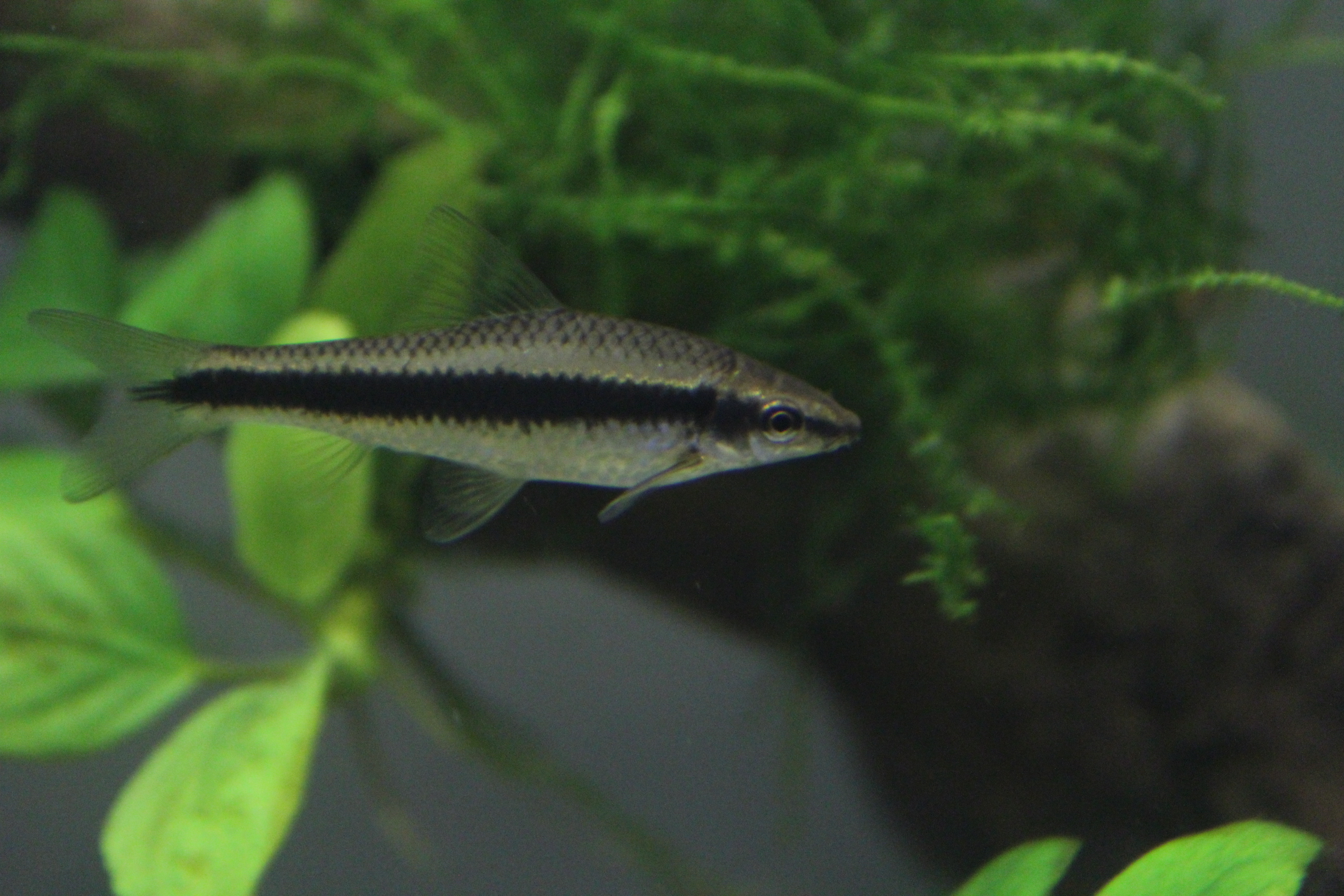
Photo: Aleander2137 - Wikimedia Commons, CC BY-SA 4.0
| Parameter | Value |
| Adult size | Up to 6 in |
| Minimum tank | 30 gallons |
| ID check | Stripe extends into tail = true SAE |
| Best algae target | Black beard algae (BBA) |
| Behavior | Peaceful as juvenile, can turn boisterous as adult |
The Tail Test That Prevents a Mislabeled Purchase
Flying Fox looks close enough to a true Siamese Algae Eater that stores routinely mislabel one as the other. The fastest field check is the tail: a true SAE's black horizontal stripe runs all the way into the caudal fin, while Flying Fox's stripe stops before the tail and its pelvic, anal, and dorsal fins carry dark coloring the SAE lacks. Getting this identification right matters because the two species behave very differently in a planted tank.
One of the Few Fish That Eats Black Beard Algae
Black beard algae frustrates most algae-control strategies because so few fish will actually eat it. True Siamese Algae Eater is a genuine exception - juveniles forage on BBA alongside hair algae and general leftovers almost constantly, making this species the go-to biological control for tanks specifically fighting a BBA outbreak.
Algae Appetite Fades With Age
The algae-eating behavior that makes SAE valuable is strongest in juveniles. As they mature toward their full 6-inch size, adults increasingly prefer prepared fish food over grazing when both are available - a fully grown SAE shouldn't be counted on as the sole algae control in an established tank the way a young one can be.
Tank Size Grows With the Fish
At up to 6 inches, Siamese Algae Eater outgrows many of the algae-eating species it gets compared to. 30 gallons is the realistic minimum, with fast, active swimming habits that reward more open floor and mid-level space as the fish matures.
Buy Siamese Algae Eater Online
FishyKart stocks true Siamese Algae Eater for tanks fighting black beard algae.
Shop Siamese Algae Eater