About & Origin
The true Siamese Algae Eater (Crossocheilus oblongus, sometimes sold under the closely related Crossocheilus langei) is a freshwater fish native to fast-flowing rivers and streams across Thailand, Malaysia, and parts of Indonesia. It holds a genuinely well-earned reputation in the hobby as one of the very few aquarium fish that will reliably eat black beard/brush algae, a notoriously stubborn algae type most other "algae eater" species ignore.
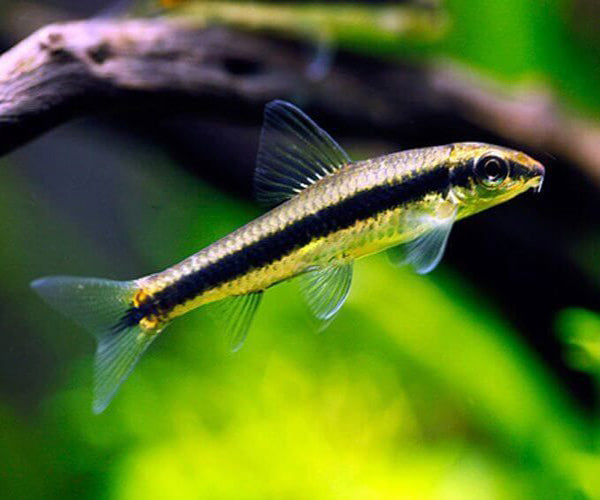
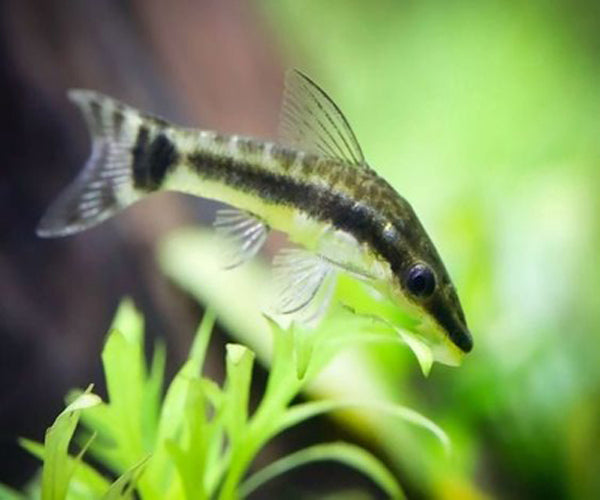
Slender and torpedo-shaped with a bold black horizontal stripe running from nose to tail and a pale gold-to-silver body, true SAEs are frequently confused in shops with several look-alike species (notably the more aggressive Flying Fox and the semi-aggressive Chinese Algae Eater) — the genuine article is a peaceful, active, constantly grazing shoaling fish, not a territorial one.
SAEs reach a moderate adult size of around 14–16cm in ideal conditions (usually smaller in home aquaria), considerably larger than most community algae-control fish like otocinclus, but still very manageable in a typical community tank.
This combo pack supplies a small group at once, which suits SAEs well, since they are naturally shoaling fish that show calmer, more confident grazing behaviour in a proper group than as isolated individuals.
A quick, reliable way to tell true SAEs apart from common look-alikes: the genuine Crossocheilus has a single, complete black stripe running perfectly straight from nose to tail with a clear (not yellow-tinted) body, unlike the Flying Fox (which has an additional gold stripe above the black one and a more aggressive temperament) or the Chinese Algae Eater (deeper-bodied, more territorial, with a distinct sucker-shaped mouth visible from below).
Requirements
True Siamese Algae Eaters are shoaling fish and do best in groups of at least 5–6 — a single or paired specimen is more prone to territorial squabbling with itself or with similarly-shaped tankmates than a properly sized group, which spreads that social behaviour out and generally settles down.
A tank of at least 100–150 litres suits a group of this size as they approach adult size, with driftwood, rockwork, and plants to graze and patrol — this is a genuinely active, constantly-moving fish that benefits from real swimming space.
Diet should include algae wafers and blanched vegetables to supplement natural grazing, especially once available algae in the tank is depleted, since a well-fed group grazes less aggressively at each other and at tankmates.
Because true SAEs are commonly mislabelled or mixed with more aggressive look-alike species in the trade, buying from a reputable source that can confirm the correct species matters if temperament and algae-eating behaviour specifically are the priority.
SAEs are peaceful toward other species and make excellent community tankmates for most peaceful fish, though — like several algae-grazing species — very old, stressed, or underfed individuals can occasionally graze on the slime coat of slow, flat-bodied fish, a trait worth being aware of though it's much less pronounced than in the Chinese Algae Eater.
Because SAEs are frequently mislabelled in shops, it's worth watching a prospective group's behaviour before purchase where possible — genuine SAEs are constantly active, peacefully grazing alongside each other, while look-alike species often show visible chasing or fin-flaring between individuals even in a shop tank.
Compatibility
Water & Care Conditions
Siamese Algae Eaters come from well-oxygenated, flowing rivers and do best with that reflected in the tank:
- pH: 6.5–7.5
- Hardness: soft to moderately hard (5–15 dGH)
- Temperature: 24–27°C (75–81°F)
- Oxygenation/flow: appreciates good water movement and high dissolved oxygen, reflecting their native fast-flowing river habitat
- Water quality: generally hardy once established, but prefers stable, well-maintained water over sudden swings
Good filtration and regular water changes support the active, higher-oxygen-demand lifestyle this species is adapted to.
SAEs are also known to become somewhat less interested in algae as they mature and their diet naturally shifts to include more general foods — this is normal and doesn't indicate a health problem, just a shift worth planning supplemental feeding around as the group ages.
Acclimation: because true SAEs are often shipped in mixed batches with look-alike species, watch a newly arrived group closely for the first week or two — genuine SAEs settle quickly into calm, constant grazing, while a look-alike accidentally included in the shipment tends to show more chasing, fin-flaring, or hiding behaviour that stands out clearly once you know what to look for. Removing a mislabelled individual early avoids ongoing low-level stress for the rest of the group.
Longevity: given good conditions, true Siamese Algae Eaters are a long-lived fish, commonly reaching 6–10 years in a well-maintained aquarium — worth factoring into stocking plans as a genuine long-term commitment rather than a short-lived cleanup crew.
A well-oxygenated tank with a sponge pre-filter or guarded intake suits this species well, since its active foraging brings it into contact with equipment and decor throughout the day, and a good filter setup supports the higher-oxygen environment it's adapted to.