About & Origin
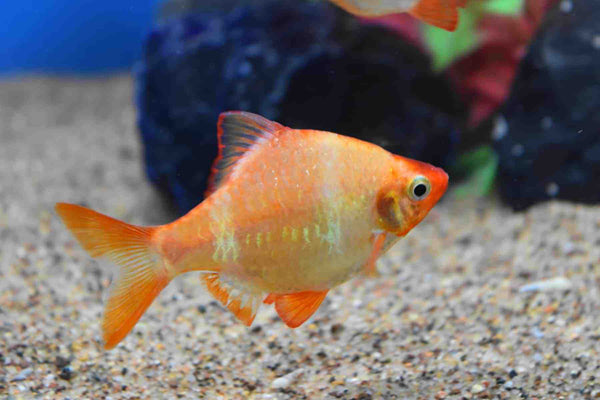
The Albino Tiger Barb is a colour-morph of the Tiger Barb (Puntigrus tetrazona), a species native to the blackwater and clearwater streams of Sumatra, Borneo, and other parts of Indonesia and Malaysia. In the wild, tiger barbs shoal in large numbers through slow-moving, vegetation-lined rivers and forest streams, picking through leaf litter and submerged plant growth for small insects, worms, crustaceans, and plant matter — an omnivorous, opportunistic diet that carries over directly into how easy they are to feed in captivity.
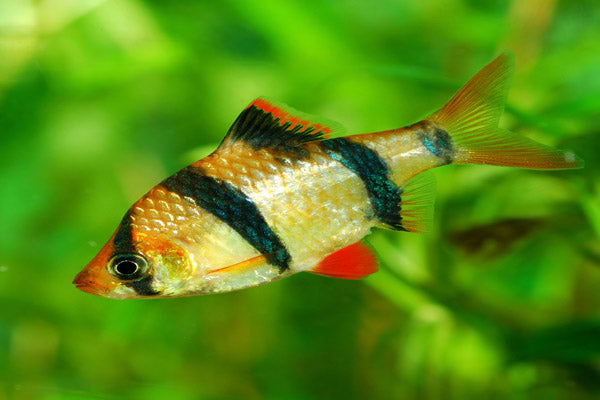
Where the standard Tiger Barb shows bold black vertical stripes over an orange-gold body, the Albino form has lost its dark pigment, giving it a soft pinkish-white body with faint, pale stripe markings and pink eyes — a striking contrast look that's become a popular alternative to the wild-type colouring in the hobby. The albino trait is a recessive genetic mutation that's been fixed into a stable breeding line by hobbyist and commercial breeders over many generations, rather than something that occurs commonly in wild populations.
Despite the cosmetic difference, Albino Tiger Barbs keep all the same behaviour as their wild-coloured relatives: fast, active, constantly on the move, and at their best — calmest and least nippy — when kept in a proper shoal rather than just a pair or trio. Tiger Barbs are egg-scatterers by nature: in a dedicated breeding setup they'll spawn readily over fine-leaved plants or a spawning mop, scattering adhesive eggs with no parental care afterward — adults will happily eat their own eggs and fry if not separated out, which is worth knowing if you ever end up with a breeding pair rather than a straight retail group.
With good care, Albino Tiger Barbs typically live 5 to 7 years, and the species itself has been a fixture of the aquarium hobby since the early 20th century, making it one of the longest-established barbs in the trade.
Requirements
Tiger Barbs, albino or standard, are a shoaling species through and through, and this is the single most important thing to get right with them.
Group size: keep them in groups of 6 or more, and more is genuinely better here — 8 to 10 is even more settled than the bare minimum. In smaller numbers they redirect their natural pecking-order energy at other tankmates — nipping fins, especially on slower, long-finned fish like bettas or fancy guppies. A proper shoal spreads that energy among themselves instead, and you'll see far less fin damage anywhere in the tank.
Tank size: a 20-gallon (75L) long tank is a reasonable minimum for a group of 6, with more room appreciated since they're active swimmers that use horizontal space more than height. A longer footprint matters more here than tank height, since these fish patrol back and forth rather than exploring vertically.
Diet: omnivorous and easy to feed — a good-quality flake or small pellet as a staple, with occasional frozen or live foods (bloodworm, brine shrimp, daphnia) for conditioning and colour. Feeding a varied diet a couple of times a day in amounts they clear in a minute or two keeps them active without fouling the water.
Filtration & flow: they come from moving water and appreciate moderate current and well-oxygenated water; a solidly cycled, well-filtered tank keeps them active and healthy. A dark substrate and background tend to bring out the best contrast in the albino colouring, though this is purely cosmetic rather than a genuine husbandry requirement.
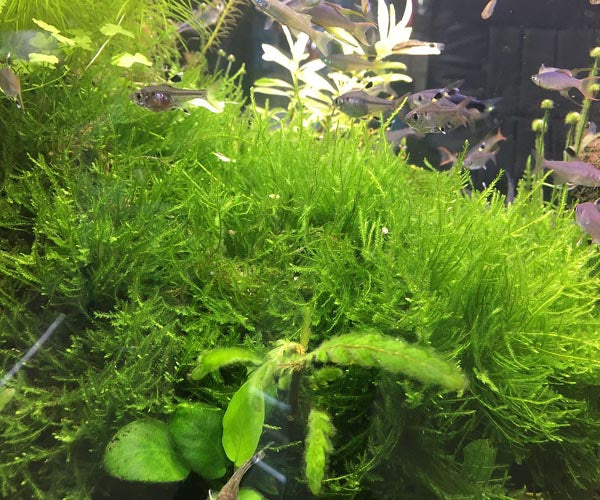
Decor: some open swimming space in the middle of the tank alongside planted or driftwood-heavy edges gives them room to shoal actively while still offering visual breaks that reduce squabbling within the group.
Compatibility
Water & Care Conditions
Tiger Barbs are adaptable and forgiving, which is part of why they're such a long-standing community-tank staple, but they do best within these ranges:
- pH: 6.0–7.5
- Water hardness: soft to moderately hard, roughly 5–15 dGH
- Temperature: 20–26°C (68–79°F)
- Oxygenation: appreciates good water movement and well-oxygenated water, in keeping with their native flowing-stream habitat
- Water changes: a weekly 20–25% partial water change keeps nitrate low and water quality stable for an active, waste-producing shoal
They're tolerant of normal community-tank swings as long as ammonia and nitrite stay at zero — like most active shoaling fish, they're more sensitive to poor water quality than to parameters being slightly off the ideal. Sudden temperature drops or an uncycled tank are the two most common triggers for ich (white spot disease) in this species, so a stable, mature filter and a gradual, drip-style acclimation for new arrivals go a long way toward avoiding early losses.
Because Albino Tiger Barbs lack the dark pigment of the standard form, they can be a touch more light-sensitive and are sometimes considered slightly more delicate as juveniles — giving them a well-planted or shaded area to retreat to, alongside otherwise standard tiger barb care, is a sensible precaution rather than a strict requirement.
Watch for the classic early signs of ich (tiny white spots across the body and fins, flicking against decor) and treat promptly with a dedicated medication if it appears, since barbs kept in a shoal can pass it between each other quickly. Otherwise this is a genuinely hardy fish once settled: a mature, cycled tank with steady parameters and regular partial water changes is really all it asks for, and it will comfortably outlast most other community-tank residents.